2026. 7. 11. 10:20ㆍ자산관리
Hi everyone.
Today's post is about how to read a Korean property register (deungibu deungbon) before you sign a real estate contract.
"Before you sign anything, how do you actually know this property is safe?"
If you're about to sign a lease (jeonse) or purchase contract in Korea, the property register isn't optional reading — it's essential. This single document lists everything from the legal owner to any debt secured against the property.
Anyone can pull a copy from the Korean court's Internet Registry Office (iros.go.kr), and an online copy costs around 1,000 KRW. Make sure it's freshly issued, ideally on the day you sign.
The contents of a register can change within a single day, so a copy from a few days ago isn't reliable anymore. Get a fresh copy right before you sign, just to be safe.

The register is divided into three main sections: Pyojebu, Gapgu, and Eulgu.
Pyojebu lists the basics — address, floor area, number of floors. Check that the floor area in your contract matches what's listed here.
Gapgu covers ownership. Confirm that the landlord's name matches the owner listed in Gapgu, and check for any provisional seizures or dispositions attached to the property.
Eulgu covers rights other than ownership — in plain terms, any debt secured against the property. A mortgage listed here isn't automatically a red flag, but you do need to know exactly how much it's for.
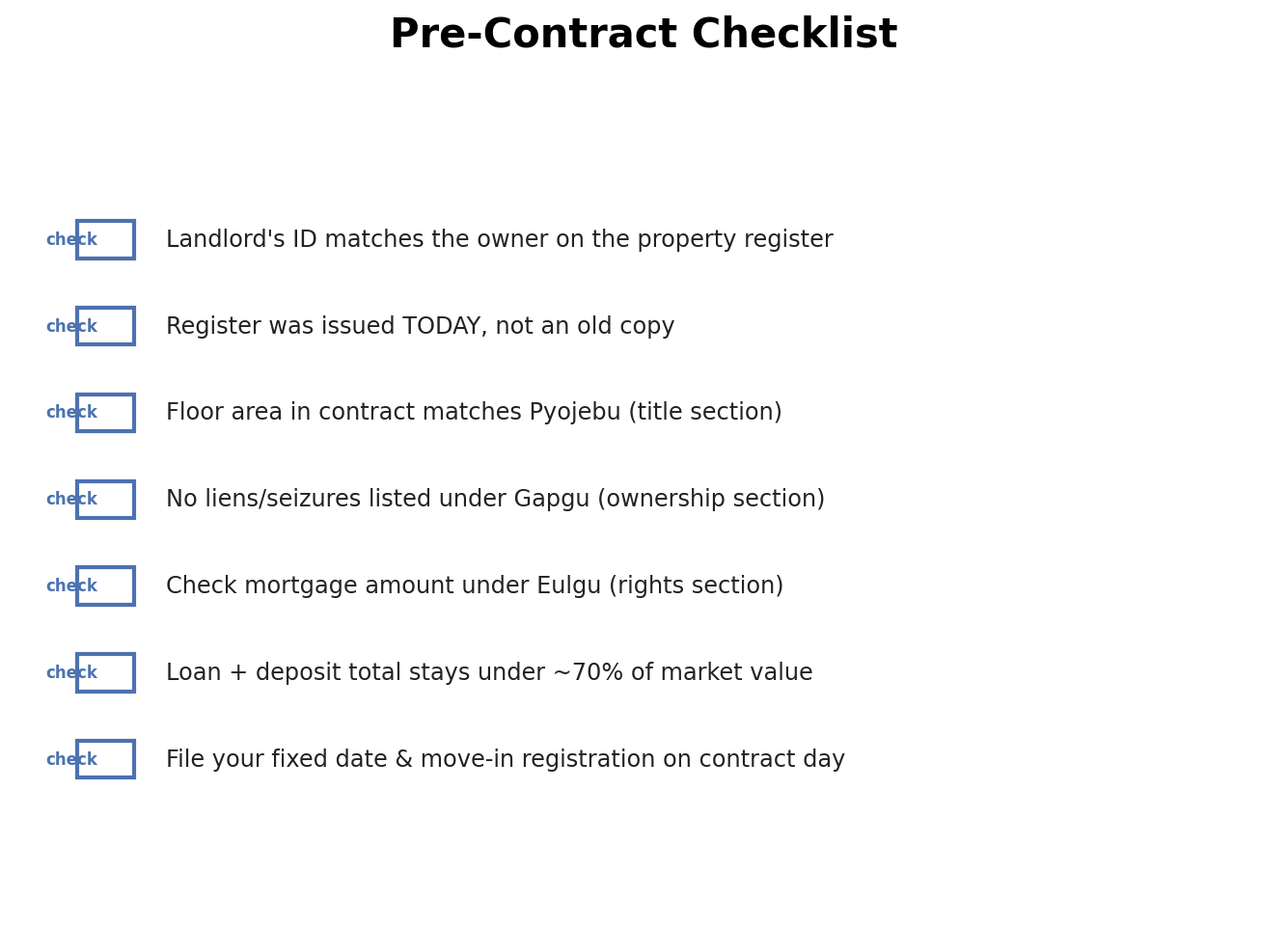
Let's walk through the checklist in more detail.
Start by confirming the landlord's ID matches the ownership details on the register. If someone signs on the landlord's behalf, ask for a power of attorney and notarized ID as well.
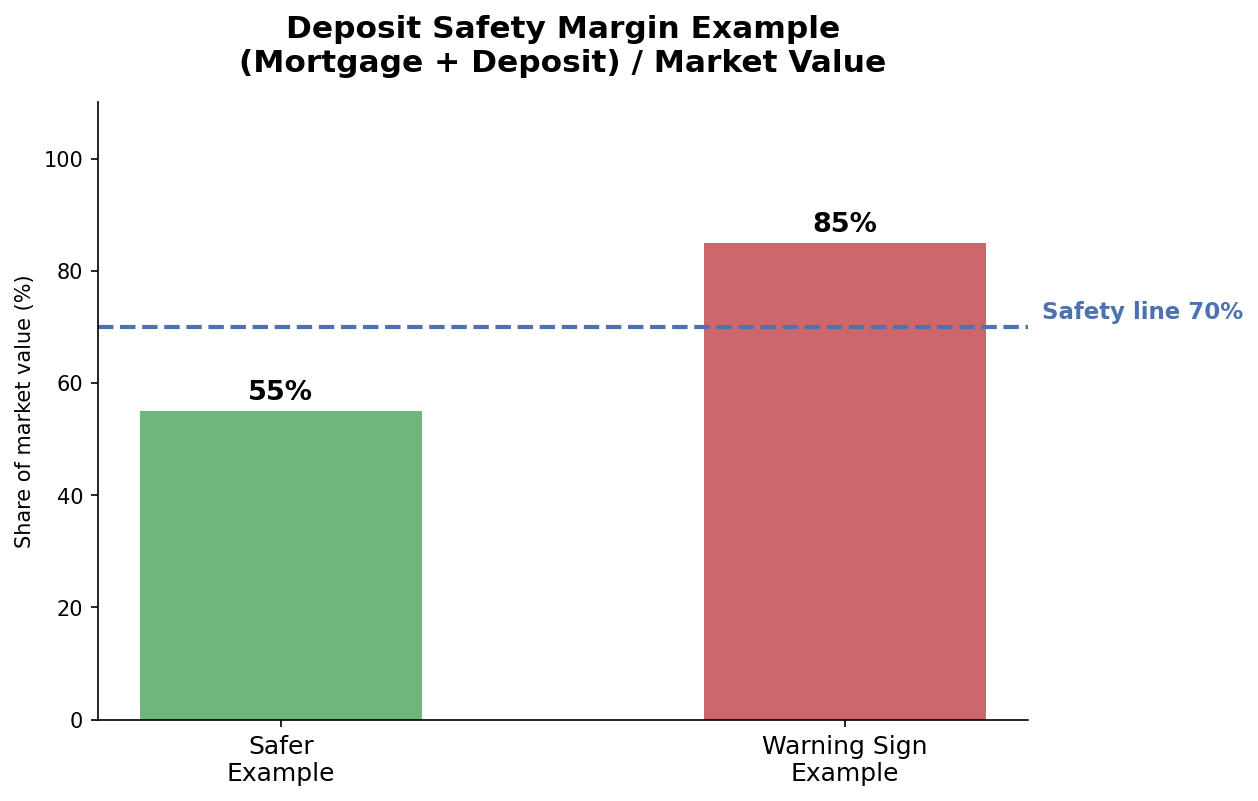
Next, add up the mortgage balance and the total tenant deposits, then compare that to the market value. A common rule of thumb is that this combined amount should stay under about 70% of the property's market value.
Keep in mind this 70% figure is just a reference point, not an absolute guarantee — actual risk also depends on factors like falling property prices or auction sale ratios.
Once you sign, get your fixed date (hwakjeongilja) and complete your move-in registration (jeonip singo) right away. Together, these give you legal priority to reclaim your deposit if anything goes wrong.
Takeaway
The property register looks intimidating at first, but once you understand the roles of Pyojebu, Gapgu, and Eulgu, it's not hard to check on your own. Confirm the owner, the floor area, any mortgages, and the deposit safety margin using this checklist, and always pull a fresh copy on the day you sign. This post is for general information only and is not investment or legal advice.
#RealEstate #PropertyRegister #KoreaRealEstate #Jeonse #LeaseAgreement #RealEstateContract #RealEstateBasics #PropertyOwnership #Mortgage #TenantRights #FixedDate #MoveInRegistration #RealEstateInvesting #AssetManagement #RealEstateChecklist #PropertySafety #DepositSafety #RealEstateTips #HomeBuying #RealEstateEducation #KoreaProperty #RentalContract
'자산관리' 카테고리의 다른 글
| Asset Management :: Why Do Rising Rates and Inflation Rattle the Stock Market? (0) | 2026.07.13 |
|---|---|
| 자산관리 :: 금리와 인플레이션이 오르면 주식시장은 왜 흔들릴까요? (0) | 2026.07.13 |
| 자산관리 :: 부동산 계약 전, 등기부등본 이렇게 확인하세요 (0) | 2026.07.11 |
| Asset Management :: Real Estate — Direct Ownership or REITs? (0) | 2026.07.11 |
| 자산관리 :: 부동산 투자, 직접 살까요 리츠로 간접투자할까요? (1) | 2026.07.11 |