2026. 7. 11. 07:21ㆍ자산관리
Hello,
Today's post is about real estate investing — specifically, the difference between buying property directly and investing indirectly through REITs (Real Estate Investment Trusts).
Do you have to buy an entire building to make money from real estate?
When people think of real estate investing, they usually picture buying an apartment or a storefront outright. But these days, there are well-established ways to invest in real estate with much smaller amounts of capital.
Let's walk through both approaches and see how they differ.
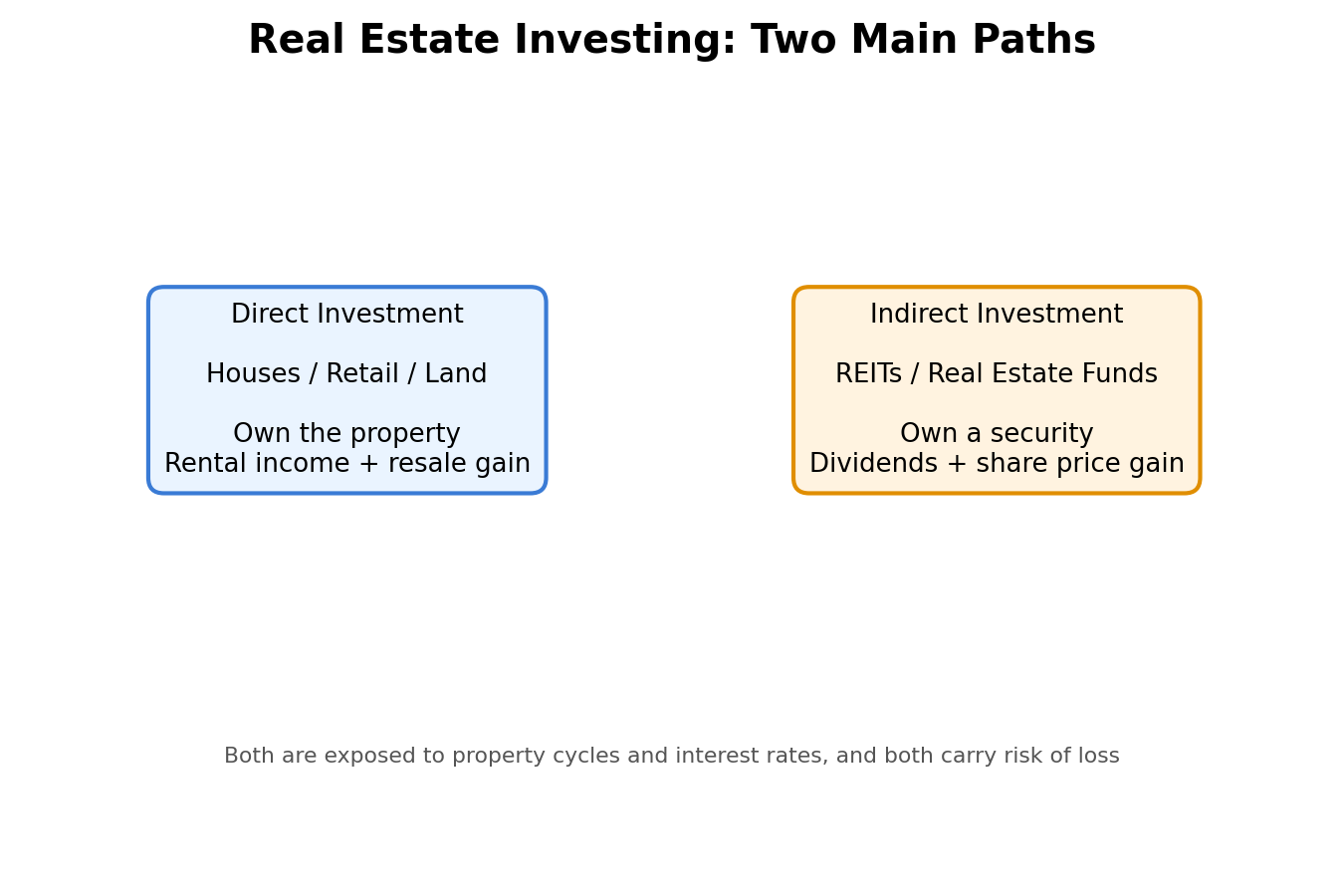
Direct Investment: Becoming the Owner
Direct investment means buying a physical property — a house, a retail unit, or land — and holding the title yourself. You earn money either through rental income or by selling later at a higher price.
The upside is full control: you manage the asset yourself, and you can use a mortgage to apply significant leverage. The downside is that it takes a large amount of upfront capital, plus ongoing costs like vacancies, tenant management, taxes, and maintenance.
Direct ownership is also relatively illiquid — if you suddenly need cash, selling a property quickly is rarely easy.
Indirect Investment: REITs, Real Estate in Smaller Slices
A REIT (Real Estate Investment Trust) pools money from many investors to buy and manage real estate or real estate-related assets, then distributes the rental income or sale proceeds as dividends. Because REITs trade on the stock exchange, you can buy or sell shares with a relatively small amount of money.
In South Korea, listed REITs are required by law to invest at least 70% of total assets in real estate-related assets, and to distribute at least 90% of distributable income as dividends. This structure is generally known for producing relatively stable dividend payouts.
That said, because REITs trade like stocks, their price can move with interest rates and broader market sentiment. It's also worth checking exactly what properties a REIT holds and who manages it, since that shapes its risk profile.
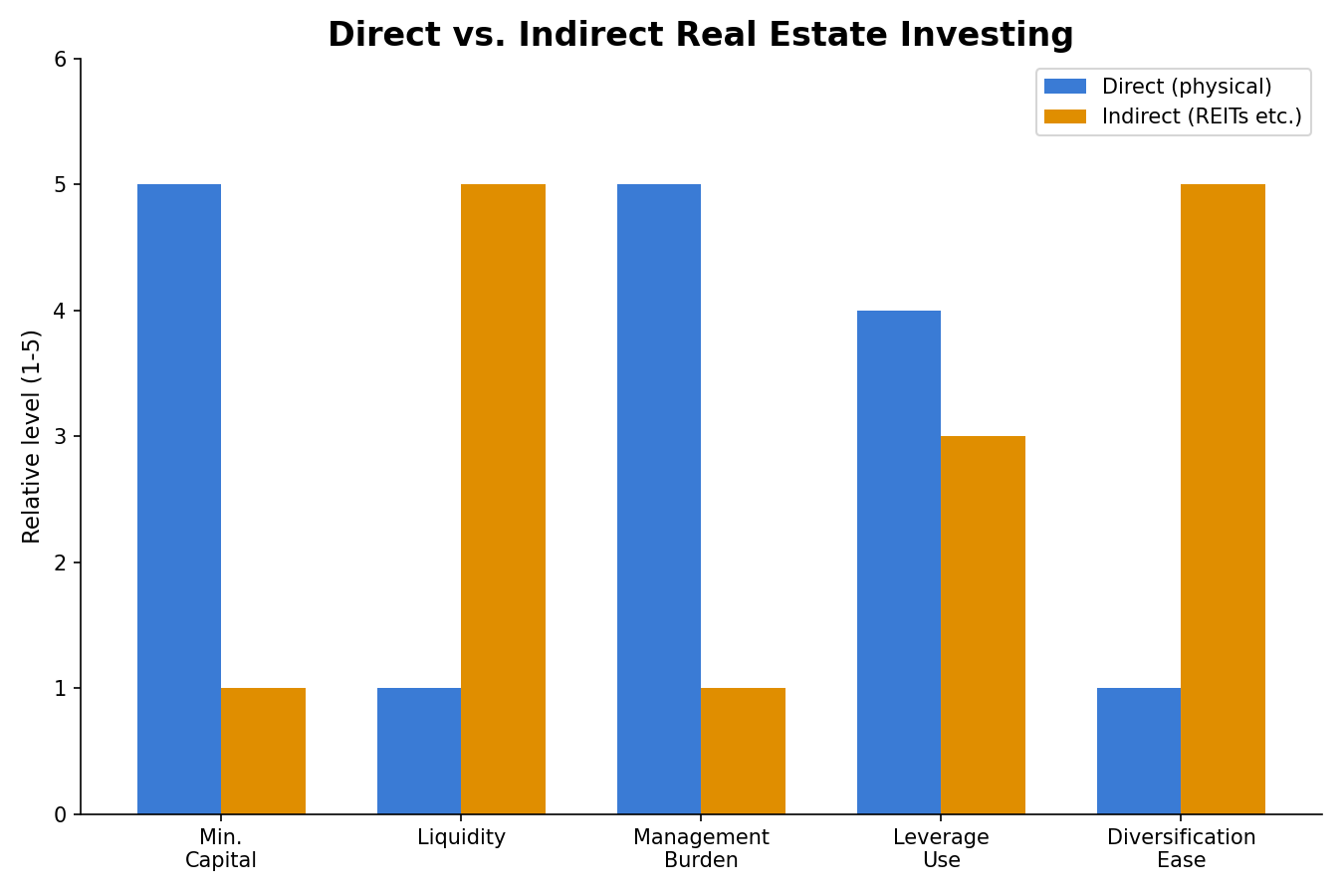
Which One Fits You?
If you have a large amount of capital, the capacity to manage a property yourself, and want to use leverage aggressively over the long term, direct ownership may suit you better. If you'd rather invest smaller amounts across multiple assets and value being able to exit quickly, a REIT or real estate fund may be a better fit.
Either way, remember that real estate is an asset class that's sensitive to economic cycles and interest rates. The more leverage involved, the heavier the burden becomes when rates rise.
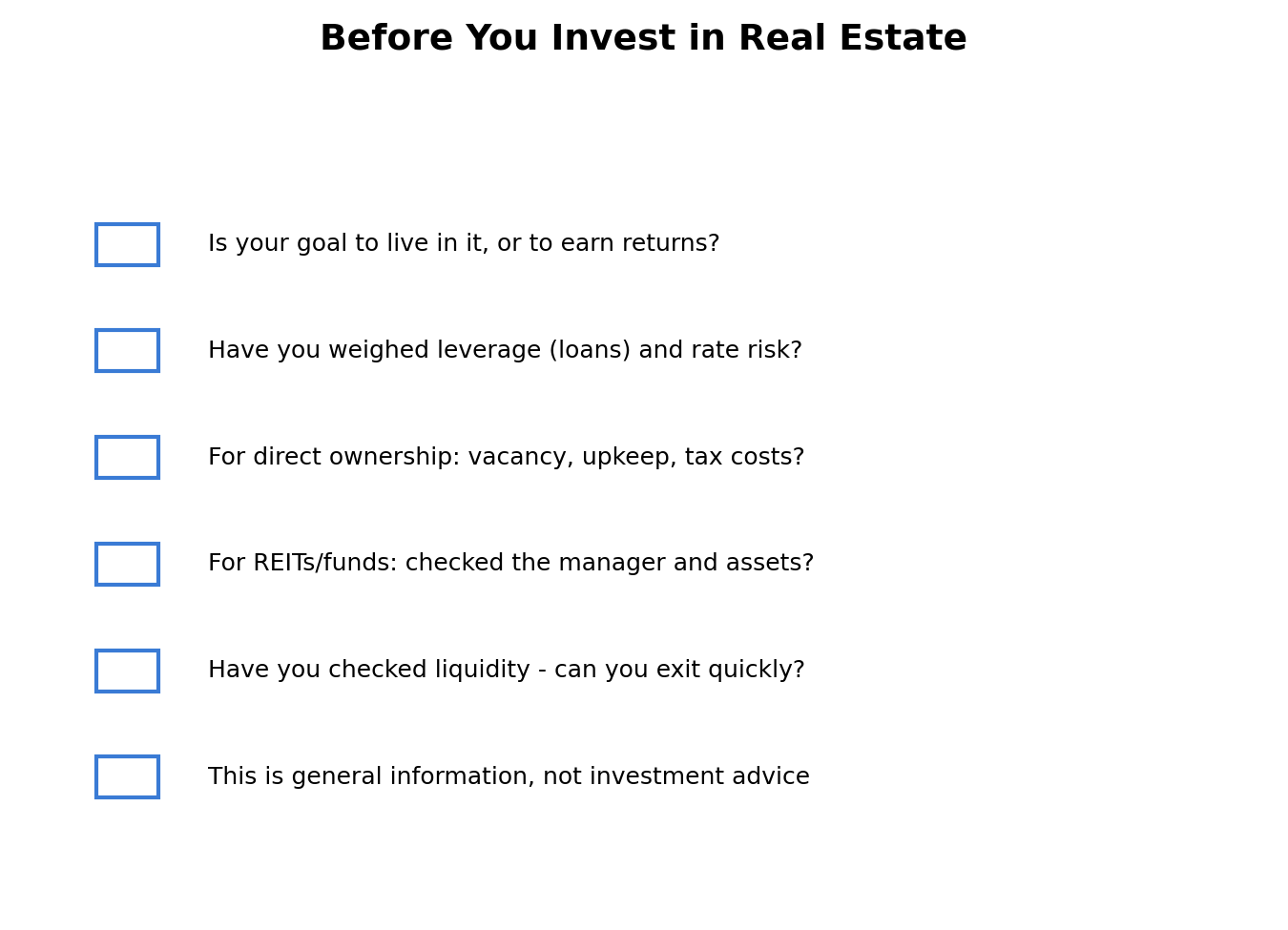
Wrap-up
Real estate investing broadly splits into two paths: buying and managing property directly, or investing indirectly through securities like REITs. Each comes with a different balance of liquidity, management burden, and capital required, so it's worth understanding your own situation and risk tolerance first. This post is general information, not a recommendation of any specific product or property, and any investment decision should be made carefully after doing your own research.
#RealEstate #RealEstateInvesting #REITs #REIT #AssetManagement #IndirectInvesting #DirectInvesting #RealEstateFund #RentalIncome #CapitalGains #Leverage #Dividends #PropertyMarket #InterestRates #PersonalFinance #InvestingBasics #BeginnerInvesting #CommercialRealEstate #LandInvesting #ApartmentInvesting #REITDividends #SmallCapitalInvesting #AssetAllocation #InvestmentEducation #RealEstateTrust
'자산관리' 카테고리의 다른 글
| Asset Management :: How to Read a Property Register Before You Sign (0) | 2026.07.11 |
|---|---|
| 자산관리 :: 부동산 계약 전, 등기부등본 이렇게 확인하세요 (0) | 2026.07.11 |
| 자산관리 :: 부동산 투자, 직접 살까요 리츠로 간접투자할까요? (1) | 2026.07.11 |
| Asset Management :: Crypto 101 — What to Know Before You Invest in Coins (0) | 2026.07.10 |
| 자산관리 :: 코인 투자, 시작 전에 꼭 알아야 할 기본 개념 (0) | 2026.07.10 |