2026. 7. 13. 03:26ㆍ자산관리
Hello!
Today's post looks at how interest rates and inflation affect the stock market.
Why does the stock market swing every time a rate headline hits the news?
With geopolitical tension pushing oil prices around and inflation worries creeping back in, even a single rate comment can send markets moving these days. Let's break down the relationship in plain terms.
Starting with the big picture: when prices rise too fast, central banks raise interest rates to cool off overheated demand. Higher rates mean borrowing gets more expensive, so households and businesses spend and invest less, which in turn eases the upward pressure on prices.
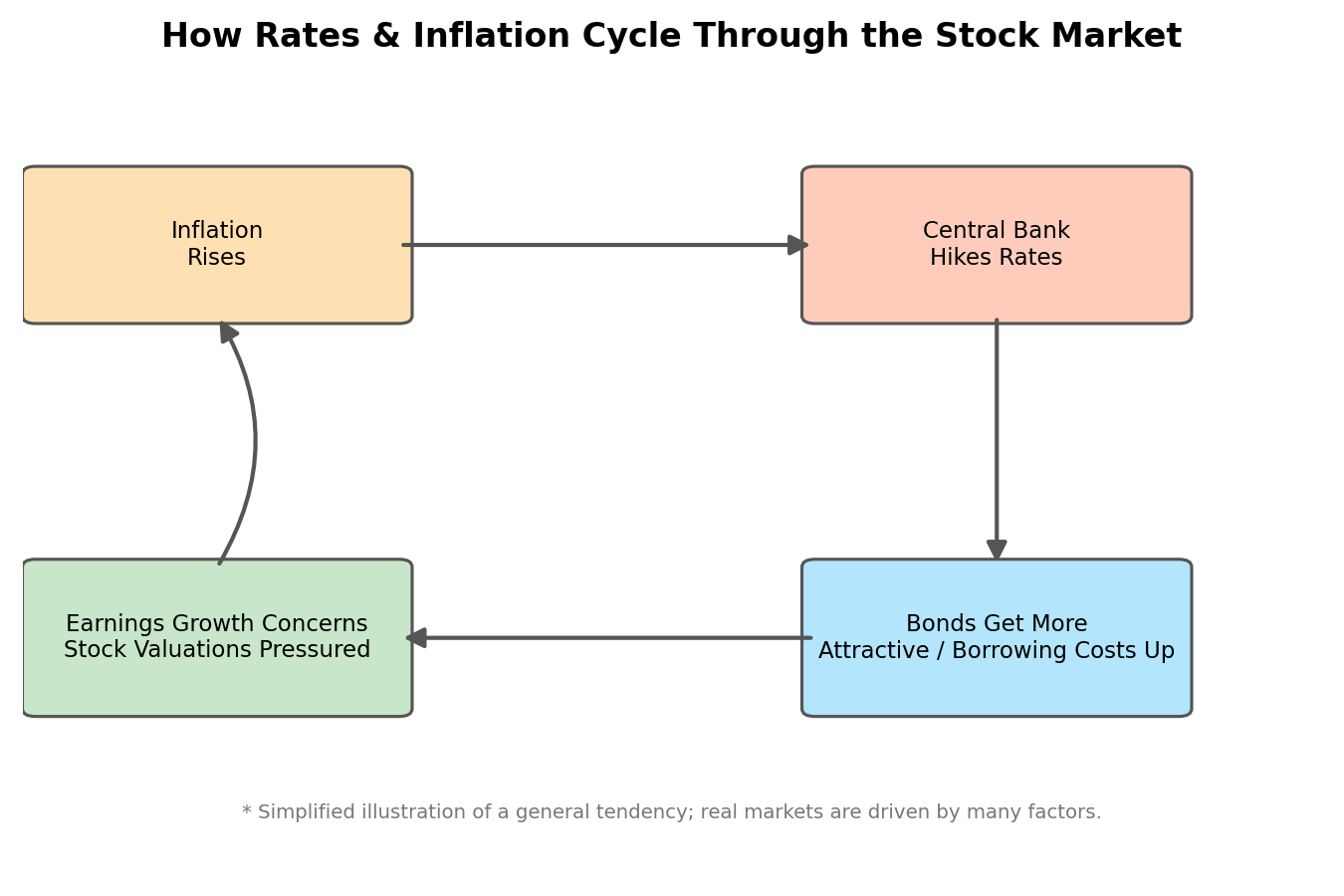
So how does this cycle actually flow through to the stock market?
When rates rise, safer assets like bonds start offering better yields, which makes stocks relatively less attractive by comparison. Growth stocks, whose value depends heavily on future earnings, tend to feel this the most — a higher discount rate lowers the present value of those future profits, adding extra pressure to their valuations.
Dividend and value stocks, on the other hand, often get more attention during rate-hike periods thanks to their steady cash flows. Companies also feel the pinch directly, since higher rates make it more expensive to borrow for expansion, leading many to scale back investment plans.
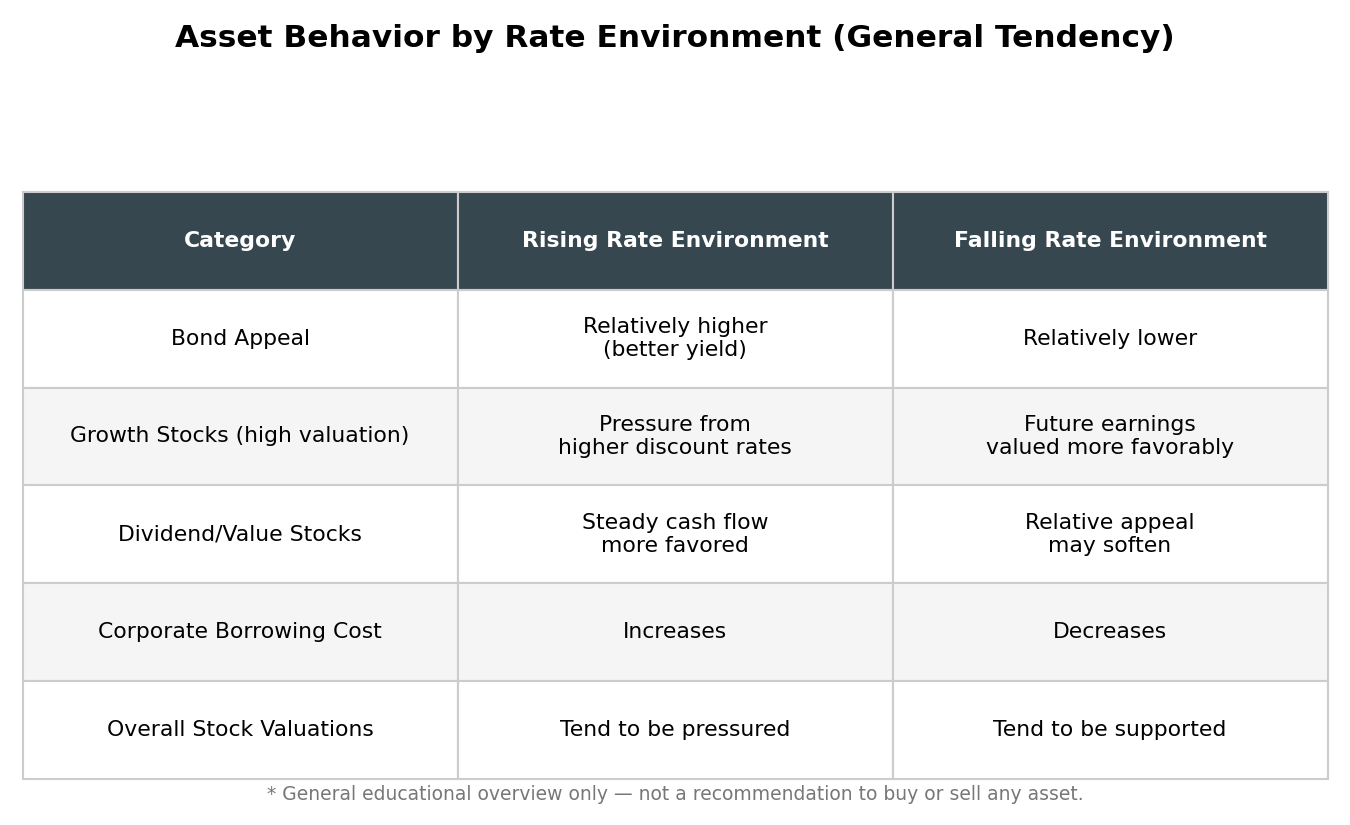
So what can an investor actually do in an environment like this?
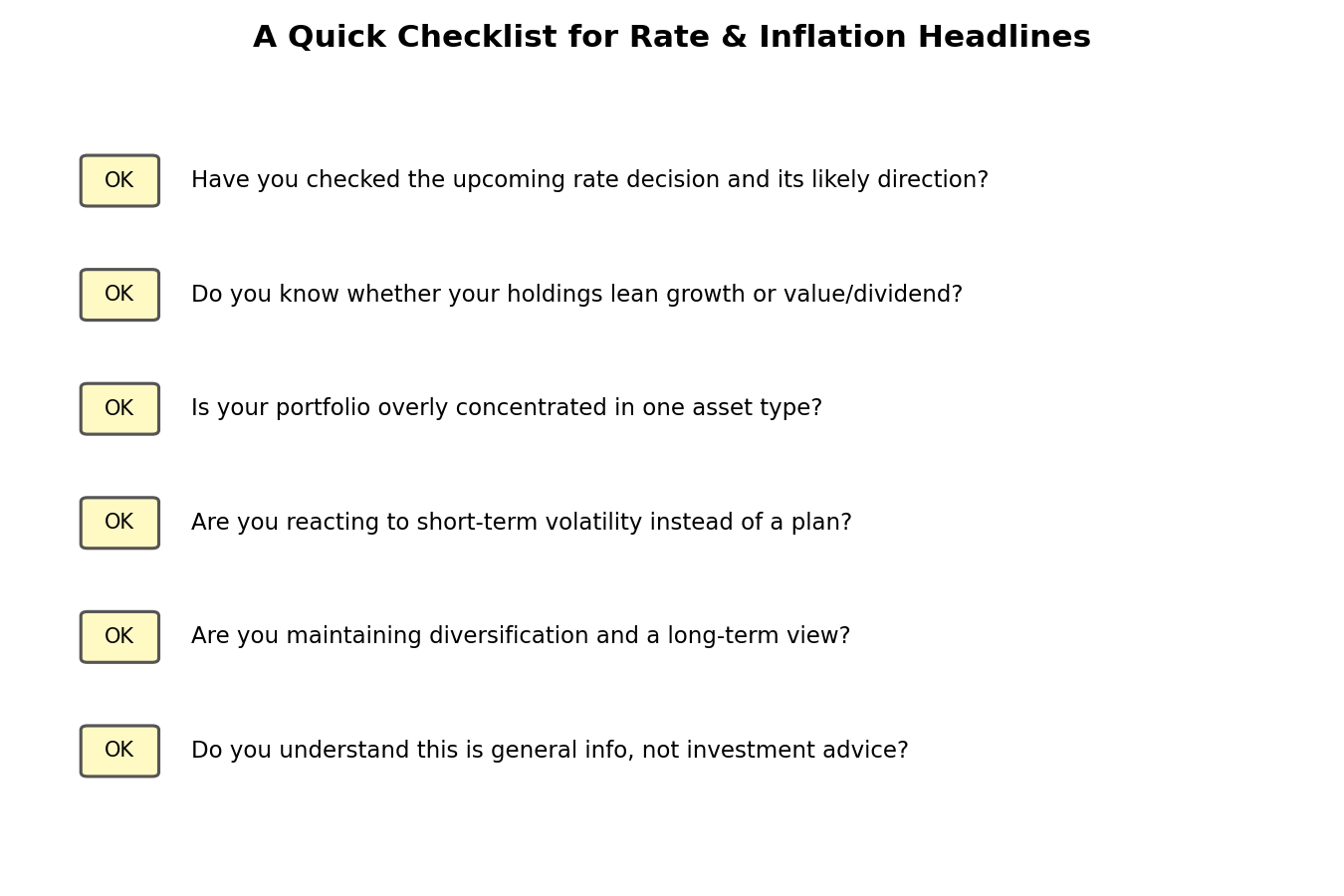
A good starting point is figuring out whether your holdings lean toward growth or toward dividend/value stocks. Rather than reacting to every single rate announcement, keeping a diversified portfolio and a long-term perspective tends to help you ride out the volatility.
Instead of buying or selling in a hurry based on short-term headlines, it's usually more valuable to understand the bigger picture and stick to your own investing principles.
Summary
Interest rates and inflation are two of the biggest macro forces moving the stock market. When rates rise, bonds become more attractive and growth-stock valuations come under pressure, while dividend and value stocks tend to get relatively more attention — keeping that pattern in mind can make market headlines easier to interpret. That said, this post is general educational information, not investment advice recommending any specific stock or trade timing, and any investment decisions and their outcomes are your own responsibility.
#AssetManagement #Stocks #StockMarket #InterestRates #Inflation #CentralBank #RateHike #GrowthStocks #ValueStocks #DividendStocks #Bonds #Portfolio #Diversification #InvestingBasics #PersonalFinance #FinancialEducation #LongTermInvesting #RiskManagement #InvestingTips #MarketNews #Economy101 #FinancialLiteracy #InvestingForBeginners
'자산관리' 카테고리의 다른 글
| Asset Management :: Perpetual Futures Have No Expiry Date — How Are They Different From Regular Futures? (0) | 2026.07.13 |
|---|---|
| 자산관리 :: 선물거래, 만기 없는 무기한 선물까지 등장했다는데 뭐가 다를까요? (1) | 2026.07.13 |
| 자산관리 :: 금리와 인플레이션이 오르면 주식시장은 왜 흔들릴까요? (0) | 2026.07.13 |
| Asset Management :: How to Read a Property Register Before You Sign (0) | 2026.07.11 |
| 자산관리 :: 부동산 계약 전, 등기부등본 이렇게 확인하세요 (0) | 2026.07.11 |