2026. 8. 3. 16:46ㆍ자산관리
Hello everyone.
Today I want to talk about a trend reshaping Korea's rental market: the shift from jeonse (lump-sum deposit leases) to wolse (monthly rent), and the rent conversion rate that connects the two.
Recent data shows that roughly six out of ten new lease contracts for small apartments in Seoul are now monthly-rent deals. As jeonse listings shrink and deposits climb, more renters are quietly moving toward monthly rent arrangements.
Why are so many people switching from jeonse to wolse these days? Let's start from that question and work through how the rent conversion rate actually works.
If you've ever wondered whether jeonse or wolse makes more sense for you, this post should give you a clearer way to think it through.

Why the Shift Toward Monthly Rent Happened So Fast
This shift didn't happen overnight. During years of low interest rates, landlords had little reason to prefer wolse, since depositing a large jeonse sum in a bank barely beat the interest they'd earn. Once rates rose, the math changed.
Collecting monthly rent became more attractive than parking a large deposit in a savings account, so landlords increasingly began favoring wolse or semi-wolse (a hybrid with a smaller deposit plus monthly rent) over pure jeonse.
Concerns about jeonse fraud cases have also played a role. As trust in the pure jeonse system wobbled, some tenants themselves started preferring wolse or semi-wolse, trading a lower deposit risk for a recurring monthly cost.
On top of that, when certain areas like Dongtan in Hwaseong get designated as regulated zones, demand often shifts to nearby, less-regulated areas. That kind of regional ripple effect also reshapes rent and deposit structures across the wider market.
What Exactly Is the Rent Conversion Rate, and How Do You Calculate It
The rent conversion rate is the percentage used to convert all or part of a jeonse deposit into monthly rent. Think of it as an exchange rate between a lump-sum deposit and a recurring monthly payment.
The formula is simpler than it sounds: monthly rent equals (original deposit minus reduced deposit) multiplied by the conversion rate, divided by 12. To convert monthly rent back into a deposit equivalent, multiply the rent by 12 and divide by the conversion rate.
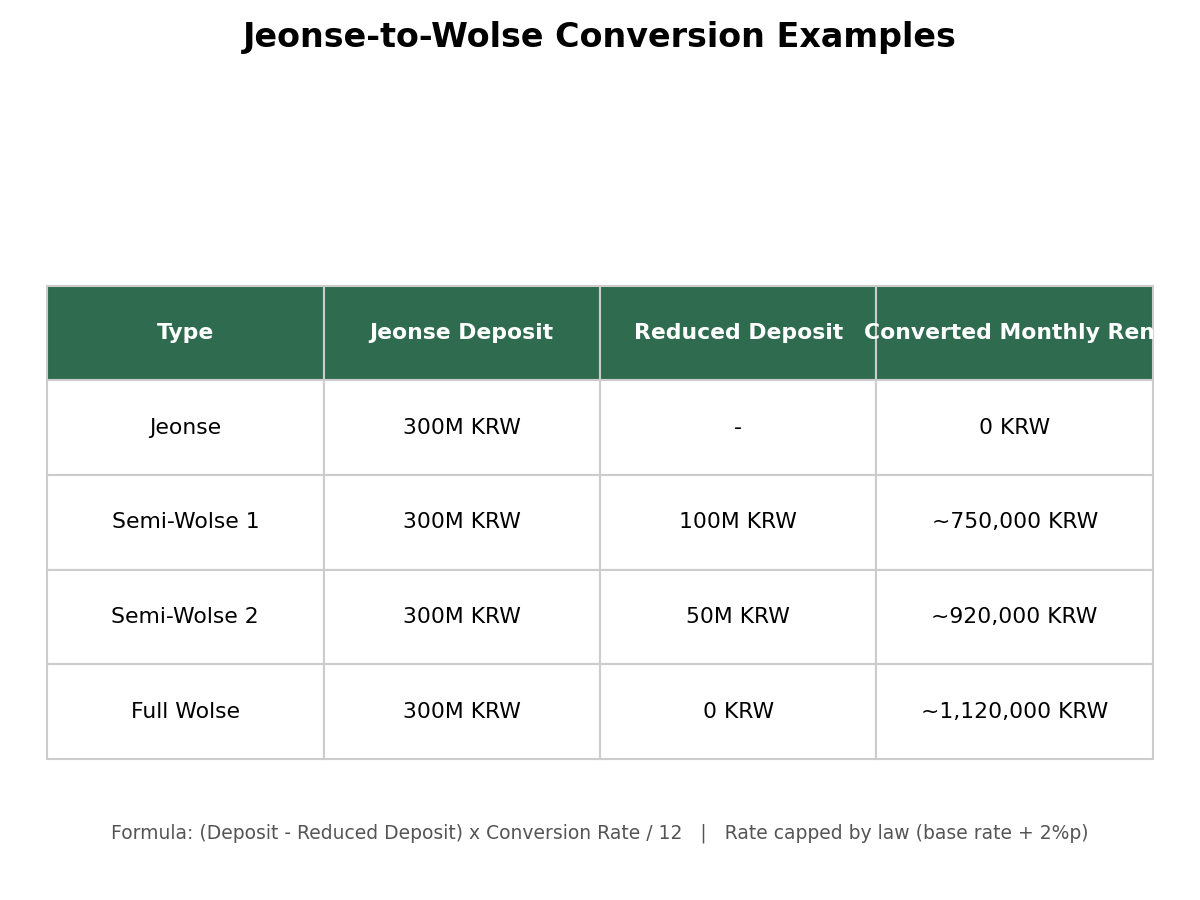
There's an important cap to keep in mind: under Korea's Housing Lease Protection Act, the legal ceiling for the conversion rate is set at the Bank of Korea's base rate plus 2.0 percentage points. That ceiling can shift as the base rate changes, so it's worth double-checking the exact figure at the time you sign a contract.
That legal cap doesn't apply universally, though. It's enforced when an existing tenant renews or changes contract terms, but for a brand-new contract with a new tenant, the landlord and tenant can freely agree on a market-rate conversion. That's why the effective rate can vary even within the same building depending on contract type.
What Tenants Should Check Before Signing
First, get in the habit of running the numbers yourself. If a landlord proposes a monthly rent, use the formula above to back-calculate the implied conversion rate, then compare it against the legal cap and typical market rates in the area.
Second, compare total housing cost across both options rather than just the headline numbers. Factor in jeonse loan interest, any tax credits tied to monthly rent payments, and differences in management fees to see which option is actually cheaper for you.
Third, always check the property registry and whether deposit-return insurance is available before signing. Semi-wolse and wolse contracts still involve a deposit, so the risk of not getting your deposit back is very real, just like with pure jeonse.
Finally, think about how long you plan to stay. If you expect to move again soon, a lower upfront deposit with monthly rent may suit you better. If you're settling in for the long haul, jeonse's lack of a recurring monthly payment can be the more comfortable choice.
'자산관리' 카테고리의 다른 글
| Real Estate :: Why Is Everyone Suddenly Talking About Court Auctions? A Beginner's Guide (0) | 2026.08.04 |
|---|---|
| 자산관리 :: 요즘 왜 다들 경매로 몰릴까? 부동산 경매 기초부터 절차까지 총정리 (0) | 2026.08.04 |
| 부동산 :: 전세의 월세화, 왜 이렇게 빨라졌을까? 전월세전환율 총정리 (0) | 2026.08.03 |
| Asset Management :: What Exactly Is a Stablecoin? A Beginner's Guide to Crypto's Digital Dollar (0) | 2026.08.01 |
| 자산관리 :: 스테이블코인이 뭐길래 이렇게 화제일까요? 코인 투자 기초 총정리 (1) | 2026.08.01 |