2026. 8. 4. 18:33ㆍ자산관리

Hello there.
Today I'm writing about court property auctions, a topic that has suddenly become a hot subject for a lot of homebuyers.
As governments in many markets keep tightening regulations on regular home purchases, more buyers are turning their attention to auctions, where some of those rules don't apply. In fact, the winning-bid ratio for Seoul apartment auctions recently hit its highest level since 2021, according to recent reporting.
Still, the word "auction" can sound intimidating. The procedure feels unfamiliar, and just hearing the word "court" makes the whole process feel more complicated than it needs to be.
Can you really buy a home cheaper through a court auction?
What Is a Court Property Auction?
A court property auction is a process where, if a debtor fails to repay a debt, the court sells the debtor's property at the request of a creditor and uses the proceeds to settle the debt. In other words, it's not a private transaction between two individuals but a public sale run through the court system.
Auctions generally fall into two types: voluntary auctions, which are based on a pre-existing security right like a mortgage, and compulsory auctions, which are based on a separate court judgment or title of execution. In practice, though, the actual process is largely the same either way.
The biggest difference from a regular sale is how the price is set. In a normal sale, the price is negotiated between buyer and seller, but in an auction, whoever submits the highest bid among competing bidders wins the property. That means some properties sell below market value, while popular ones can end up selling at or even above market price.
Interestingly, in areas under strict regulations, such as designated land-use permit zones, buying through auction can let a buyer skip certain permit requirements that would otherwise apply to a regular purchase. That has drawn extra investor interest lately, though whether this trend continues will likely depend on future policy changes, so take it as background context rather than a guarantee.
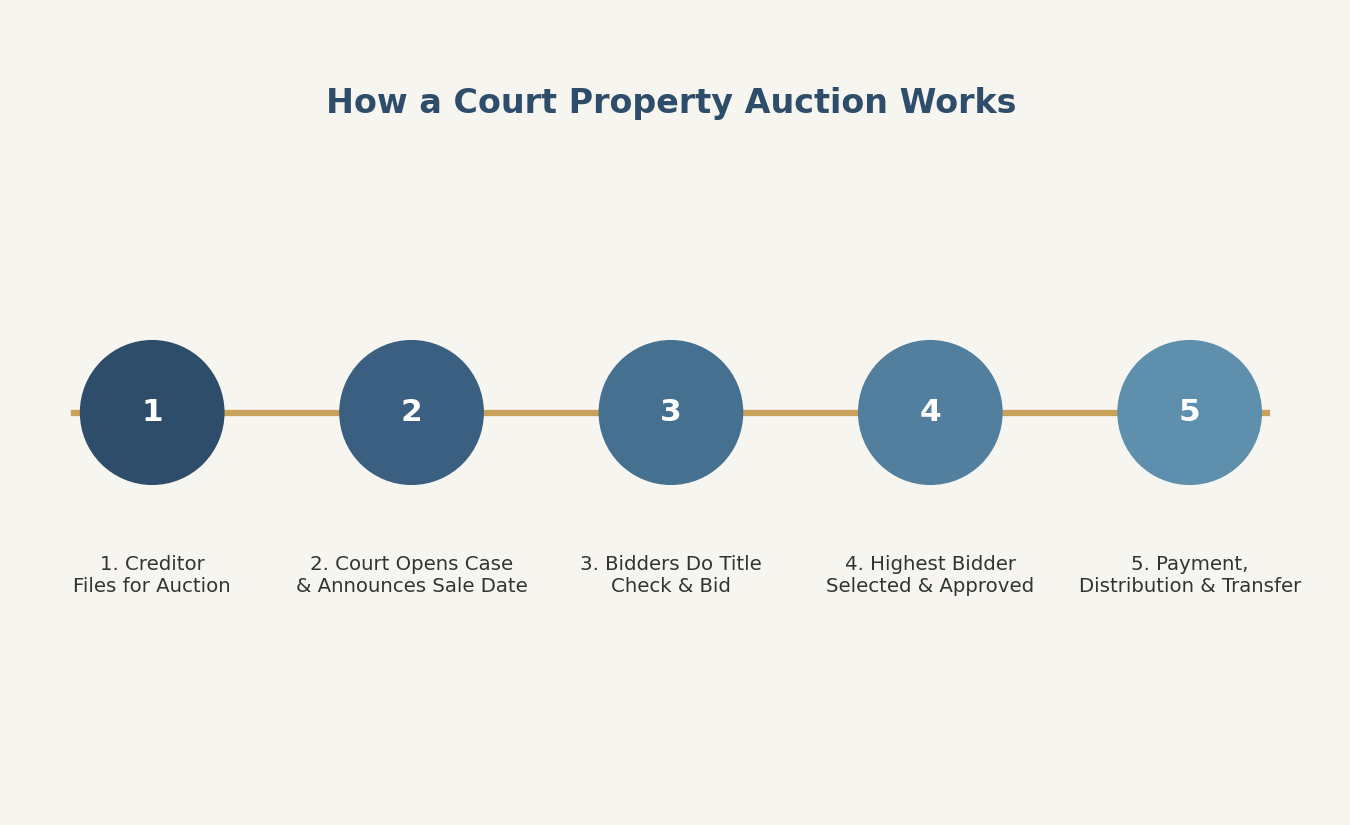
How the Auction Process Works
The process starts when a creditor files a request for auction with the court. Once the court accepts the filing, it issues an order opening the auction case, then goes through preparation steps before announcing the sale date and the property details publicly.
Once that announcement is out, anyone interested in bidding starts gathering information and doing their own title research. This means carefully checking what rights are registered against the property, and if there's a tenant, confirming the deposit amount and whether that tenant properly filed a distribution claim before the deadline.
Bidding is usually done through a "date-bidding" method, where bidders show up in person at the court on the scheduled sale date, submit a bid sheet to the court officer, and the bids are opened right there. Bidders also need to submit a bid deposit, which is a set percentage of the minimum sale price, along with their bid.
Whoever submits the highest bid is named the top bidder, and once the court issues a sale approval decision and the buyer pays in full, ownership transfers to them. After that, the sale proceeds are distributed to the creditors, which wraps up the entire process.

What to Know Before You Bid
The single most important step in an auction is title research. If the property has a tenant, the key thing to check is whether that tenant filed a distribution claim before the deadline. Miss this detail, and the winning bidder could end up on the hook for a deposit they never expected to cover.
Clearing out the current occupant is another piece to plan for. In a regular sale, the seller typically hands over an empty property, but in an auction, the winning bidder often has to negotiate directly with whoever is living there, and sometimes has to go through a formal court order to have them removed.
It's also worth knowing what happens when a sale fails. If nobody bids or the highest bid comes in under the minimum sale price, the auction fails and gets rescheduled, usually with the minimum price lowered by a set percentage. That's why you'll sometimes see the same property come up for auction multiple times at progressively lower prices.
This article is meant to explain how the auction system generally works and is not a recommendation to bid on any specific property. Auctions can carry risks tied to legal claims or the property's condition that aren't always obvious upfront, so if you're seriously considering bidding, review the official property registry yourself and consult a licensed professional, such as a judicial scrivener or an auction specialist.

'자산관리' 카테고리의 다른 글
| Asset Management :: What Are PER and PBR? A Beginner's Guide to Stock Valuation Metrics (0) | 2026.08.05 |
|---|---|
| 자산관리 :: PER과 PBR이 뭐길래? 주식 가치평가 지표 기초 총정리 (0) | 2026.08.05 |
| 자산관리 :: 요즘 왜 다들 경매로 몰릴까? 부동산 경매 기초부터 절차까지 총정리 (0) | 2026.08.04 |
| Real Estate :: Why Is Jeonse Turning Into Monthly Rent So Fast? Understanding th (0) | 2026.08.03 |
| 부동산 :: 전세의 월세화, 왜 이렇게 빨라졌을까? 전월세전환율 총정리 (0) | 2026.08.03 |