2026. 7. 26. 19:55ㆍ취미생활/축구
Hello,
Today's post is about one of the most iconic institutions in world football: the history of FC Barcelona.
If you follow football even casually, you've probably heard the nickname "Barca" — but this club's story goes far beyond trophy counts, tightly woven into the identity of an entire region.
Why do people say Barcelona is "more than a club"? Let's find out where that phrase actually came from.
Origins and Early Years
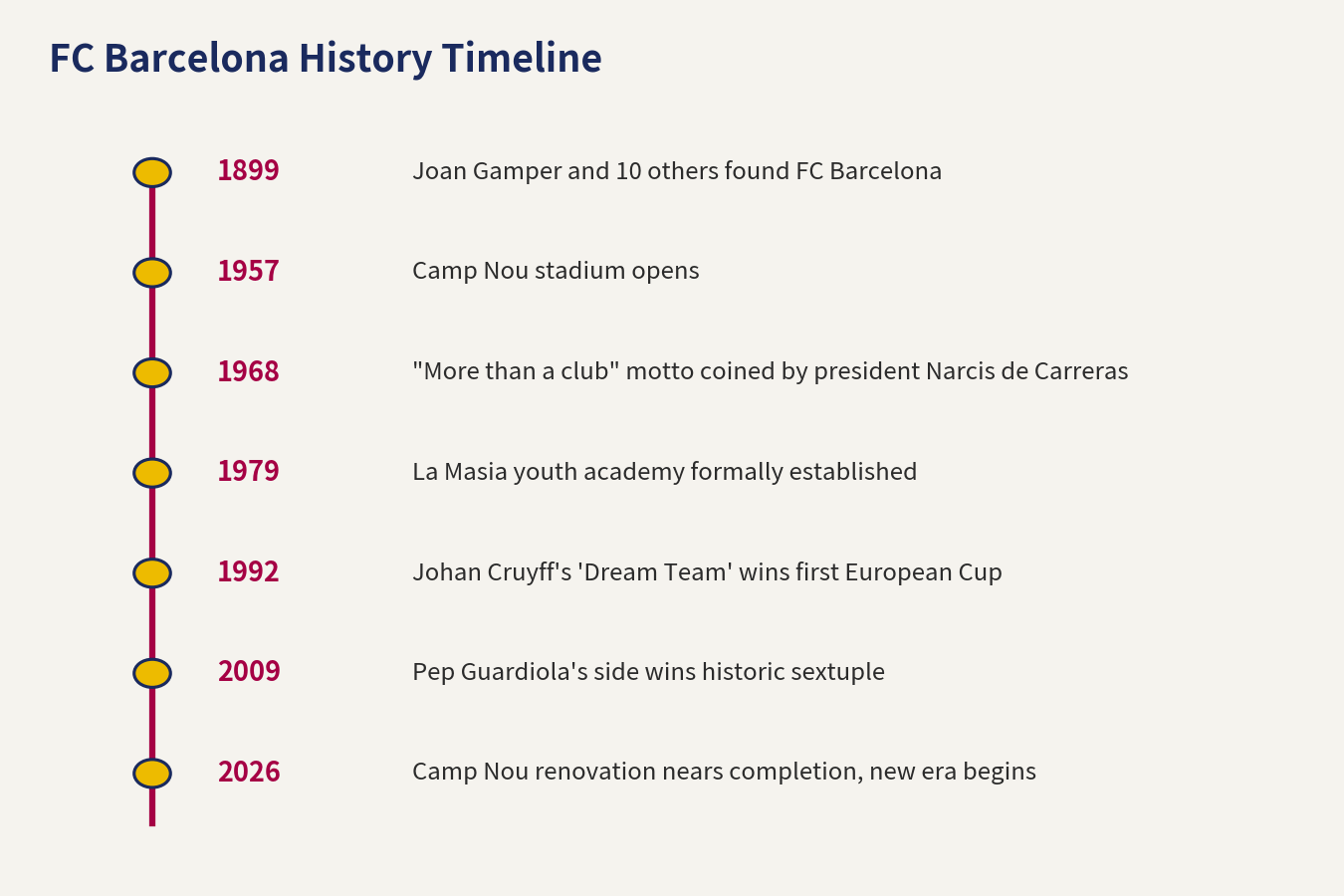
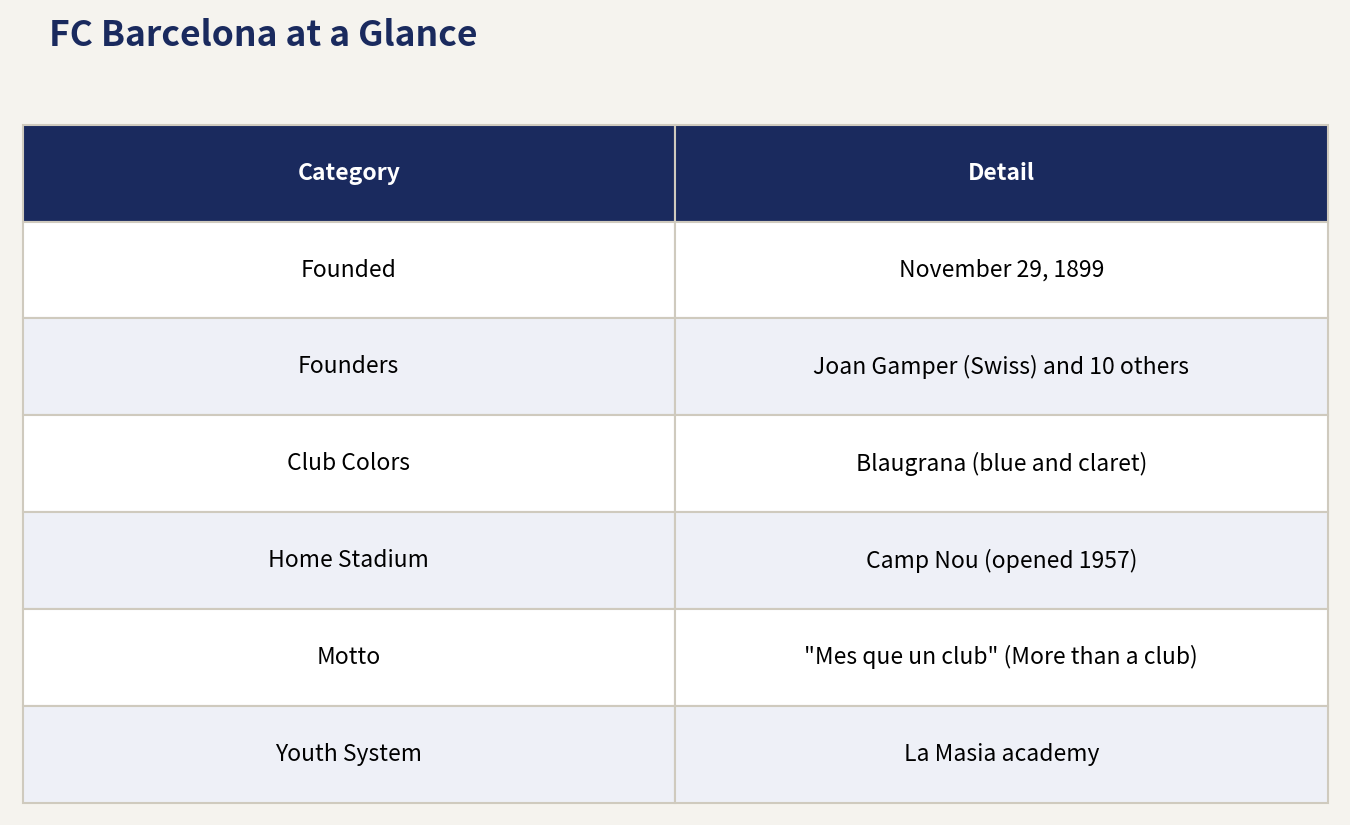
FC Barcelona was founded on November 29, 1899, when Swiss businessman Joan Gamper gathered ten other sportsmen at a gym in Barcelona to establish the club. English and German players were reportedly among the founders, making it an international effort from the very start.
The club's iconic blue and claret colors, known as "blaugrana," are said to trace back to the colors associated with Gamper's home region in Switzerland. What started as a personal touch became one of the most recognizable kits in world football.
The club's early decades were far from smooth. Spain's civil war and the political turmoil that followed brought the club close to collapse more than once, and club figures reportedly suffered tragic consequences during that period.
Despite these hardships, the club survived largely because it functioned as more than a sports organization — it became a rallying point for the local community.
La Masia and the Club's Philosophy
No discussion of Barcelona is complete without mentioning La Masia, its youth academy. Formally established around 1979, La Masia has long aimed to develop not just skilled players but well-rounded individuals through education alongside football training.
In the early 1990s, Johan Cruyff's so-called "Dream Team" won the club's first European Cup (today's Champions League) in 1992, laying the philosophical groundwork for Barcelona's style of play. Many trace the origins of "tiki-taka," the possession-based passing style, back to this era.
Later, in 2009, under manager Pep Guardiola, the club achieved a historic sextuple — winning all six competitions it entered in a single season, one of the most celebrated periods in the club's history.
Interestingly, many of the key players during that era came directly from La Masia, often cited as proof that the academy's philosophy translates into real results on the pitch.

The Weight Behind "More Than a Club"
Barcelona's motto, "Mes que un club" ("more than a club"), is generally attributed to president Narcis de Carreras, who first used the phrase upon taking office in 1968. Far from a simple marketing slogan, the phrase reportedly captured the club's role as a symbol of Catalan identity during the Franco dictatorship.
During a period when even speaking Catalan in public was restricted, Camp Nou reportedly became one of the few places where people could express that identity freely. This history is a large part of why Barcelona is still seen as more than just a football club today.
Camp Nou itself opened in 1957 and has undergone several expansions since, becoming one of the largest stadiums in Europe. A major renovation is currently underway, and capacity is expected to increase significantly once it's complete.
Good to Know
From Johan Cruyff to Lionel Messi, the list of legendary players who have worn the Barcelona jersey reads like a highlight reel of football history itself.
The rivalry with Real Madrid, known as "El Clasico," has grown into an event that captures the attention of all of Spanish society, not just football fans — a reflection of the regional and political symbolism both clubs carry.
That said, the club has faced real financial and squad-related challenges in recent years. Alongside its storied past, Barcelona is also navigating some very present-day difficulties.
'취미생활 > 축구' 카테고리의 다른 글
| Soccer :: Why Is Offside So Hard to Judge? A Rules Deep Dive (0) | 2026.07.27 |
|---|---|
| 축구 :: 오프사이드, 왜 이렇게 판정하기 어려울까요? 경기 규칙 총정리 (0) | 2026.07.27 |
| 축구 :: FC 바르셀로나는 어떻게 "클럽 그 이상"이 됐을까? 브랜드별 역사 총정리 (1) | 2026.07.26 |
| Soccer :: How Did the UEFA European Championship Become Europe's Ultimate Footba (0) | 2026.07.25 |
| 축구 :: 유로는 어떻게 유럽 최강팀을 가리는 무대가 됐을까? 국제대회 총정리 (0) | 2026.07.25 |