2026. 7. 27. 21:33ㆍ취미생활/축구
Hello everyone.
Today I'm writing about one of the most debated rules in soccer: the offside rule.
Whether you're new to the game or you've been watching for years, offside calls have a way of making everyone pause and squint at the screen. Anyone who's watched a broadcast freeze on a VAR line for what feels like forever knows the feeling.
Offside has actually been part of soccer since the sport's earliest official rules, but it's gone through major changes over more than 150 years to become what it is today. Few rules reflect the evolution of the game and its fans' expectations quite like this one.
"Do you know exactly when offside gets called?"
What Is the Offside Rule
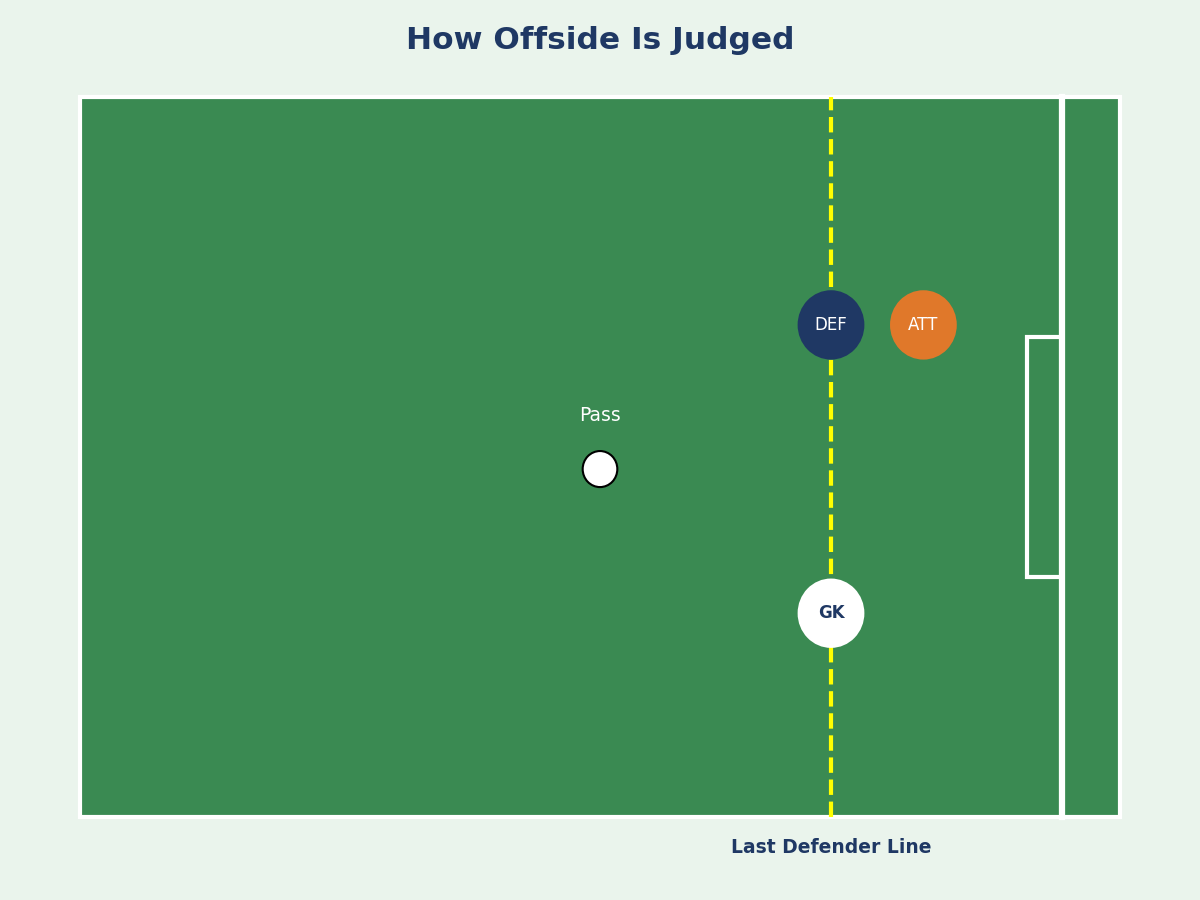
In simple terms, offside is called when an attacking player is nearer to the opponent's goal line than the ball and the second-last opponent (usually the last outfield defender) at the moment a teammate passes to them.
Being in an offside position isn't a foul by itself. It only becomes an offense when that player touches the ball, interferes with an opponent, or is judged to gain an advantage from being in that position.
One detail that trips a lot of people up: offside doesn't apply in a player's own half of the field. It only comes into play once a player crosses into the opponent's half.
There are also exceptions for throw-ins, corner kicks, and goal kicks — a player can't be offside directly from any of those restarts. Good to keep in mind next time you're watching a match.
Origins and Key Changes
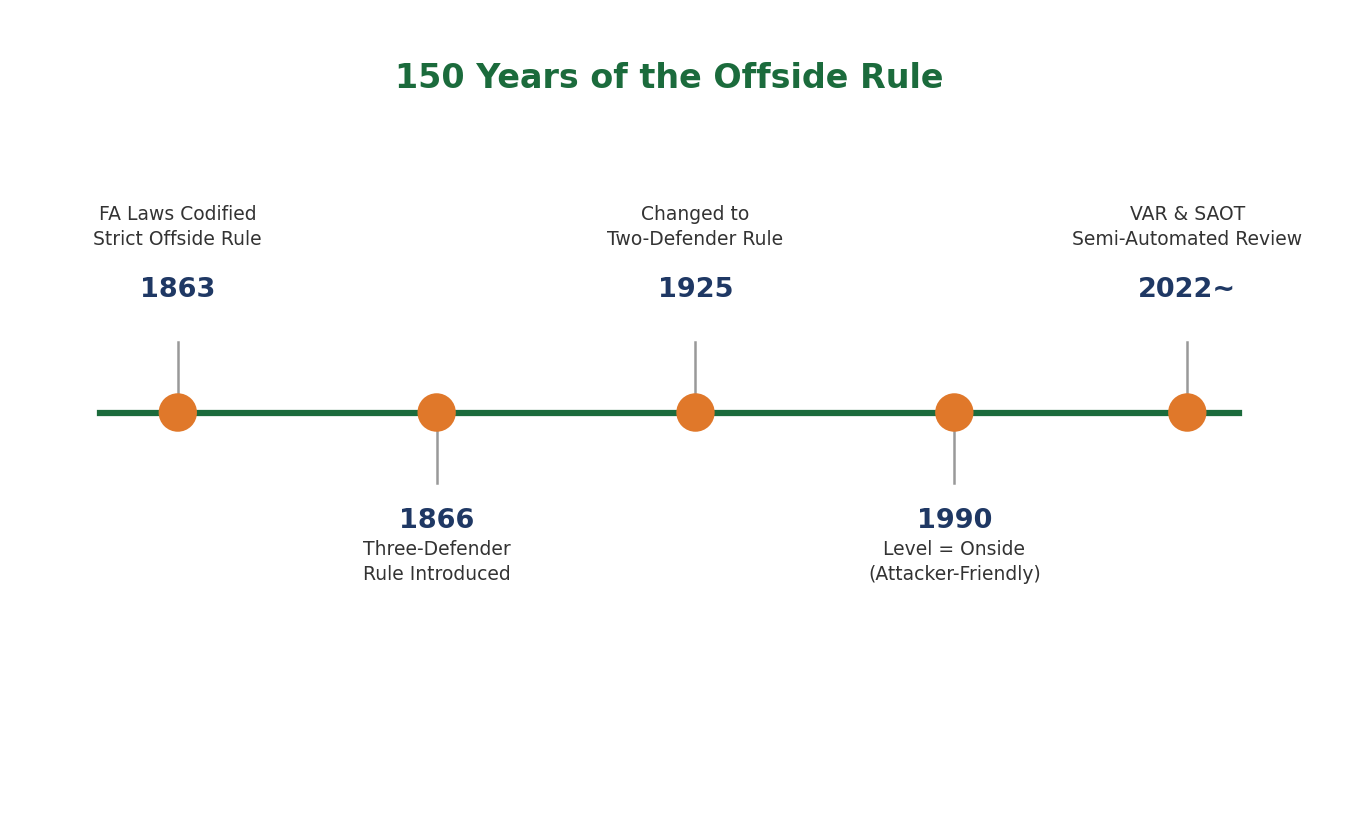
The offside rule dates back to 1863, when the Football Association in England first codified the laws of the game. The earliest version was far stricter than today's — an attacking player standing ahead of the ball was considered offside almost automatically.
The rule was loosened in 1866, when it became acceptable for an attacker to be onside as long as three defenders (including the goalkeeper) were positioned between them and the goal line.
In 1925, the International Football Association Board (IFAB) lowered that number to two defenders — typically the goalkeeper plus one outfield player. This shift is often credited with opening up more attacking play.
The most significant recent change came in 1990, when the law was adjusted so that an attacker level with the second-last defender is considered onside rather than offside. That version of the rule is still in effect today.

VAR and Semi-Automated Offside Technology
The introduction of VAR (Video Assistant Referee) made offside calls dramatically more precise. Where officials once relied purely on the assistant referee's eye, lines can now be drawn on screen to check margins of just a few centimeters.
That precision comes with a cost, though: VAR reviews can take a long time, and debates over exactly which body part should be used to draw the offside line are still common.
Semi-automated offside technology (SAOT) was developed to address that gap. It was first used officially at the 2022 Qatar World Cup, combining player-tracking sensor data with multiple cameras to speed up the review process.
Reports suggest SAOT has cut average offside review times from a couple of minutes down to well under a minute in many cases. It's reasonable to expect the technology will keep evolving from here.
Good to Know
One well-known tactic built entirely around this rule is the "offside trap," where a defensive line steps forward together to catch attackers in an offside position. It requires near-perfect timing among defenders to pull off successfully.
A detail that confuses a lot of fans: the offside determination is made at the moment the ball is played, not when the attacker receives it. So a player who was onside when the pass left a teammate's foot can keep running forward without being called offside.
Hands and arms are excluded from offside judgments. Only body parts that could legally be used to score — the torso, head, and legs — count when officials draw the line.
If you're new to watching soccer, it helps to remember that the line drawn on VAR replays simply marks the position of the last defender. Keeping that one image in mind makes the whole rule much easier to follow.
'취미생활 > 축구' 카테고리의 다른 글
| Soccer :: How Did Pele Become the King of Football? A Legend's Story (0) | 2026.07.29 |
|---|---|
| 축구 :: 펠레는 어떻게 '축구의 신'이 됐을까? 레전드 스타 총정리 (0) | 2026.07.29 |
| 축구 :: 오프사이드, 왜 이렇게 판정하기 어려울까요? 경기 규칙 총정리 (0) | 2026.07.27 |
| Soccer :: How Did FC Barcelona Become "More Than a Club"? A Brand History (0) | 2026.07.26 |
| 축구 :: FC 바르셀로나는 어떻게 "클럽 그 이상"이 됐을까? 브랜드별 역사 총정리 (1) | 2026.07.26 |