2026. 7. 20. 09:34ㆍ자동차
Hi everyone.
Today's post is about the heart of every electric vehicle: the battery, and how its technology has evolved over time.
Do you know what kind of battery chemistry actually powers the EV you drive today? The battery pack under the floor of a modern electric car is the result of more than a century of trial and error.
I work on charging systems for electrified equipment, so I like to look at how battery technology has changed, because it explains a lot about why charging infrastructure looks the way it does today.
In this post, let's walk through the evolution of EV battery technology, from lead-acid all the way to solid-state batteries.
Origins
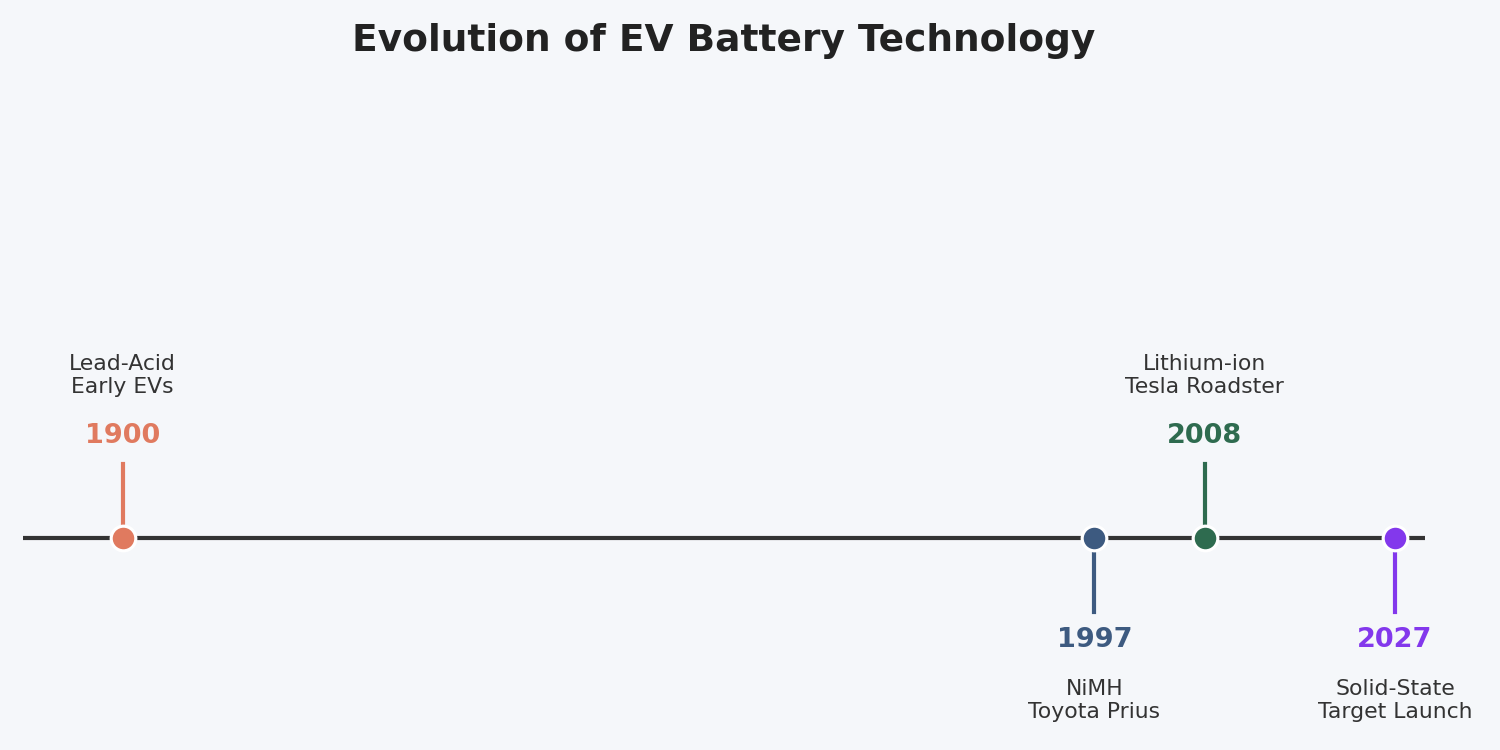
Electric vehicles are often said to be older than gasoline-powered cars. Early EVs that appeared in the late 19th century mostly relied on lead-acid batteries for power.
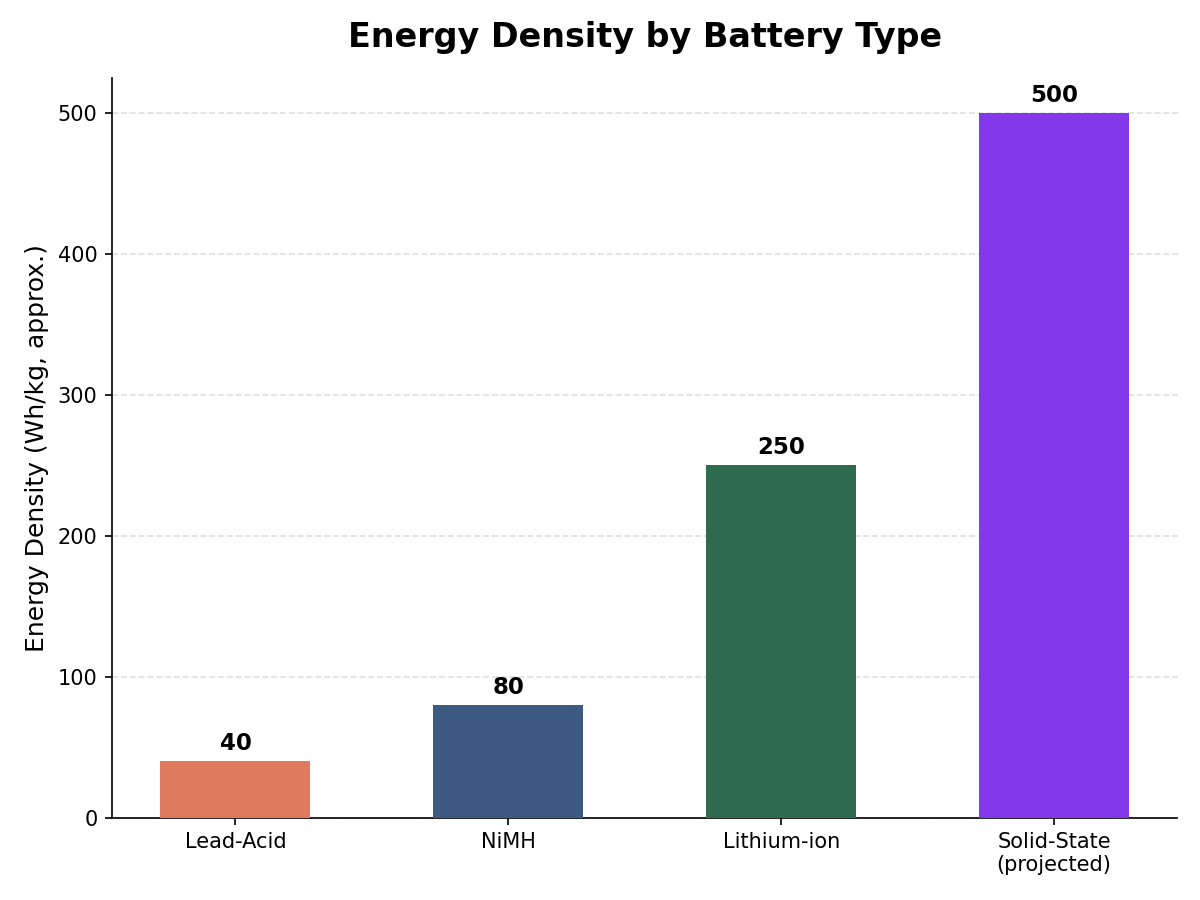
Lead-acid batteries generate electricity through a chemical reaction involving lead and sulfuric acid. They were cheap and simple to build, which made them popular in the early days of the auto industry. Their major drawback was that they were heavy and had low energy density, which limited how far a vehicle could travel on a single charge.
In the 1990s, GM's early EV1 reportedly started out with lead-acid batteries before switching to nickel-metal hydride (NiMH). Toyota's Prius, launched in 1997, also used NiMH batteries and helped kick off the hybrid era.
NiMH batteries offered higher energy density than lead-acid and helped extend driving range, but they would soon hand the spotlight over to lithium-ion technology.
Key Facts
Lithium-ion batteries were first commercialized by Sony in 1991. In the beginning, they were mainly used in small electronics like laptops and camcorders.
The symbolic moment for lithium-ion in the auto industry came with the Tesla Roadster in 2008, widely regarded as the first mass-produced electric car to use lithium-ion cells. That launch helped push the entire EV industry toward lithium-ion as the default battery chemistry.
Compared to NiMH, lithium-ion batteries offer significantly higher energy density and lighter weight, letting a battery pack of the same size deliver much longer range. Throughout the 2010s, automakers rushed to launch lithium-ion-based EVs, and that's when the EV market as we know it today really took shape.
Even within lithium-ion chemistry, there's real variation: NCM cells (nickel-cobalt-manganese) tend to favor higher energy density and longer range, while LFP cells (lithium iron phosphate) are generally known for better safety characteristics and lower cost.

Good to Know
The battery chemistry getting the most attention right now is solid-state. Unlike conventional lithium-ion cells, which use a liquid electrolyte, solid-state batteries replace that liquid with a solid electrolyte.
Switching to a solid electrolyte is said to reduce the fire risk associated with liquid electrolyte leakage, while also allowing for meaningfully higher energy density. Industry watchers expect solid-state cells to offer a notable jump in energy density over today's lithium-ion batteries.
Samsung SDI has reportedly targeted mass production of solid-state batteries for the second half of 2027, and Toyota has said it's aiming to bring solid-state-powered EVs to market around 2027 to 2028. Toyota is also reported to have raised its target driving range from about 1,000 km to 1,200 km.
As battery technology keeps advancing, charging infrastructure has to keep pace. Higher energy density and larger battery capacity both raise the importance of high-power charging and thermal management technology that can refill a pack quickly and safely.
'자동차' 카테고리의 다른 글
| Car :: AC vs DC Charging — EV Charging Basics Explained (0) | 2026.07.21 |
|---|---|
| 자동차 :: 전기차 충전, 완속과 급속은 뭐가 다를까? 충전 기초상식 총정리 (0) | 2026.07.21 |
| 자동차 :: 전기차 배터리, 납축전지에서 전고체까지 기술의 변천사 총정리 (0) | 2026.07.20 |
| Car :: Porsche's First Car Was Actually Electric — A Brand History (0) | 2026.07.18 |
| 자동차 :: 포르쉐의 첫차는 전기차였다? 브랜드 역사 총정리 (0) | 2026.07.18 |