2026. 7. 16. 11:02ㆍ자산관리
Hello.
Today's post is about two terms that come up constantly in futures markets: contango and backwardation, and the roll costs they create for investors.
More and more people invest in commodities or stock indices indirectly through ETFs and ETNs, rather than trading futures contracts themselves.
But a lot of investors get confused about why futures prices move differently from spot prices, and why their long-term returns sometimes don't match what the underlying asset actually did.
Why hasn't your commodity ETF gone up as much as the commodity itself?

What Are Contango and Backwardation?
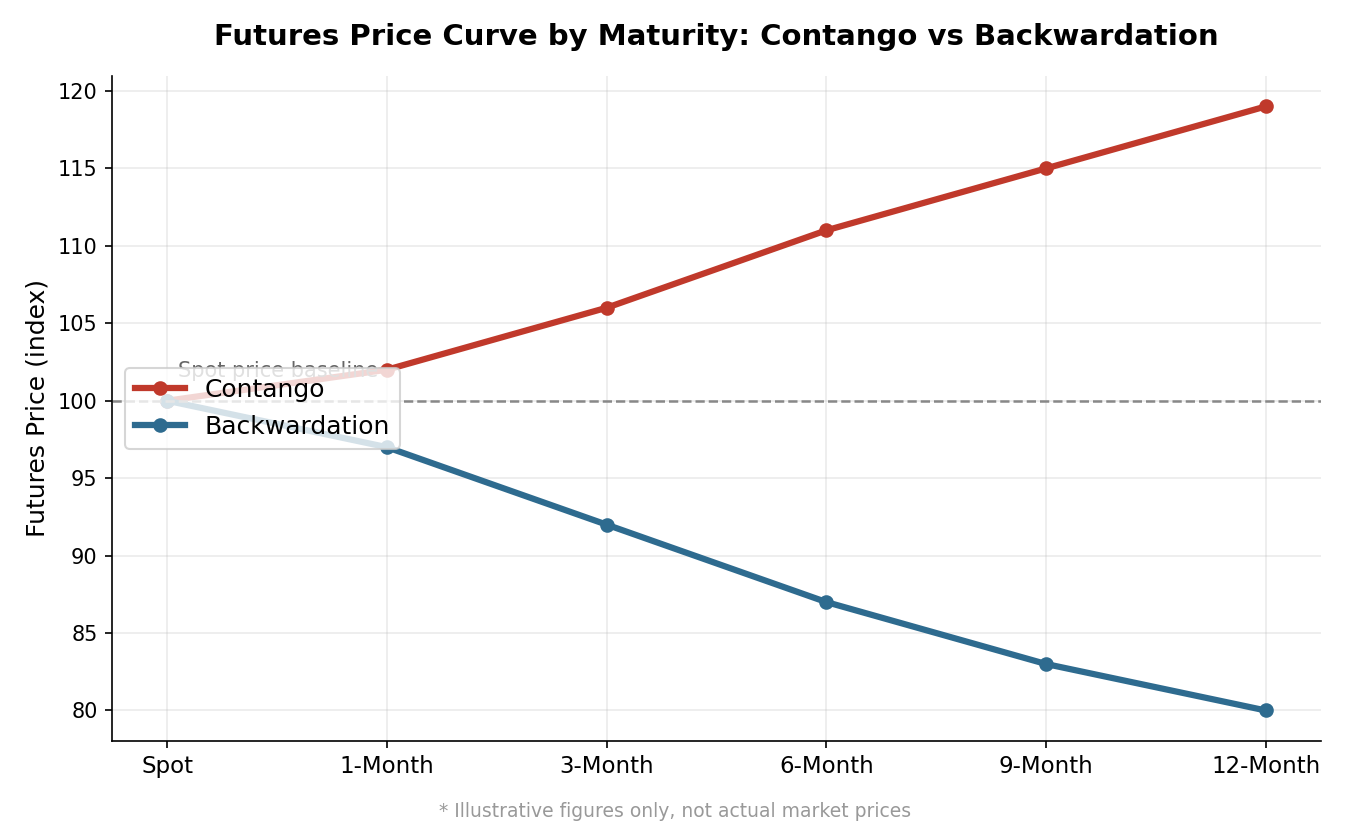
Futures prices don't always move in lockstep with spot prices. If you line up contracts with different expiration dates side by side, you'll often see a curve: prices that rise steadily the further out the maturity, or prices that fall the further out the maturity. These two shapes are called contango and backwardation.
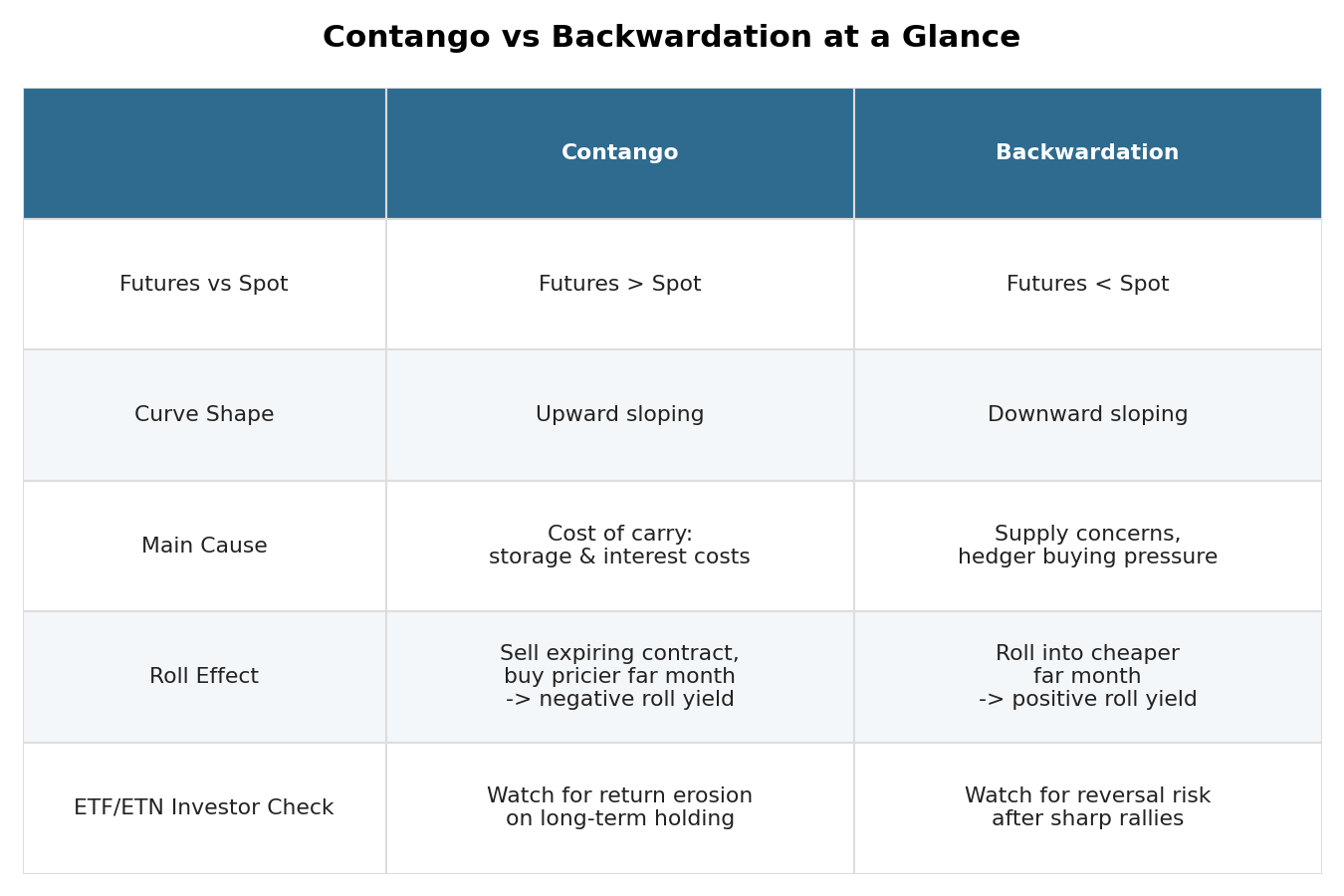
In contango, futures prices sit above the spot price, and the further out the contract, the higher the price tends to be. For commodities, this is usually explained by the "cost of carry" — storage costs, transportation, insurance, and the interest cost of tying up capital until delivery.
Backwardation is the opposite: futures prices sit below the spot price. This can happen when there are concerns about near-term supply shortages, or when producers (hedgers) are more eager to lock in prices by selling futures ahead of time.
It's worth remembering that neither state is permanent. The same commodity can shift between contango and backwardation as market conditions change.
Why Does Rolling Matter?
Futures contracts have expiration dates. So an ETF or ETN that wants continuous exposure to a commodity or index has to regularly "roll" — selling the contract that's about to expire and buying a further-out contract to replace it.
In a contango market, this process can work against the investor. The fund sells the relatively cheap near-month contract and buys the more expensive far-month contract, which quietly erodes returns over time even if the spot price stays flat. This is often called negative roll yield.
In a backwardated market, the opposite can happen — rolling into a cheaper far-month contract can actually add to returns, known as positive roll yield. But since market structure can flip, this advantage isn't guaranteed to last.
This is why you sometimes see cases where the underlying commodity barely moved, yet the ETF tracking it posted a disappointing long-term return. A meaningful part of that gap is often attributable to roll costs rather than the commodity's actual price action.
Good to Know for ETF and ETN Investors
If you hold a commodity or volatility (VIX) futures-based ETF or ETN, it's worth checking the prospectus to see how it rolls contracts. Some funds roll entirely into the near-month contract, while others spread the roll across multiple maturities, and the cost structure can differ depending on the method.
Roll costs tend to compound the longer you hold a position. In a market with persistent contango, holding a commodity ETF for the long term could mean the fund's return lags even if the spot price is flat or slightly higher.
It also helps to remember that contango and backwardation aren't permanent fixtures. Supply chain issues, seasonal demand, interest rate shifts, and other factors can flip a market's structure, so past patterns shouldn't be assumed to continue indefinitely.
Futures and related derivative products often involve leverage or significant price volatility, which carries the risk of losing principal. This post is intended as general educational information about how futures markets are structured, not investment advice for any specific product. Please make your own informed decisions after careful research.
Bottom Line
Contango and backwardation describe why futures prices can diverge from spot prices, and that divergence directly affects returns through the rolling process. Even if you've never traded a futures contract yourself, this matters if you hold a commodity or index ETF or ETN, since you're indirectly exposed to the same dynamics.
Market structure isn't fixed — a market in contango today could shift into backwardation tomorrow. What matters most is understanding these concepts and getting into the habit of checking how the products you invest in are actually structured. I'll be back soon with more topics that can help with everyday asset management.
#FuturesMarket #Contango #Backwardation #RollYield #RollCost #CommodityETF #ETN #AssetManagement #InvestingBasics #Derivatives #FuturesTrading #Hedging #CostOfCarry #FuturesExpiry #NearMonthContract #FarMonthContract #CommodityInvesting #IndexFutures #VIXFutures #InvestingEducation #PersonalFinance #Portfolio #RiskManagement #MoneyManagement