2026. 7. 11. 14:24ㆍ자동차
Hello.
Today I'm covering one of the most basic but confusing topics for new EV owners: the difference between AC (Level 2) charging and DC fast charging.
Do you actually know what's happening inside your car when you plug in for a "slow" charge versus a "fast" one?
I work on charging systems for electrified equipment (EVs, electric excavators, electric wheel loaders) for a living, and this is one of the questions I get asked most often by people who just bought their first EV.
Here's the key fact to start with: household power is alternating current (AC), but an EV battery stores energy as direct current (DC). Where that AC-to-DC conversion happens is exactly what separates AC charging from DC fast charging.
AC charging feeds AC power straight from the wall into the car, and the vehicle's own On-Board Charger (OBC) converts it to DC before it reaches the battery. Typical AC charging output sits around 3.3-7 kW.
DC fast charging works differently: the charging station itself converts AC to DC before it ever reaches the car, bypassing the onboard charger entirely. Because of this, DC chargers can push much higher power — typically 50 kW and up, with ultra-fast chargers exceeding 100 kW.

One thing a lot of people ask about is battery health. Frequent DC fast charging can put more stress on the battery's internal electrode structure, which may accelerate long-term degradation. AC charging, by contrast, is generally considered gentler on the battery over time.
Cost is another big factor. DC fast charging typically runs 2-3 times more expensive than AC charging, and some highway rest-stop or premium fast-charging networks price even higher. If you drive daily, relying mainly on AC charging and saving DC fast charging for road trips or emergencies tends to be the more economical approach.
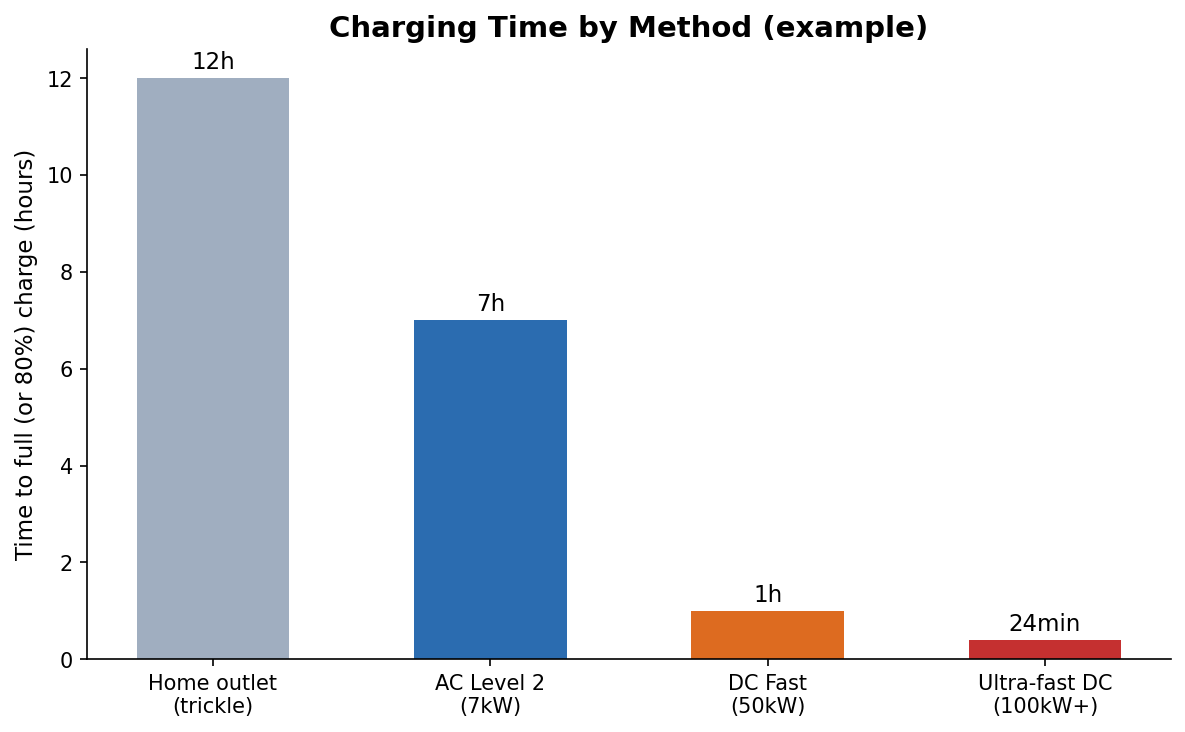
So how should you actually use this in practice? If you have access to AC charging at home or at work, plugging in overnight is usually the best default — it's easier on the battery and cheaper per kWh.
DC fast charging shines when you're on a road trip or need a quick top-up in a hurry. My suggestion: treat AC charging as your everyday habit, and use DC fast charging as a supplement when you actually need the speed.

Summary
AC charging relies on the car's onboard charger to convert household AC into DC, typically at 3.3-7 kW, while DC fast charging converts power to DC at the station itself and can deliver 50 kW or more. AC charging is gentler on the battery and cheaper, while DC fast charging is quicker but usually costs more and, if used frequently, may affect long-term battery health. Making AC charging your daily default and reserving DC fast charging for road trips or urgent situations is generally the smarter way to run an EV long-term.
#EV #EVCharging #ACCharging #DCFastCharging #ElectricVehicle #OnboardCharger #OBC #EVBattery #EVChargingBasics #ChargingSpeed #EVChargingCost #EVChargingStation #FastCharger #Level2Charging #EVMaintenance #BatteryHealth #EVChargingInfrastructure #Electrification #EVBeginnerGuide #EVBasics #ChargingConnector #EVBuyingGuide #EVTips #GreenTransportation #SustainableMobility
'자동차' 카테고리의 다른 글
| Car :: CCS, CHAdeMO, NACS — What's the Difference Between EV Charging Connectors? (0) | 2026.07.11 |
|---|---|
| 자동차 :: 전기차 커넥터 종류, CCS·CHAdeMO·NACS 뭐가 다를까? 기초 상식 총정리 (0) | 2026.07.11 |
| 자동차 :: 전기차 충전, 완속과 급속은 뭐가 다를까? 기초 상식 총정리 (0) | 2026.07.11 |
| Car :: How Did Tesla Actually Get Started? A Brand History (0) | 2026.07.10 |
| 자동차 :: 테슬라는 어떻게 시작됐을까? 브랜드 역사 총정리 (0) | 2026.07.10 |