2026. 8. 5. 23:59ㆍ자동차
Hello everyone.
Today I want to talk about one of the most iconic names in EV brand history: Tesla, and how it all began.
Electric cars are everywhere on the road these days, and Tesla is almost always the name that comes to mind first. What's less well known is that the company wasn't originally Elon Musk's creation at all.
I work on developing charging systems for electrified equipment - EVs, electric excavators, electric wheel loaders, and similar machines. So whenever I look back at Tesla's history, what stands out to me isn't just the cars themselves, but how much the company also built the charging infrastructure around them.
Why did Tesla become the default name for electric vehicles so quickly? Let's dig into the story behind the brand.
Origins: How Tesla Was Founded
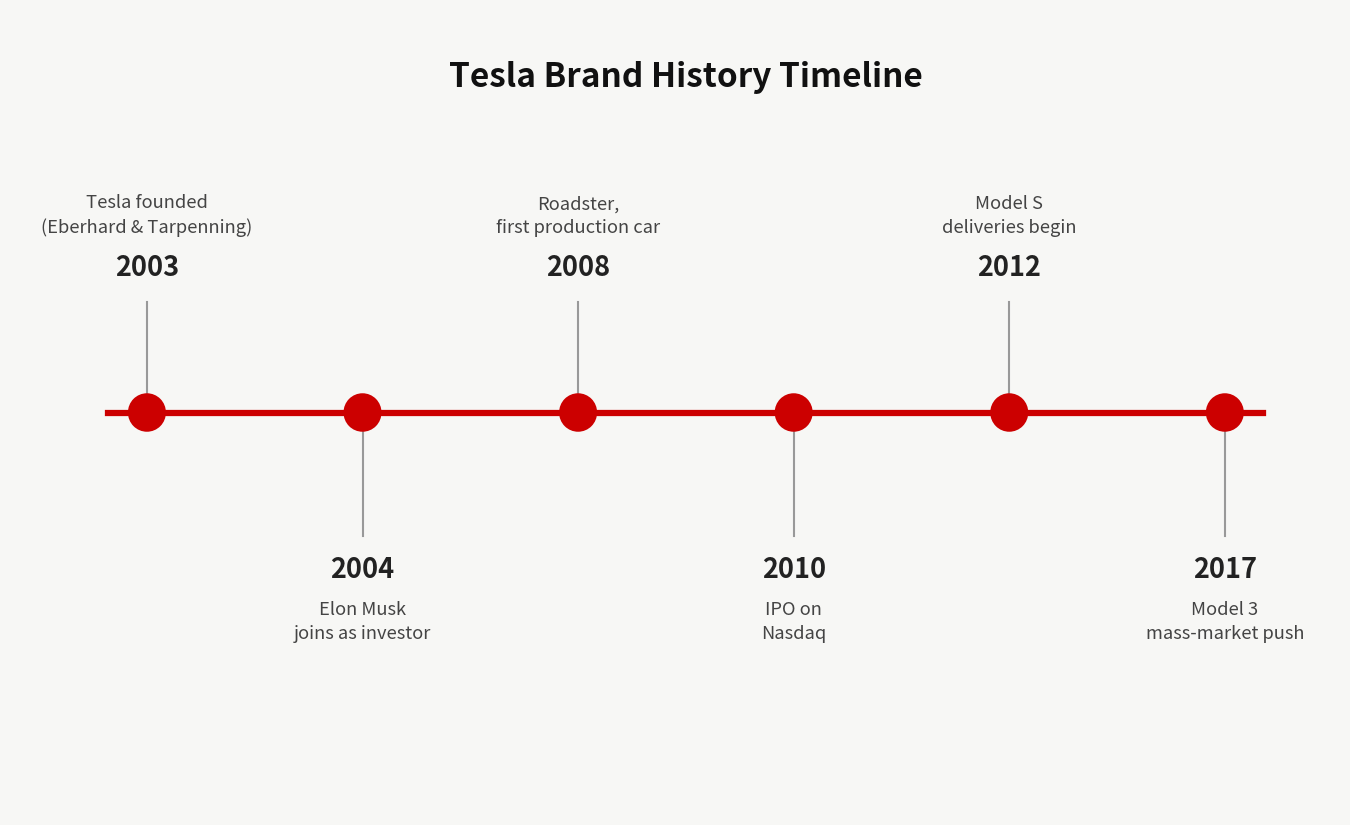
Tesla was founded in July 2003 in San Carlos, California, by two engineers, Martin Eberhard and Marc Tarpenning. Eberhard served as the company's first CEO, while Tarpenning took on the role of CFO.
The company's name pays tribute to the physicist and inventor Nikola Tesla, best known for his pioneering work on AC (alternating current) electric motors.
Eberhard and Tarpenning were reportedly inspired to start an EV company after watching the market's reaction to GM's earlier electric car experiment, the EV1, which convinced them there was real demand for a well-made electric vehicle.
Elon Musk, the name most people associate with Tesla today, actually joined a year later. In 2004, he invested about $6.5 million and became chairman of the board, later taking a much more hands-on role as the company grew.
Key Facts: From the Roadster to the Model S
Tesla's first production car, the Roadster, rolled off the line in February 2008. It could travel about 394 km (245 miles) on a single charge, an unheard-of number for a production EV at the time.
The Roadster was built on a modified Lotus chassis rather than an all-new platform, so it had its limitations, but it succeeded at proving a crucial point: an electric car could be genuinely fast and fun to drive, not just efficient.
In 2010, Tesla went public on the Nasdaq, becoming the first American automaker to IPO since Ford Motor Company back in 1956 - a major milestone for a company that was barely seven years old.
The Model S, first announced in 2008, finally began customer deliveries in 2012 and established Tesla as a serious player in the premium sedan segment. Then in 2017, the more affordable Model 3 arrived, opening the door to mass-market adoption of EVs.

Good to Know: Tesla and the Charging Ecosystem
One thing that really sets Tesla apart from other automakers is that it didn't just build cars - it built its own charging network. The Supercharger network was designed to eliminate range anxiety on long trips, and it's still widely referenced as a benchmark in the industry today.
From my perspective as someone who develops charging systems for electrified equipment, what stands out about Tesla's approach is that it treated the vehicle, the charger, and the network as one connected ecosystem rather than separate products. Connector design, communication protocols, and billing all had to work together to create a smooth user experience.
Tesla's charging connector has reportedly been adopted by a growing number of other automakers, effectively becoming a de facto standard in North America. It's fairly rare in the auto industry for one company's proprietary design to spread this widely across the whole market.
This kind of thinking about charging infrastructure isn't limited to passenger EVs, either. Fast, reliable charging is becoming just as critical for electric excavators and electric wheel loaders in construction, and it's interesting to watch the charging know-how Tesla built for consumer cars gradually extend into other industries.

Wrap-Up
Tesla started as a small startup founded by two engineers in 2003, and it grew into a brand that reshaped the entire EV market through the Roadster, Model S, and Model 3. Behind that growth was a strategy that treated charging infrastructure as just as important as the cars themselves.
Going forward, the EV market will likely keep evolving around battery technology and charging infrastructure. I plan to keep covering this space on the blog, from passenger EVs to the electrified construction and industrial equipment that's following a similar path. Hope you found this rundown useful!
#Tesla #테슬라 #ElectricVehicle #EVHistory #CarBrandHistory #ElonMusk #Roadster #ModelS #Model3 #Supercharger #ChargingInfrastructure #EVCharging #Electrification #EVChargers #NikolaTesla #AutomotiveHistory #EVMarket #ElectricExcavator #ElectricWheelLoader #NACS #CarFacts #EVTrends
'자동차' 카테고리의 다른 글
| 자동차 :: 테슬라는 어떻게 시작됐을까? 브랜드 역사 총정리 (0) | 2026.08.05 |
|---|---|
| Car :: Coffee Break, Full Charge? Inside the Megawatt Charging System (MCS) for EVs and Heavy Equipment (0) | 2026.08.04 |
| 자동차 :: 트럭도 커피 한 잔에 완충된다? 메가와트 충전 시스템(MCS) 미래기술 총정리 (0) | 2026.08.04 |
| Car :: Can Your EV Power the Grid? A Complete Guide to Vehicle-to-Grid (V2G) Tec (0) | 2026.08.03 |
| 자동차 :: 전기차가 전력망을 살린다? V2G(Vehicle-to-Grid) 기술 완전정리 (0) | 2026.08.03 |