2026. 8. 4. 20:03ㆍ자동차

Hello,
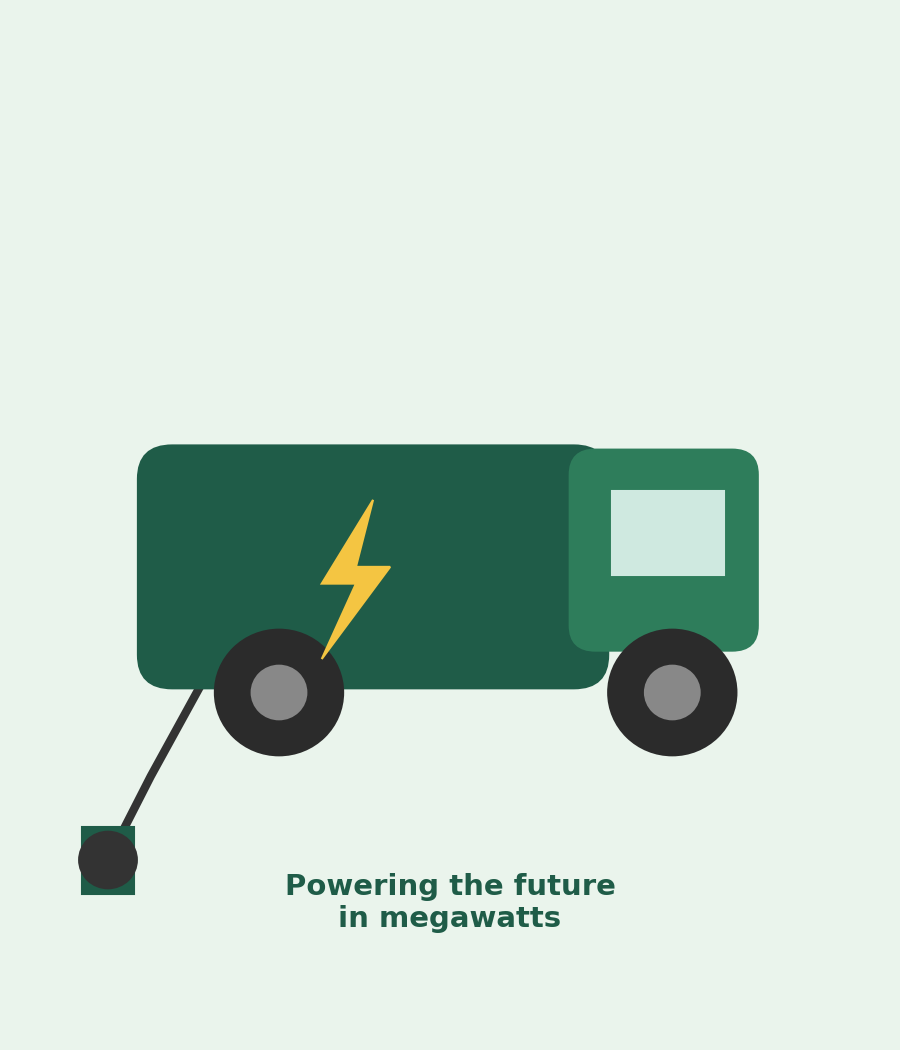
Today I want to talk about one of the most important future technologies in electrification: the Megawatt Charging System, or MCS.
When people think of EV charging, slow AC charging or standard DC fast charging usually comes to mind. But a far more powerful charging method is now moving from standard to real-world deployment, aimed at heavy-duty trucks and even electric construction equipment like excavators and wheel loaders.
"Could a truck really finish charging in about the same time it takes to grab a coffee?"
That's the question I want to answer in this post. As someone who works on charging systems for electrified equipment, I believe MCS is a technology that will reshape the direction of this industry over the next few years.
What Exactly Is MCS
MCS is an ultra-high-power DC charging standard developed under the leadership of CharIN, the Charging Interface Initiative. It builds on the CCS (Combined Charging System) standard already used in passenger EVs, extending it to handle far greater power levels.
The numbers are striking. MCS supports up to 1,250V and 3,000A, translating to a theoretical maximum output of around 3.75MW. Compare that to today's common fast chargers, which typically run in the 50-350kW range, and the gap is more than tenfold.
In February 2026, CharIN published IEC TS 63379, a technical specification establishing global interoperability for the standard, with SAE J3271 also serving as a reference point. This alignment means manufacturers in North America and Europe are converging on the same connector and communication protocol direction.
Commercial vehicle makers like Scania have announced electric trucks supporting MCS starting in mid-2026. That marks a shift from MCS being a document-stage standard to something actually being built into vehicles and charging infrastructure.
How Is It Different From Regular Fast Charging
The biggest difference is charging speed. In Europe, truck drivers are legally required to take a 45-minute rest break, and MCS is designed to charge a battery to around 80% within that window.
If fast charging for passenger EVs was about a quick stop during a long road trip, MCS is built around a different goal: keeping commercial trucks on a schedule comparable to diesel trucks, without breaking the legally mandated rest period. That's the key to making electric trucking economically competitive.
The connector design reflects this ambition too. MCS connectors use a 7-pin layout, with far more sophisticated cooling and safety interlock systems than standard CCS connectors. Handling this much current means thermal management of the cable and connector becomes absolutely critical.
From my perspective as someone who designs charging systems, thermal management and power conversion efficiency are really where MCS will be won or lost. Higher voltage and current mean insulation design, cooling systems, and communication reliability all need to be re-validated from scratch.
Why It's Expanding Into Construction Equipment
MCS was originally developed with heavy trucks and buses in mind, but interest has recently expanded to off-highway equipment — electric excavators, wheel loaders, and other construction machinery.
Construction equipment is even more sensitive to downtime than trucks. If a machine on a job site sits idle for hours just to charge, the entire project schedule can slip, and that translates directly into cost.
That's why ultra-high-power charging that can top up a battery within a short lunch break or shift change is drawing attention in the construction machinery industry as well. Some heavy equipment manufacturers are reportedly expanding their electric excavator and wheel loader lineups while also joining discussions on charging infrastructure standardization.
Unlike trucks, though, construction equipment doesn't move along fixed road networks, and power infrastructure varies widely from site to site. So rather than applying MCS as-is, the industry is often discussing it alongside complementary solutions like mobile charging stations or battery swapping tailored to each site's conditions.


What Still Needs to Be Solved
Vehicle and charger technology alone won't be enough to make MCS mainstream. Drawing megawatt-level power instantaneously requires the local distribution grid to handle that load, and most existing grids weren't designed with this kind of capacity in mind.
To address this, the industry is exploring pairing MCS charging stations with large-scale energy storage systems (ESS) to buffer instantaneous peak demand. That also means building a single MCS station can involve lengthy grid interconnection work and permitting.
Cost is another real hurdle. Cables, connectors, and cooling systems capable of handling this much power are considerably more expensive than standard fast-charging equipment, and mass production hasn't scaled up enough yet to bring prices down significantly.
Even so, the broader shift toward electrification in logistics and construction seems difficult to reverse at this point, and ultra-fast charging standards like MCS are increasingly seen as the missing piece needed to complete the electrification of heavy trucks and construction machinery.
'자동차' 카테고리의 다른 글
| 자동차 :: 트럭도 커피 한 잔에 완충된다? 메가와트 충전 시스템(MCS) 미래기술 총정리 (0) | 2026.08.04 |
|---|---|
| Car :: Can Your EV Power the Grid? A Complete Guide to Vehicle-to-Grid (V2G) Tec (0) | 2026.08.03 |
| 자동차 :: 전기차가 전력망을 살린다? V2G(Vehicle-to-Grid) 기술 완전정리 (0) | 2026.08.03 |
| Car :: Slow vs Fast EV Charging - What's Actually the Difference? A Beginner's G (0) | 2026.08.02 |
| 자동차 :: 전기차 충전, 완속과 급속은 뭐가 다를까? 충전 기초상식 총정리 (0) | 2026.08.02 |