2026. 8. 3. 21:55ㆍ육아생활

Hello everyone.
Today's post is about everyday habits that can help support your child's brain development.
Is there really something we can do every day to help our child's brain grow healthier?
These days, many parents are eager to start early education, teaching letters, numbers, and even a second language as soon as possible. But a recent parenting policy forum, where experts in brain development, cognitive science, and child mental health shared their views, offered a somewhat different message.
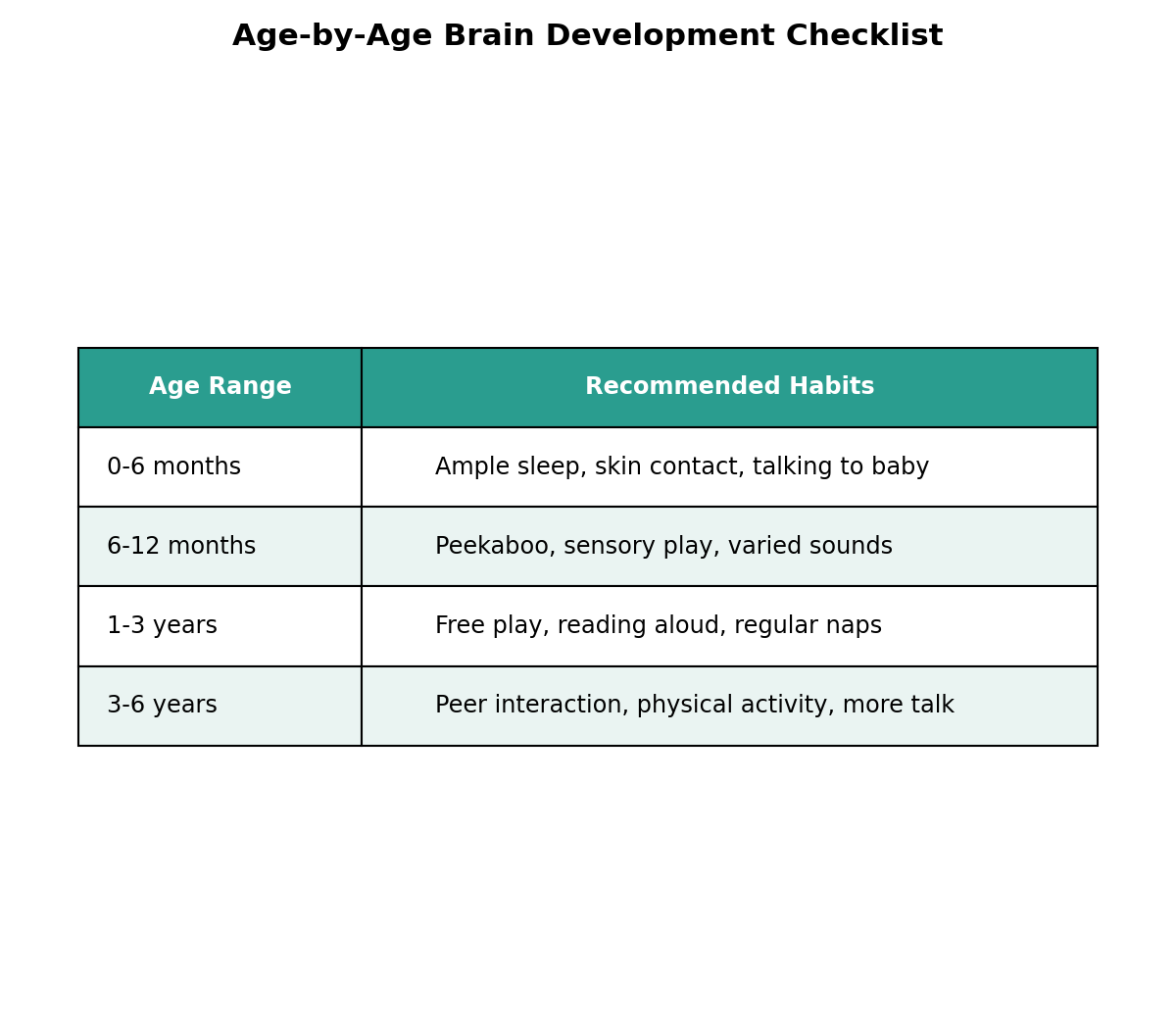
Their shared advice was that instead of pushing intensive early academics, giving children plenty of play, conversation, and consistent sleep is far more beneficial for brain development. Based on that, today we'll walk through concrete, age-by-age habits that can genuinely support a child's growing brain.

How Does Brain Development Actually Happen?
A child's brain keeps developing from birth well into adulthood, but it grows fastest during the early years. During this period, the brain forms synaptic connections between neurons at an explosive rate, laying the groundwork for learning and emotional regulation.
In particular, the period from the last trimester of pregnancy through the first two years of life is often called the "first 1,000 days," and it is considered a critical window for brain development. During this window, specific fatty acids and other nutrients needed for brain structure increase rapidly, shaping the brain's physical architecture.
Recent research describes the brain, gut, and sleep systems as closely interconnected during this period. In other words, sleeping well, maintaining gut health, and brain growth aren't separate issues — they influence one another.
The brain at this stage is also highly sensitive to outside stimulation. Everyday input like a parent's voice, physical touch, and new textures or sounds can have a much bigger impact than we might expect.
Everyday Habits That Support Brain Development
Sleep tops the list. According to one longitudinal study, sleep problems in early childhood can lead to difficulties with executive function, which covers attention, emotional control, and behavior regulation, and this has been shown to affect school adjustment and academic performance well into the early elementary years. This is exactly why keeping a regular nap and bedtime routine matters more than it might seem.
Second comes play and interaction. Experts emphasize that play built on a secure attachment with a caregiver forms the root of emotional and cognitive development. You don't need fancy toys — simple games like peekaboo or sensory play provide plenty of stimulation on their own.
Third is nutrition. The brain develops faster than the rest of the body in the early years, which is thought to make it more sensitive to nutritional deficiencies. We can't say any single supplement or product dramatically boosts brain development, but a balanced diet, and supplementation guided by a pediatrician when needed, is worth considering.
Finally, talking and reading aloud. Language input is closely tied to cognitive development, so making eye contact and talking with your child even briefly every day can add up to real benefits for language and thinking skills over time.

Good to Know
Screen time deserves a mention too. It's hard to say watching videos is always bad, but many experts recommend avoiding situations where heavy media use replaces time that would otherwise go to play, conversation, or sleep.
It's also worth remembering that every child develops at their own pace. Rather than comparing your child to the kid next door and feeling anxious, it's more helpful to respect your own child's pace and keep building good habits consistently.
That said, if you notice your child's language or physical development is noticeably behind peers, or you have any concerns, please don't rely solely on information from the internet — talk to a pediatrician. Catching things early and getting the right support when needed is always the safest approach.
In the end, the key isn't special learning materials or early academics — it comes back to the basics: enough sleep and play, balanced nutrition, and warm interaction with parents.
'육아생활' 카테고리의 다른 글
| 육아 :: 우리 아이 뇌발달, 일상 습관으로 도울 수 있을까요? 시기별 가이드 (1) | 2026.08.03 |
|---|---|
| Parenting :: Vitamin D and Probiotics for Kids - How Much Do They Really Need? (0) | 2026.08.02 |
| 육아 :: 우리 아이 영양제, 비타민D와 유산균 제대로 챙기고 계신가요? (0) | 2026.08.02 |
| Parenting :: Do You Know When Your Baby Needs Each Vaccine? (0) | 2026.08.01 |
| 육아 :: 우리 아이 예방접종, 시기와 종류 제대로 알고 계신가요? (0) | 2026.08.01 |