2026. 8. 2. 19:17ㆍ육아생활
Hello everyone.
Today's post is about kids' supplements, focusing specifically on vitamin D and probiotics.
A lot of parents ask their pediatrician about supplements at every well-child visit. And once you walk into a pharmacy or baby store, the sheer number of options can make it hard to know where to start.
The truth is, there's no single supplement every child absolutely needs. It really depends on the child's age, whether they're breastfed or formula-fed, and their eating habits. Let's walk through the general guidelines together.
Does your baby actually need a vitamin D supplement?
The honest answer is: it depends on the child. But there are some general benchmarks worth knowing, so let's go through them.
When Do Kids Actually Need Supplements?
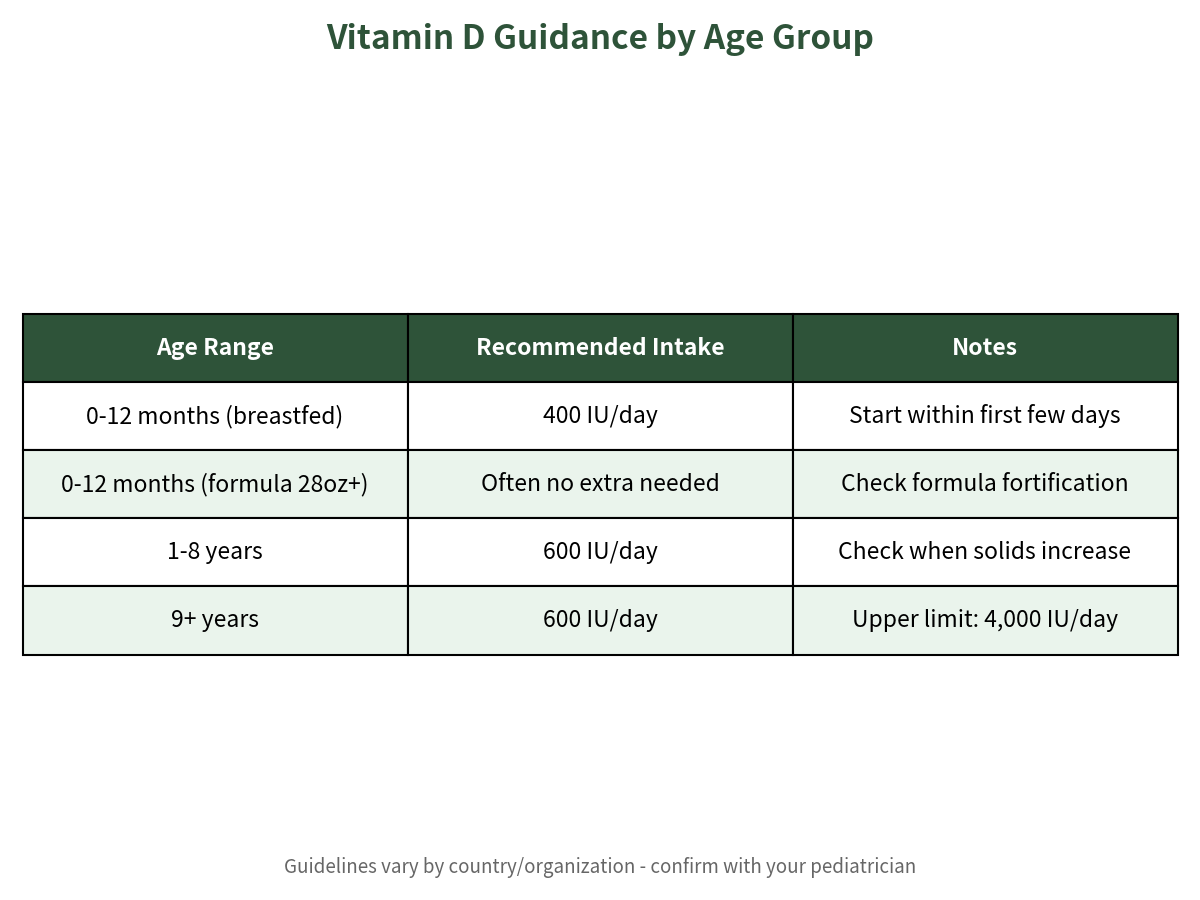
Breast milk is known to contain very little vitamin D on its own. That's why breastfed infants are generally advised to start a vitamin D supplement within the first few days of life.
Formula-fed babies are a bit different. Since infant formula is already fortified with vitamin D, babies drinking enough formula each day often don't need an extra supplement at all.

The same logic applies once solids are introduced. As formula or breast milk intake naturally decreases with more solid food, that's usually the point where a separate vitamin D supplement becomes worth considering.
Probiotics tend to come up for different reasons. Many parents look into them for digestive health, regularity, or general immune support. Unlike vitamin D, though, probiotics aren't something every child necessarily needs - they're more of an optional addition depending on the child's condition.
Origins of the Guidelines
The American Academy of Pediatrics (AAP) recommends 400 IU per day of vitamin D for infants under 1 year old, and 600 IU per day for children ages 1 through 18. Guidelines can vary somewhat by country, so it's worth double-checking the exact number with your own pediatrician.
Babies drinking around 28 ounces (about 800ml) or more of formula a day often get enough vitamin D from the formula itself. If intake is lower, or breast milk makes up most of the diet, a separate supplement is usually worth discussing.

Since vitamin D is fat-soluble, it can build up in the body, so more isn't automatically better. The upper limit is often cited as 1,000 IU/day for infants and up to 4,000 IU/day for children 9 and older - so if your child is taking more than one fortified product, it's worth adding up the totals.
Probiotic products for kids commonly range from about 100 million to 10 billion CFU per day. That said, the CFU count matters less than which specific strain is included and whether the label clearly states a "guaranteed count" through the expiration date.
What to Check Before You Buy
The first thing to check is whether a product is actually formulated for your child's age group. Adult and children's formulations often have very different dosages, so age labeling matters more than it might seem.
Second, watch out for overlap. Fortified formula and baby food often already contain added vitamin D or iron, so if your child is taking multiple products, it's worth reading every label and adding up the actual total intake.
Third, be a little skeptical of products that make bold claims. Phrases like "boosts immunity 100%" or "guarantees height growth" tend to be marketing language rather than proven fact, so compare ingredient lists and actual dosages instead.
Finally, if your child is a picky eater, has an existing medical condition, or has known allergies, please talk to a pediatrician before starting any supplement. This post is meant for general information only and isn't a substitute for individual medical advice or diagnosis.
Wrap-Up
Today we covered when and how much vitamin D and probiotics kids might need. Whether a baby is breastfed, formula-fed, or already eating solids changes the vitamin D picture, and for probiotics, the strain type and guaranteed CFU count matter more than the number on the label alone.
Supplements are just one small piece of the puzzle - a balanced diet and consistent daily routine still matter the most for kids' growth. If you notice anything unusual or have specific concerns, please don't guess on your own; a quick chat with your pediatrician is always the safer route.
#ParentingTips #KidsSupplements #VitaminD #Probiotics #InfantNutrition #Breastfeeding #FormulaFeeding #BabyFood #ChildHealth #Pediatrician #BabyVitamins #ProbioticsCFU #GuaranteedCount #ChoosingSupplements #ParentingAdvice #ParentingHacks #KidsImmunity #WellChildVisit #GutHealth #IronSupplement #DHA #NewParents #MomLife #DadLife #HealthyKids
'육아생활' 카테고리의 다른 글
| Parenting :: Can Everyday Habits Really Help Your Child's Brain Development? An (0) | 2026.08.03 |
|---|---|
| 육아 :: 우리 아이 뇌발달, 일상 습관으로 도울 수 있을까요? 시기별 가이드 (1) | 2026.08.03 |
| 육아 :: 우리 아이 영양제, 비타민D와 유산균 제대로 챙기고 계신가요? (0) | 2026.08.02 |
| Parenting :: Do You Know When Your Baby Needs Each Vaccine? (0) | 2026.08.01 |
| 육아 :: 우리 아이 예방접종, 시기와 종류 제대로 알고 계신가요? (0) | 2026.08.01 |