2026. 8. 1. 16:29ㆍ육아생활
Hello everyone.
Today's post is about infant and toddler vaccinations, covering the timing and types you'll want to know.
Raising a baby means facing a vaccination schedule that can feel confusing at first glance. Different clinics sometimes explain it in slightly different ways, which only adds to the confusion.
For first-time parents especially, it's not always clear what counts as a nationally supported vaccine, or exactly when each dose should happen.
Do you know exactly which vaccines your baby needs, and when?
In this post, we'll walk through the basics of the national immunization program, the general timeline by age, and a few practical things to keep in mind before and after each visit.
What Is the National Immunization Program
A national immunization program is a set of vaccines that the government helps cover the cost of, so families can get them at public health centers or designated clinics without paying full price.
The list of nationally supported vaccines is generally understood to include hepatitis B, tuberculosis (BCG), diphtheria-tetanus-pertussis (DTaP), polio, Hib, pneumococcal disease, rotavirus, MMR (measles-mumps-rubella), varicella, hepatitis A, Japanese encephalitis, influenza, and HPV.
One notable update in 2026 was that HPV vaccination support, previously focused mainly on girls, was expanded to include boys as well. Coverage details like this can shift from year to year, so it's worth checking the latest official guidance.
Combination vaccines are also increasingly common, such as six-in-one shots covering diphtheria, tetanus, pertussis, polio, Hib, and hepatitis B in a single injection. These combos help reduce the total number of needle pokes a baby goes through.

The Timeline, Stage by Stage
Vaccination typically begins right at birth. The first dose of the hepatitis B vaccine is generally given during the newborn period, often within the first day of life.
The BCG vaccine, which protects against tuberculosis, is recommended within the first four weeks after birth. Then, around 2, 4, and 6 months, babies typically receive multiple doses of DTaP, polio, Hib, and pneumococcal vaccines in close succession, which is why parents often find themselves at the clinic frequently during this stretch.
The rotavirus vaccine has a strict window worth remembering: the first dose should start between 6 and 15 weeks of age, and the full series needs to be completed before 8 months. Missing this window can mean the vaccine is no longer an option, so timing really matters here.
Around the first birthday, babies usually receive their first doses of MMR, varicella, and hepatitis A. Later, around ages 4 to 6, booster doses of DTaP and polio follow, and around ages 11 to 12, a Td booster and the HPV vaccine typically come into the picture.

Before and After Each Visit
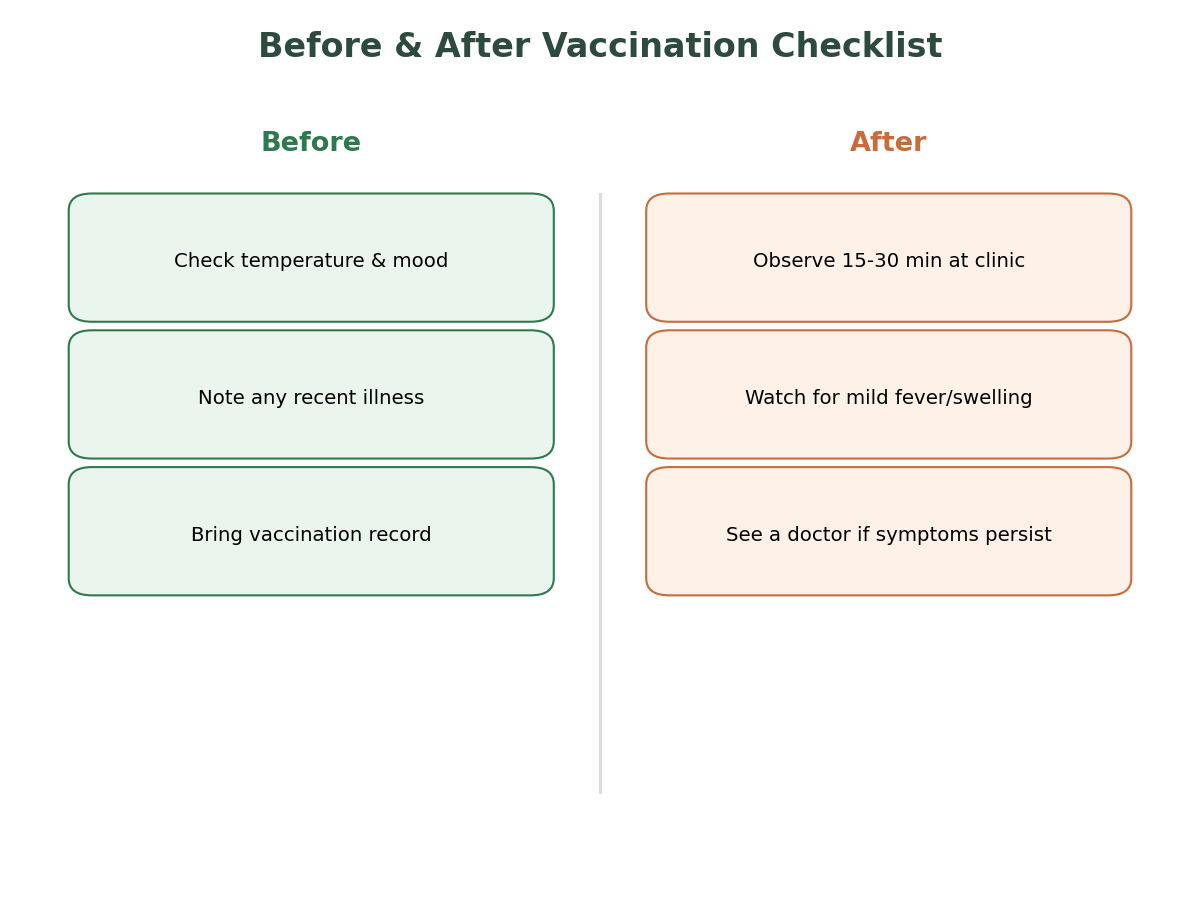
Before any vaccination, it's worth checking on your baby's overall condition. If they have a fever or seem unwell, it's safer to postpone the shot and talk to your pediatrician first.
On the day of the shot, keeping the injection site clean matters, and it's generally recommended to stay at the clinic or health center for about 15 to 30 minutes afterward so staff can watch for any reaction. This short observation window exists to catch rare adverse reactions early.
Once home, mild fever or slight swelling at the injection site is common and usually nothing to worry about. But if a high fever persists or your baby shows symptoms that seem out of the ordinary, don't wait, get them checked by a doctor.
Many national health authorities offer an online portal or app where you can track your child's vaccination history and upcoming doses, which makes it much easier to stay on schedule.
Keep in mind that everything covered here is general guidance. Actual vaccination plans can vary depending on your baby's health, birth timing, and individual circumstances. Always confirm the exact schedule and eligibility with your pediatrician.
'육아생활' 카테고리의 다른 글
| Parenting :: Vitamin D and Probiotics for Kids - How Much Do They Really Need? (0) | 2026.08.02 |
|---|---|
| 육아 :: 우리 아이 영양제, 비타민D와 유산균 제대로 챙기고 계신가요? (0) | 2026.08.02 |
| 육아 :: 우리 아이 예방접종, 시기와 종류 제대로 알고 계신가요? (0) | 2026.08.01 |
| Parenting :: How Do You Choose a Safe Stroller for Your Baby? A Buying Guide (0) | 2026.07.31 |
| 육아 :: 우리 아이 첫 유모차, 어떻게 골라야 안전할까요? 육아용품 총정리 (1) | 2026.07.31 |