2026. 8. 2. 22:49ㆍ취미생활/축구
Hello everyone.
Today's post is about one of the most brilliant and controversial players in the history of soccer, Diego Maradona.
Would you believe a single player could produce the most controversial foul and the most iconic goal of a tournament within the same match?
At the 1986 Mexico World Cup, two moments just four minutes apart carved Maradona's name permanently into soccer history. Today we'll take a closer look at how a boy who learned the game in the poor streets of Buenos Aires became both a footballing god and one of the sport's most divisive figures.
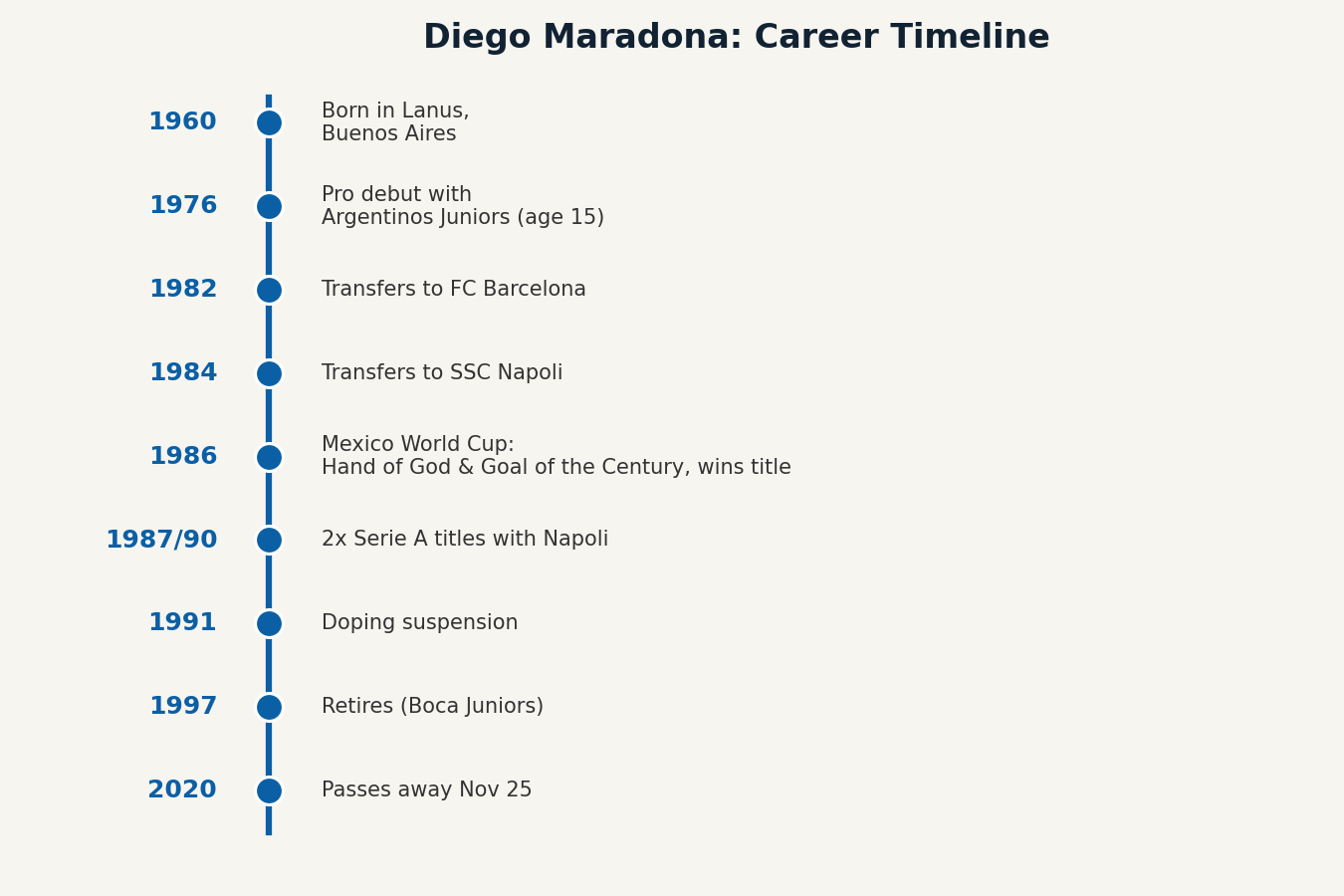
Maradona was born on October 30, 1960, in Lanus, a poor neighborhood on the outskirts of Buenos Aires, Argentina, the fifth of eight siblings. He is said to have honed his skills playing in the streets from a young age, making his professional debut with Argentinos Juniors in 1976 at just 15 years old.
Despite his small frame, he was recognized early on as a prodigy for his exceptional ball control and ability to change direction in an instant. His career would go on to stretch far beyond Argentina, into Spain and Italy, and eventually into the memory of soccer fans around the world.
Four Minutes in Mexico: The Hand of God and the Goal of the Century
On June 22, 1986, at the Estadio Azteca in Mexico City, Argentina's quarterfinal against England produced one of the most dramatic sequences in soccer history. In the 51st minute, with the score still level, Maradona jumped for a loose ball against English goalkeeper Peter Shilton and punched it into the net with his fist. The goal was allowed to stand.
When asked afterward whether the goal was legitimate, Maradona famously said it was scored "a little with the head of Maradona and a little with the hand of God," which is how the goal earned its nickname, the "Hand of God." Since instant replay and VAR did not exist at the time, the goal counted, and it remains a sore point between English and Argentine fans to this day.
Remarkably, just four minutes later, Maradona rewrote soccer history again in a completely different way. This time he picked up the ball roughly 60 meters from goal, in Argentina's own half, and dribbled past five English players before beating Shilton once more to score.
That second goal was voted the "Goal of the Century" in a FIFA.com poll in 2002. Argentina won the match 2-1, went on to beat West Germany in the final, and Maradona was named the tournament's best player, taking home the Golden Ball.
Hero of Naples: Maradona's Club Career
Maradona's club career was just as dramatic as his time with the national team. He transferred to FC Barcelona in 1982 for what was reportedly a record fee at the time, but his two years there were marked by injuries and off-field controversy, and are generally remembered as an unhappy chapter.
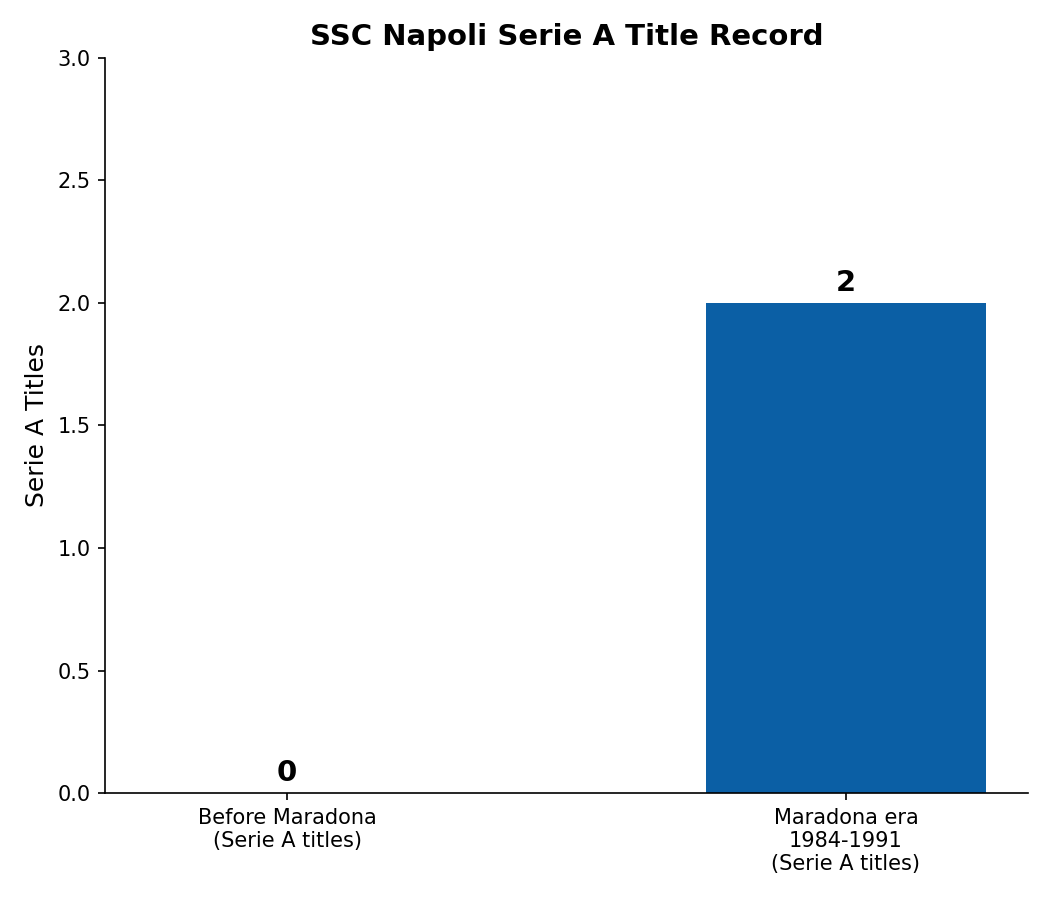
In 1984, Maradona moved to SSC Napoli in Italy. At the time, Napoli was a perennial mid-to-lower-table club in Serie A, and his arrival completely changed the trajectory of the team.
With Maradona leading the way, Napoli won the Serie A title in 1987 and again in 1990, the first league titles in the club's history and still remembered as the greatest era in its history. In Naples, a working-class port city in southern Italy, Maradona is still revered almost like a deity, and murals and monuments dedicated to him remain scattered throughout the city.
The later part of his time in Naples, however, was not without its shadows. In 1991 he was suspended after testing positive for cocaine use, an episode that left a lasting mark on his career. He went on to play for Sevilla in Spain and Newell's Old Boys and Boca Juniors in Argentina, retiring from professional play in 1997.
Light and Shadow: The Legacy He Left Behind
Maradona's life is often cited as an extreme example of genius on the field coexisting with turmoil off it. Drug problems and personal controversies followed him throughout his career, yet fans often said that a single moment of brilliance from his feet was enough to make them forget the controversy.
After retiring as a player, he remained involved in the sport as a manager, including a stint as head coach of the Argentine national team, and was still regarded as a living legend by fans right up until his death on November 25, 2020.
The debate over who was the greatest player of all time, Pele or Maradona, remains unresolved among soccer fans to this day. Since both players dominated their respective eras in their own way, many fans prefer to remember them as two very different kinds of legends rather than ranking one above the other.
What Maradona left behind was more than a list of records. His career is often cited as proof of how dramatic a single person's talent can make the sport of soccer.