2026. 7. 30. 21:13ㆍ자산관리
Hello.
Today's post is about futures trading, one of the more misunderstood corners of asset management.
Can a small deposit really let you control a position many times its size?
If you have spent time around stock investing, you have probably run into the word futures somewhere, maybe in a headline like KOSPI 200 futures closed higher. But what a futures contract actually is, and how it differs from simply buying a stock, often stays fuzzy even for people who trade regularly.
Futures contracts work on a completely different structure than buying stock outright, and because of leverage, a small misunderstanding can turn into a much bigger loss than expected. So in this post, we will walk through how futures trading works at a basic level and the concepts worth knowing before you ever consider trading one.
This post is general information meant to help you understand how futures trading works. It is not investment advice or a recommendation to buy or sell any specific product.
What Is a Futures Contract
A futures contract is an agreement to buy or sell a specific asset at a predetermined price on a set future date. Unlike a spot trade, where you exchange the asset right now, a futures contract separates the moment you agree to the deal from the moment it actually settles.
The concept is widely believed to have originated in agricultural markets. Farmers and merchants would lock in a price before harvest, so that neither side would be blindsided if prices swung sharply by the time the crop came in. Over time, this same structure expanded into financial markets, covering everything from stock indices to interest rates, currencies, and commodities.
In Korea, the Korea Exchange (KRX) lists a range of derivative products, including KOSPI 200 futures. Rather than betting on a single company, KOSPI 200 futures track the direction of the entire index, so trading them requires a view on where the broader market is headed rather than any individual stock.
One of the biggest differences from owning stock outright is that futures let you profit in both directions. If you expect prices to rise, you take a long position, and if you expect them to fall, you can take a short position, meaning futures are structured so you can pursue gains even in a falling market.

Margin and Leverage, A Double Edged Sword
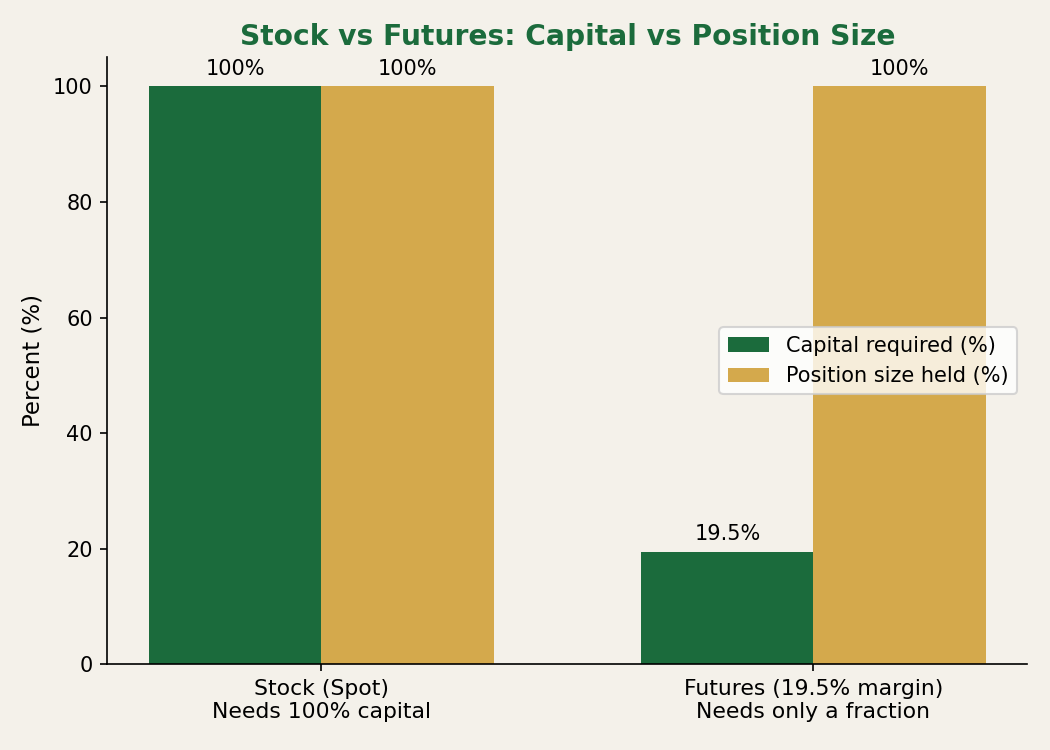
The defining feature of futures trading, and its biggest risk, is the margin system. You do not need to put up the full contract value. Depositing a fraction of it as margin is enough to open a position.
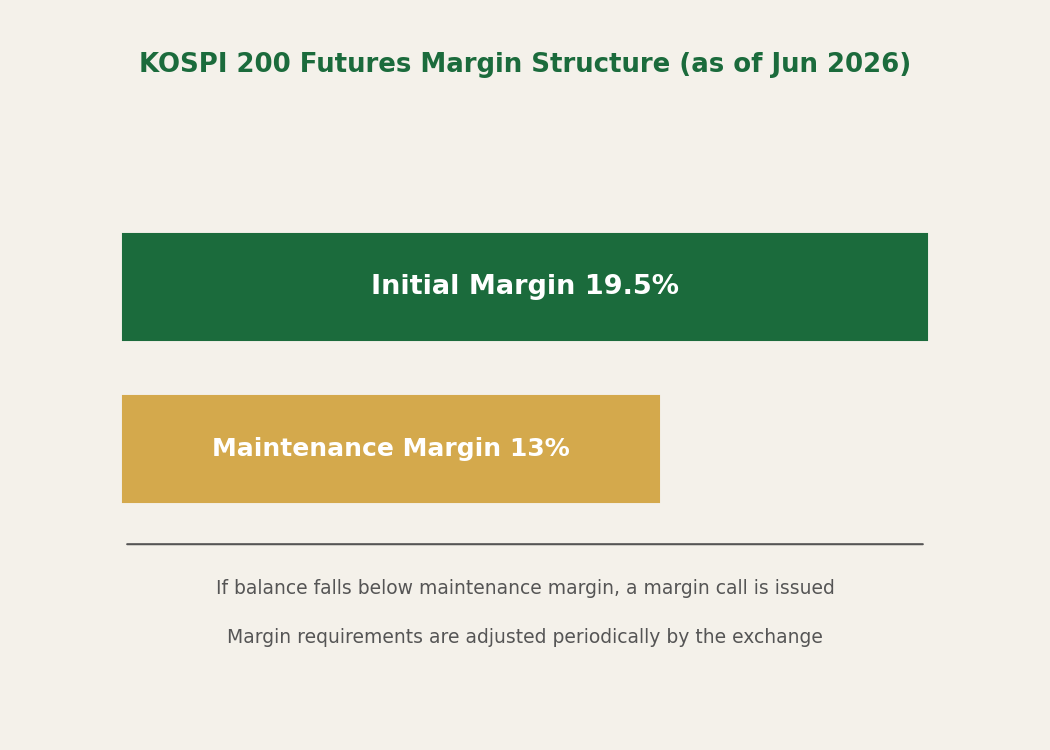
As of June 2026, the initial margin requirement for KOSPI 200 futures is reported at roughly 19.5%, with a maintenance margin around 13%. In practical terms, that means you can control a position worth roughly five times your deposit, and it also means your gains and losses are magnified by roughly that same multiple. Margin requirements are adjusted periodically depending on market conditions, so always check the current rate before trading.
This is what is known as the leverage effect. Because a small amount of capital controls a much larger position, returns relative to your capital can look impressive when the trade goes your way, but losses grow just as fast when the market moves against you. In extreme cases, losses can exceed your original deposit, which is the single biggest structural difference from simply owning shares of stock.
Futures positions are also marked to market daily through a process called daily settlement. Gains and losses on your open position are reflected in your account every day, and if your balance falls below the maintenance margin, you will receive a margin call requiring additional funds. Failing to meet a margin call can result in your position being force liquidated. This is a major reason futures are classified as a high risk product best approached only with real trading experience and solid risk management habits.
A Few Things Worth Remembering
Unlike stocks, futures contracts come with a fixed expiration date. When that date arrives, the position is settled either through physical delivery or cash settlement, and traders who want to keep their exposure alive have to roll over into the next contract month before the current one expires.
Futures markets also tend to move ahead of spot markets, which is why analysts often watch futures index movements as an early signal of broader market sentiment. That is part of why even investors who never trade futures directly still see futures related headlines in financial news.
If you are new to futures, it is worth practicing on a paper trading or simulated account before committing real capital, just to get a feel for how margin balances move and how quickly positions can change. Setting a personal loss limit in advance, and sticking to a leverage level you can actually control, matters more than almost anything else in this market.
Finally, futures and options are both classified as derivatives, and both carry a real risk of losing more than your original investment. That said, they are structurally different. Futures are closer to a straightforward directional bet, while options involve buying and selling rights tied to a premium. Understanding that distinction clearly, rather than treating the two as interchangeable, will serve you well before you trade either one.
Final Thoughts
Today we covered the basics of futures contracts, how margin and leverage work together, and a few things worth keeping in mind before you trade one. Futures offer the appeal of controlling a large position with a relatively small deposit, but it is worth remembering that losses can grow just as quickly. This is a genuinely high risk product.
This post is general information meant to help you understand how futures trading works, not advice about any specific trade. If you are considering trading futures yourself, take the time to study the mechanics thoroughly and honestly assess your own risk tolerance and capacity for loss before you begin.
#FuturesTrading #FuturesContract #KOSPI200Futures #Derivatives #Margin #Leverage #DailySettlement #MarginCall #Rollover #AssetManagement #InvestingBasics #FuturesAndOptions #KRX #KoreaExchange #RiskManagement #BeginnerInvestor #InvestingEducation #PersonalFinance #FinancialLiteracy #RiskDisclosure #FuturesMarket
'자산관리' 카테고리의 다른 글
| Asset Management :: How Exactly Do Options Trading Profits Work? A Beginner's Guide (0) | 2026.08.01 |
|---|---|
| 자산관리 :: 옵션 거래, 대체 어떻게 돈을 버는 구조일까요? 옵션 투자 기초 총정리 (0) | 2026.08.01 |
| 자산관리 :: 선물거래, 대체 뭐길래 이렇게 위험하다고 할까요? 선물 투자 기초 총정리 (0) | 2026.07.30 |
| Asset Management :: Why Are More Retail Investors Choosing ETFs Over Individual (0) | 2026.07.29 |
| 자산관리 :: 요즘 개인투자자들, 왜 개별 종목 대신 ETF를 고를까요? 주식투자 기초 총정리 (0) | 2026.07.29 |