2026. 7. 30. 11:51ㆍ취미생활/골프
Hello everyone.
Today I'm writing about the history of PING, one of golf's most recognizable club brands.
If you've played golf for a while, chances are you've seen a PING iron or putter in someone's bag. It's a brand used by tour professionals all over the world today, but what's less well known is that it started in a home garage with a single frustrated golfer.
Looking into a brand's history often explains why today's club designs look the way they do, and PING is a great example. The very idea of a "forgiving" iron, something almost every golfer takes for granted now, traces back directly to this company.
Did you know the brand's name actually started out as nothing more than the sound the club made at impact?
Origins
PING's founder, Karsten Solheim, was born in Norway and moved to the United States, settling in the Seattle area, as a child. As an adult he worked as an engineer at General Electric designing appliances, and by most accounts he was also a passionate amateur golfer in his spare time.
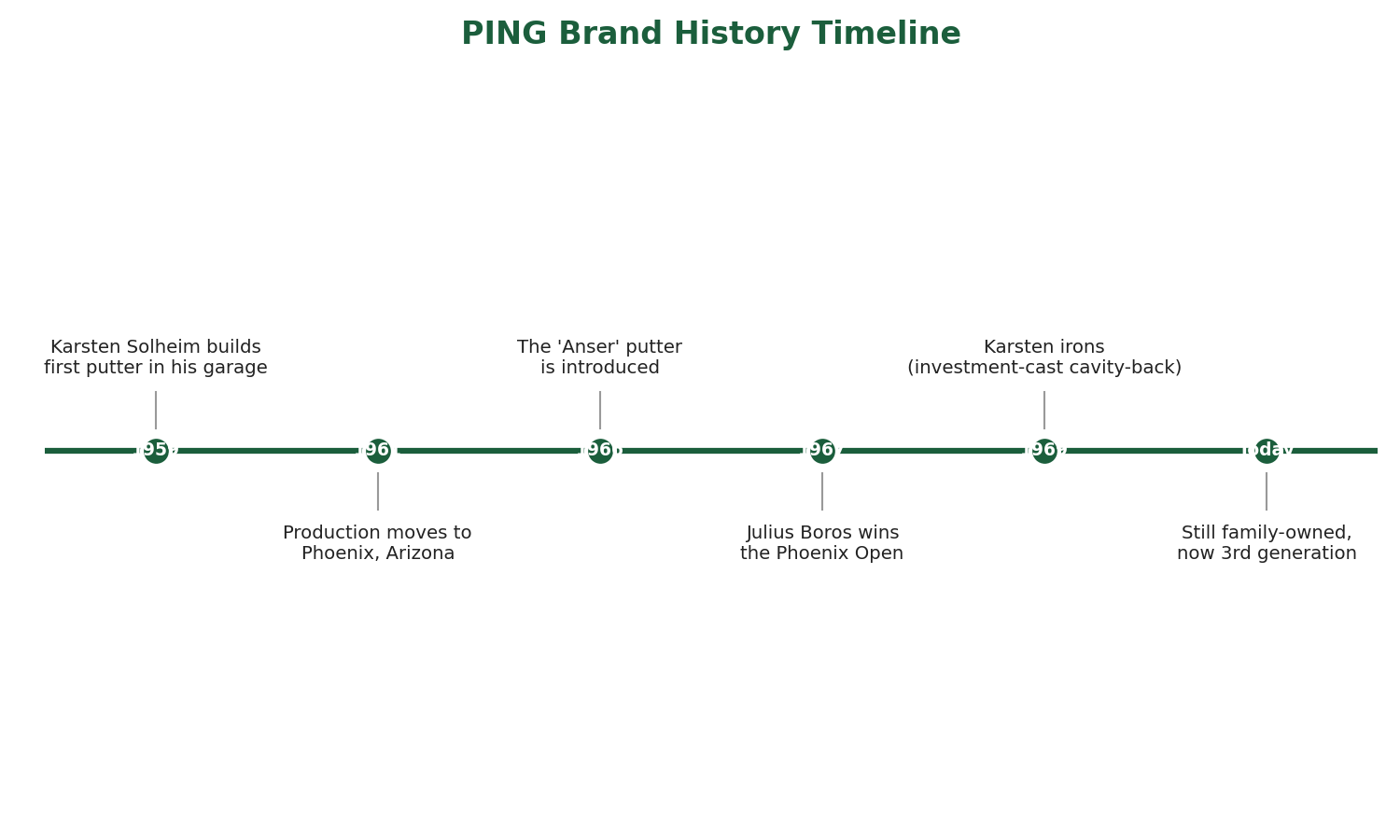
His problem was a familiar one: his putting just wasn't working the way he wanted. So after work, in his own garage, he started designing his own putter. In 1959 he came up with a design that shifted weight toward the heel and toe of the clubhead rather than concentrating it in the center.
When the ball came off this new putter, it made a distinctive metallic "ping" sound, and Solheim simply named the product after that sound. Rather than a catchy marketing phrase, the brand name came straight from the club itself, which is a fairly memorable origin story even by today's standards.
In the early years, this was very much a family operation. His wife, Louise Solheim, is said to have handled orders, customer service, and bookkeeping, while his youngest son, John A. Solheim, helped build putters alongside him. It really was a garage business run by the whole family.
Key Facts
The brand really started to gain recognition in 1966 with the launch of the "Anser" putter. Its design distributed weight toward the perimeter of the head and used an offset hosel, making it easier for golfers to return the face square at impact.
The turning point came in 1967, when tour professional Julius Boros won the PGA Tour's Phoenix Open using the Anser putter. The wave of orders that followed that win outgrew what a garage operation could handle, and the company moved into a proper production facility in Phoenix, Arizona.
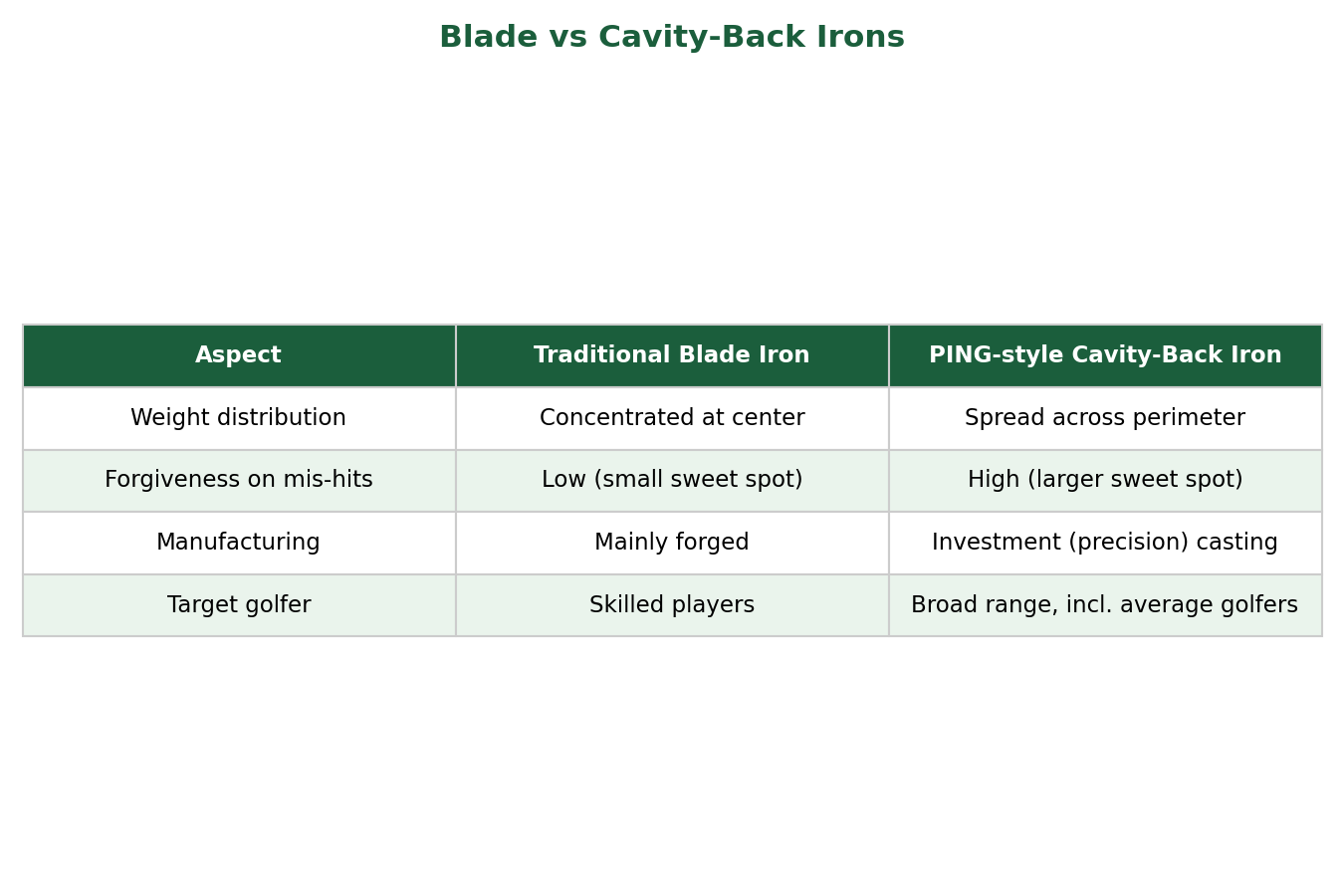
What started as a putter company soon expanded into irons. The 1969 "Karsten" irons were built using an investment casting process to create a cavity-back design, a manufacturing method that allowed much more precise control over how weight was distributed across the back of the clubhead.
This mattered because, up to that point, forged blade irons with weight concentrated in the center had small sweet spots that mainly rewarded skilled players. By spreading weight to the perimeter, PING made irons noticeably more forgiving on off-center hits, and that basic design philosophy went on to become the standard across nearly every iron brand that followed.
Good to Know
One thing that often comes up when people talk about PING is its color-code fitting system. It matches a golfer's height, wrist-to-floor measurement, and swing characteristics to a specific lie angle, marked by color. Plenty of brands offer custom fitting today, but PING is widely credited within the golf industry as the company that helped popularize this kind of fitting culture in the first place.
PING's corporate structure is also somewhat unusual. While many golf equipment brands have been bought out or changed hands repeatedly, PING (under parent company Karsten Manufacturing) remains one of the few major club brands still owned and run by the founding family, now in its third generation.
Today PING makes a full lineup covering drivers, irons, wedges, and putters, and its clubs are still regularly seen on the PGA and LPGA Tours. In the putter category especially, descendants of the original Anser design continue to be released.
For everyday golfers, PING's history is a good reminder that proper fitting can matter more than brand name alone. Rather than just grabbing an off-the-rack set, it can be worth checking your lie angle and shaft specs at least once. ^^