2026. 7. 31. 12:23ㆍ취미생활/골프
Hello there.
Today's post is about something every golfer eventually wonders about: how does a golf handicap actually get calculated?
"How exactly is your handicap number calculated?"
After a round, most golfers stare at their scorecard total, but the number that really tells the story is the handicap index. Surprisingly few people know exactly how that number is produced.
Did you know that until fairly recently, different countries calculated handicaps in completely different ways? Today the whole golfing world uses a single unified formula, and we'll walk through both the history and the actual math behind it.
Origins
Before January 1, 2020, six separate handicap systems existed around the world — used respectively in the United States, Great Britain and Ireland, Continental Europe, Australia, South Africa, and Argentina.
That meant a golfer's handicap earned in England and one earned in the U.S. could represent genuinely different skill levels, even if the numbers matched, making fair cross-border competition nearly impossible.
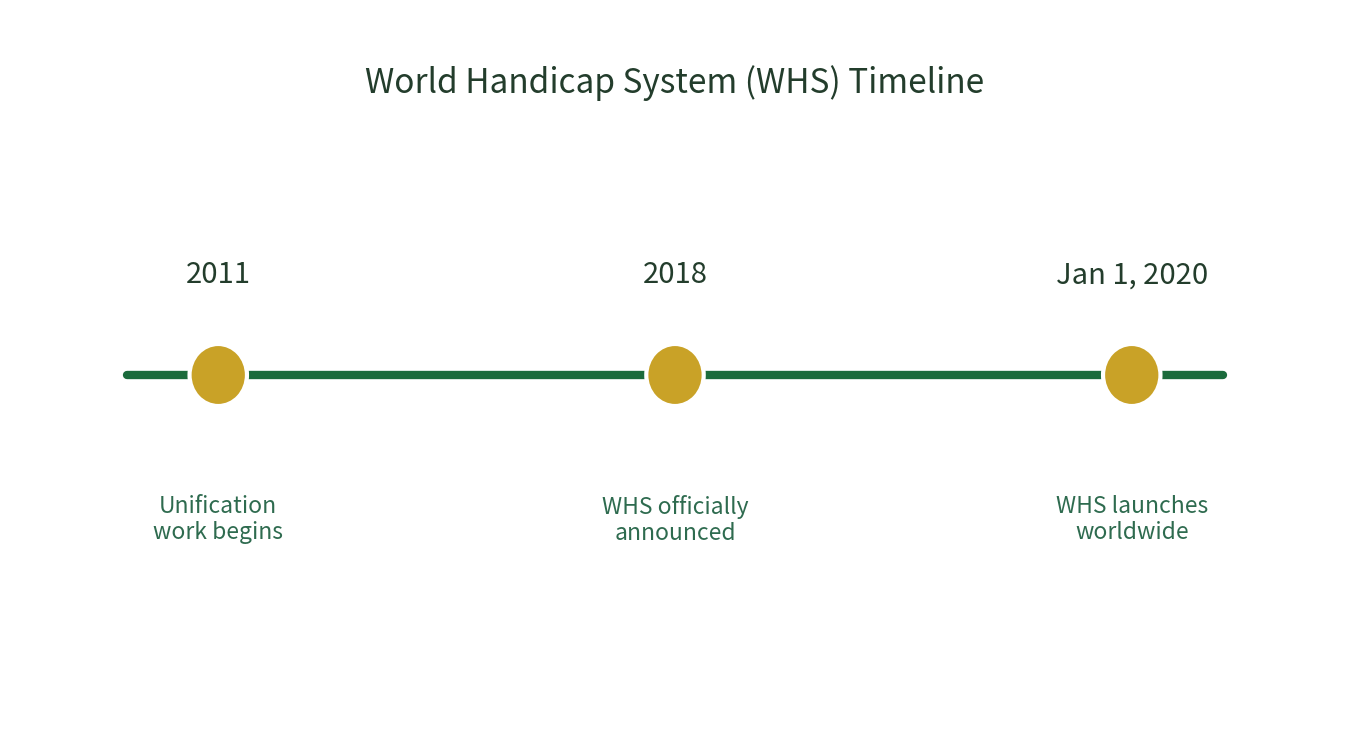
To fix this, the USGA and The R&A began work on a unified system back in 2011, and in 2018 they officially announced the creation of the World Handicap System (WHS).
The WHS finally launched worldwide on January 1, 2020, meaning golfers anywhere on the planet now calculate their handicap index using the exact same method.

How the Math Works
Under WHS, your Handicap Index is the average of your best 8 Score Differentials out of your most recent 20 rounds — not just any 8 rounds, but specifically the top 8 from that rolling window of 20.
The key building block is the Score Differential itself, calculated as (113 ÷ Slope Rating) × (Adjusted Gross Score − Course Rating − PCC adjustment).
Course Rating represents the score a scratch golfer (handicap 0) is expected to shoot on that course, while Slope Rating measures how much harder that same course plays for an average bogey golfer compared to a scratch player.
New golfers without an existing handicap can submit three 18-hole rounds, or 54 holes total, to receive their first Handicap Index, which then becomes fully established once 20 scores have been recorded.
Separately, the number of strokes you actually receive on the course you're playing is your Course Handicap, calculated as Handicap Index × (Slope Rating ÷ 113) — which is why two golfers with the same Handicap Index can receive a different number of strokes depending on which course they play.
Good to Know
WHS also includes safeguards that protect golfers from a single disastrous hole skewing their handicap. The most important one is the Net Double Bogey cap, which limits the maximum score counted on any hole to a double bogey plus any handicap strokes you're entitled to on that hole.
In other words, even if you completely blow up and take a triple bogey or worse on one hole, only the capped maximum counts toward your Score Differential — so one bad hole won't distort your entire handicap.
Another clever feature is the Playing Conditions Calculation (PCC), which compares how every golfer who played a given course on a given day performed relative to expectations, then automatically adjusts for unusually hard or easy weather and course conditions.
Together, these features make WHS far more sophisticated than a simple scoring average — it's a system designed to account for daily variables that are otherwise outside any single golfer's control.
'취미생활 > 골프' 카테고리의 다른 글
| Golf :: Se Ri Pak's Barefoot Shot — How a Legend Was Born at the 1998 U.S. Women's Open (0) | 2026.08.01 |
|---|---|
| 골프 :: 맨발의 투혼, 박세리는 어떻게 골프 역사의 전설이 됐을까? 레전드 스타 총정리 (0) | 2026.08.01 |
| 골프 :: 내 핸디캡, 대체 어떻게 계산되는 걸까요? 핸디캡 시스템 총정리 (1) | 2026.07.31 |
| Golf :: How Did a Garage 'Ping' Sound Become a Golf Club Brand? A Brand History (0) | 2026.07.30 |
| 골프 :: PING(핑), 차고에서 울린 소리는 어떻게 골프클럽 브랜드가 됐을까? 브랜드별 역사 총정리 (0) | 2026.07.30 |