2026. 7. 28. 22:36ㆍ취미생활/골프
Hello there.
Today's post is about golf course dress codes and the first-round checklist every beginner golfer should have ready.
What should you actually wear to a golf course?
More and more people are picking up golf these days, often practicing at a screen golf simulator before ever setting foot on a real course. Once a tee time is actually booked, though, the first worry usually isn't the swing — it's the outfit. What counts as acceptable, and what doesn't?
Golf has a reputation for stricter dress standards than most other sports, covering everything from the clubhouse to the fairway. I work in developing electrification equipment, so my day-to-day wardrobe is about as casual as it gets, which makes the golf course one of the few places where I actually think twice about what's in my closet.
In this post, we'll look at why golf courses have dress codes in the first place, what you should actually wear, and what to pack before heading out for your first round.

Origins: Why Is the Dress Code So Strict?
Golf's dress culture traces back to the exclusive Scottish clubs where the sport first took shape. Those early clubs were social institutions run on membership, and formal attire was seen as a way to show respect for the game and the club itself.
That history is part of why so many courses still require a collared shirt today. It isn't really about looking sharp for its own sake — it's a habit rooted in courtesy toward the other players you're sharing the round with, and toward the course.
The footwear rule has a more practical origin. Metal spikes used to be standard on golf shoes, but they were found to tear up the putting greens. Golf's governing bodies took this seriously enough that the USGA has notified players not to wear metal-spiked shoes during qualifying rounds and practice sessions.
As a result, most courses today only allow soft spikes, which grip well without damaging the turf. It's worth checking this when you buy your first pair of golf shoes, since not every shoe on the market meets the requirement.

Key Facts: From Shirt to Shoes, What to Actually Wear
For tops, a collared polo shirt or a golf-specific knit sweater is the standard choice. Crew-neck T-shirts without a collar are turned away at most courses, so when you're shopping for golf clothes, the first thing to check is whether the shirt has a collar.
For bottoms, slacks or a golf skirt are the usual picks. Denim jeans may look casual and comfortable, but they're on the banned list at the vast majority of courses. Some courses do allow shorts, though length and fabric restrictions often apply, so it's safer to check the course's policy beforehand.
Footwear, as mentioned above, means soft-spike golf shoes. Regular sneakers, sandals, or flip-flops can get you turned away at the first tee, so a dedicated pair of golf shoes is worth the investment.
Outerwear matters too, depending on the season. A windbreaker or light golf jacket works well in spring and fall, while a warm golf-specific padded jacket is better for winter rounds. Either way, look for something that doesn't restrict your arm movement, since a bulky jacket can throw off your swing.
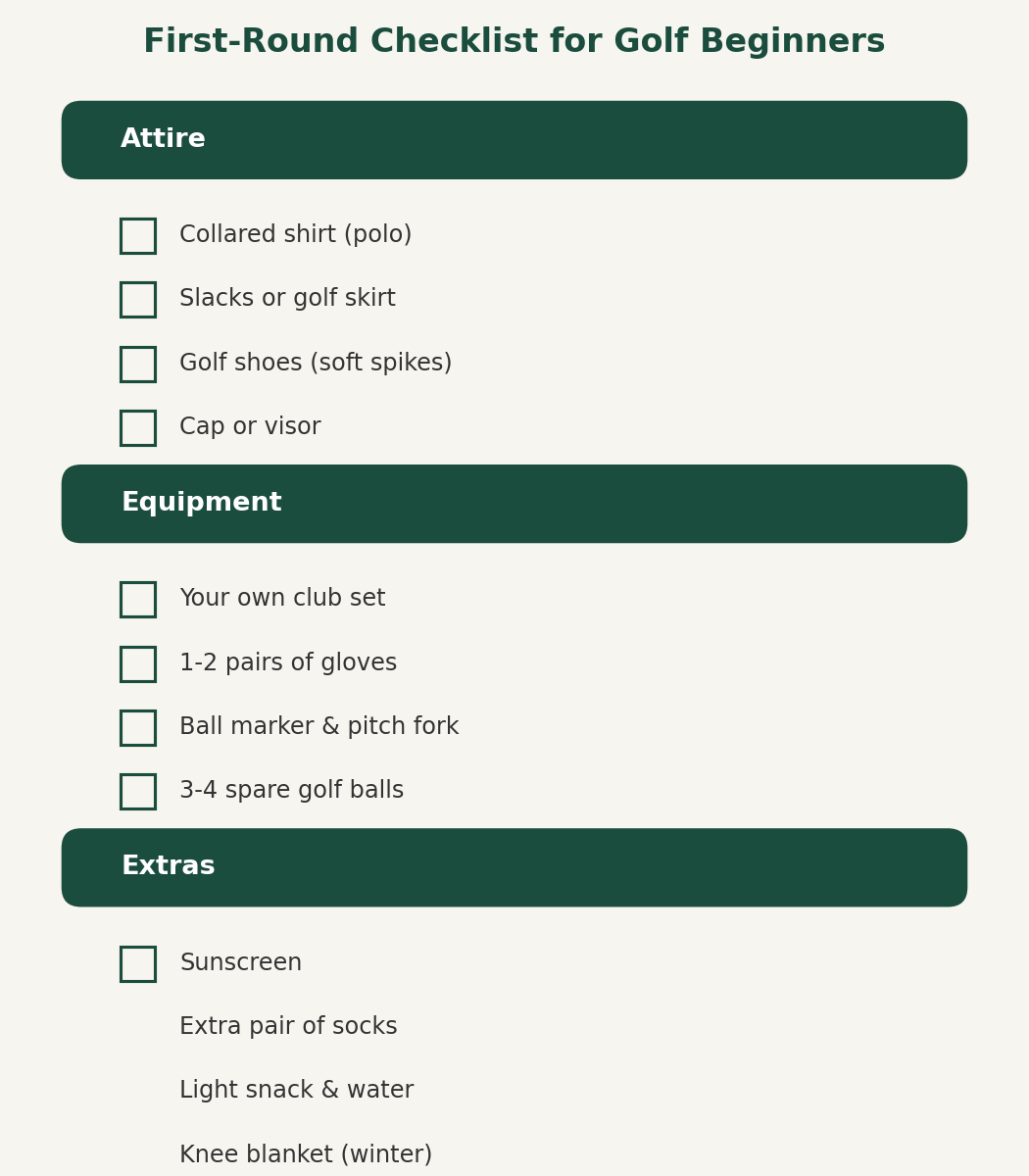
Good to Know: Your First-Round Checklist
Clothing isn't the only thing that matters — what you pack matters just as much. Your own set of clubs and a pair of gloves are the basics, and it's worth bringing a spare glove or two in case of sweat or rain.
A ball marker and a pitch-repair fork are small but essential items for the green. Good etiquette means repairing not just your own pitch mark, but any other visible marks you happen to notice nearby.
It's smart to pack three or four extra golf balls, since balls heading out of bounds or into a water hazard are a normal part of any round — especially your first one. Beginners in particular should err on the side of bringing more than they think they'll need.
Beyond that, sunscreen, an extra pair of socks, and a light snack and water are all worth packing. A round typically runs four to five hours, so these small preparations make a bigger difference to your energy and focus than you'd expect.
'취미생활 > 골프' 카테고리의 다른 글
| Golf :: How Did a Garage 'Ping' Sound Become a Golf Club Brand? A Brand History (0) | 2026.07.30 |
|---|---|
| 골프 :: PING(핑), 차고에서 울린 소리는 어떻게 골프클럽 브랜드가 됐을까? 브랜드별 역사 총정리 (0) | 2026.07.30 |
| 골프 :: 골프장 복장 규정, 정확히 알고 계셨나요? 골린이 첫 라운드 준비물 가이드 (0) | 2026.07.28 |
| Golf :: How Did Augusta National Become Golf's Most Legendary Course? (0) | 2026.07.27 |
| 골프 :: 오거스타 내셔널, 골프 역사상 가장 특별한 코스는 어떻게 탄생했을까? 명문 골프장 총정리 (0) | 2026.07.27 |