2026. 7. 28. 12:55ㆍ취미생활/야구
Hello everyone.
Today's post is about one of the most confusing and debated rules in baseball: the balk.
Even longtime fans often find themselves puzzled the moment an umpire throws up a hand and calls a balk, unsure exactly what the pitcher did wrong.
Have you ever watched a pitcher make what looked like a completely normal motion, only to see the umpire immediately call a balk?
To answer that, we need to look at why the balk rule exists in the first place. In this post, we'll walk through the origin and history of the balk rule, the most common types of balks, and exactly what happens on the field once one is called.
What Is a Balk, and Why Does It Exist?
A balk is an illegal act called against a pitcher when there is at least one runner on base, and the pitcher makes a motion that violates the rules governing legal delivery.
At its core, the rule exists to prevent deception. A pitcher who starts a motion as if about to deliver the ball but stops, or who pretends not to be paying attention to a runner and then suddenly throws over, is trying to gain an unfair advantage by confusing the baserunner. That kind of deceptive motion is exactly what the rule targets.
According to the Official Baseball Rules, the purpose of the balk rule is stated plainly: to prevent the pitcher from deliberately deceiving the runner. In other words, even if a motion looks perfectly natural to the pitcher, an umpire can still call a balk if the motion could realistically mislead a runner.
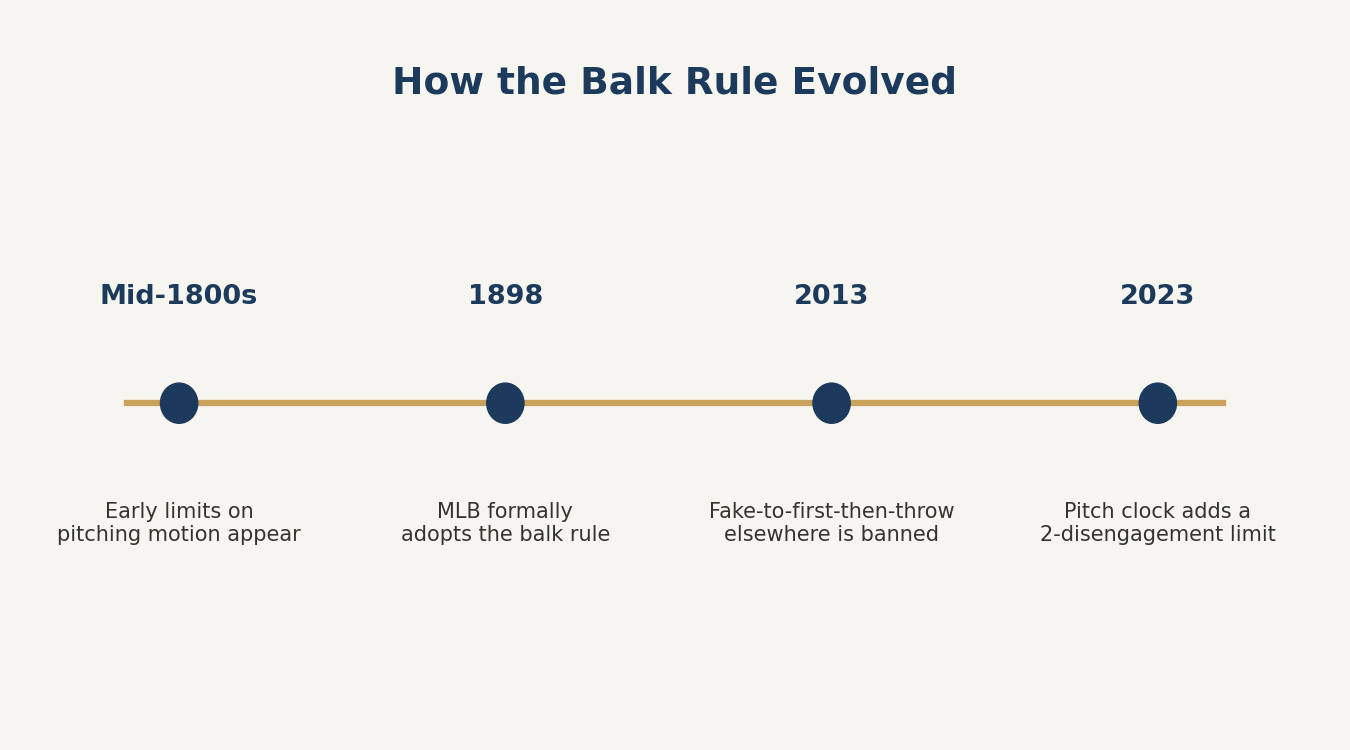
The rule didn't appear overnight. Early, informal restrictions on pitching motions date back to the mid-1800s, and after years of refinement, the balk rule was formally adopted into Major League Baseball in 1898, roughly in the form we still recognize today.
Common Types of Balks
The current MLB rulebook (Rule 6.02a) lists 13 distinct ways a pitcher can commit a balk, and a 14th was added starting in the 2023 season, bringing the total to 14.
The most frequently called balk is failing to come to a complete, discernible stop in the set position before delivering the pitch. Pitchers are required to pause clearly, even briefly, before starting their motion, and if that pause is too vague, umpires can rule it a balk.
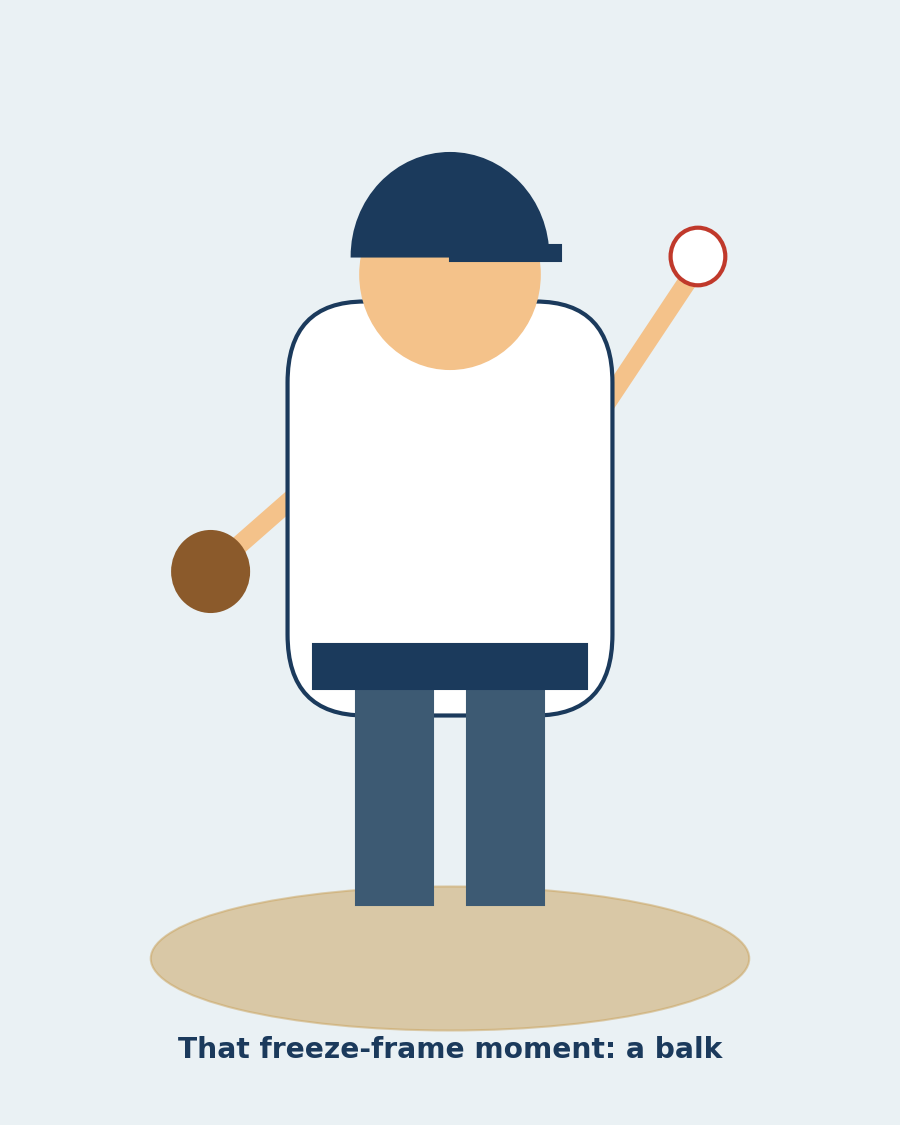
Another common type happens when a pitcher starts a natural pitching motion and then stops partway through, or fakes a throw to first base without actually releasing the ball. While on the rubber, going through the motion of a throw without completing it is treated as an attempt to deceive the runner, which draws a balk.
There's also a somewhat surprising category: simply flinching while standing on the rubber. Even if the pitcher considers it an involuntary movement, if the umpire judges that it could deceive a runner, a balk can be called regardless of intent.
Since the 2023 season, the pitch clock era added a new wrinkle. Pitchers are now limited to two "disengagements" per plate appearance — stepping off the rubber or attempting a pickoff — and a third attempt is ruled a balk unless it results in an out. It's part of a broader push to speed up the pace of play.

What Actually Happens When a Balk Is Called?
The moment a balk is called, the pitch itself is voided. Every runner currently on base automatically advances one base.
What about the batter? The batter isn't ruled out, and simply stays in the box with the count exactly as it was before the balk. In that sense, the penalty falls entirely on the pitcher.
You might assume a balk called with no runners on base doesn't matter much, but depending on the situation a different kind of penalty can still apply to the pitcher, so the rule isn't entirely toothless even in an empty-base situation.
If you watch enough games, you'll notice broadcasters frequently disagree in real time — "that's not a balk," "that's clearly a balk" — which says a lot about how much the call depends on an umpire's split-second judgment.