2026. 7. 23. 20:31ㆍ취미생활/야구
Hello.
Today I'm writing about one of baseball's most basic yet surprisingly confusing rules: the strike zone.
Where exactly does the strike zone begin and end?
Even longtime fans often struggle to explain it precisely. You may have heard that calls can vary slightly from umpire to umpire, and if you actually look at the rulebook, the strike zone turns out to be more clearly defined than most people assume.
Interest in the topic has grown even more since the KBO League introduced its Automatic Ball-Strike System (ABS). Now that a machine, not a human eye, makes the call, understanding exactly how the zone is defined matters more than ever.
So let's walk through the traditional definition of the strike zone first, and then look at how the recent ABS rollout has changed things.
Origins and Official Definition
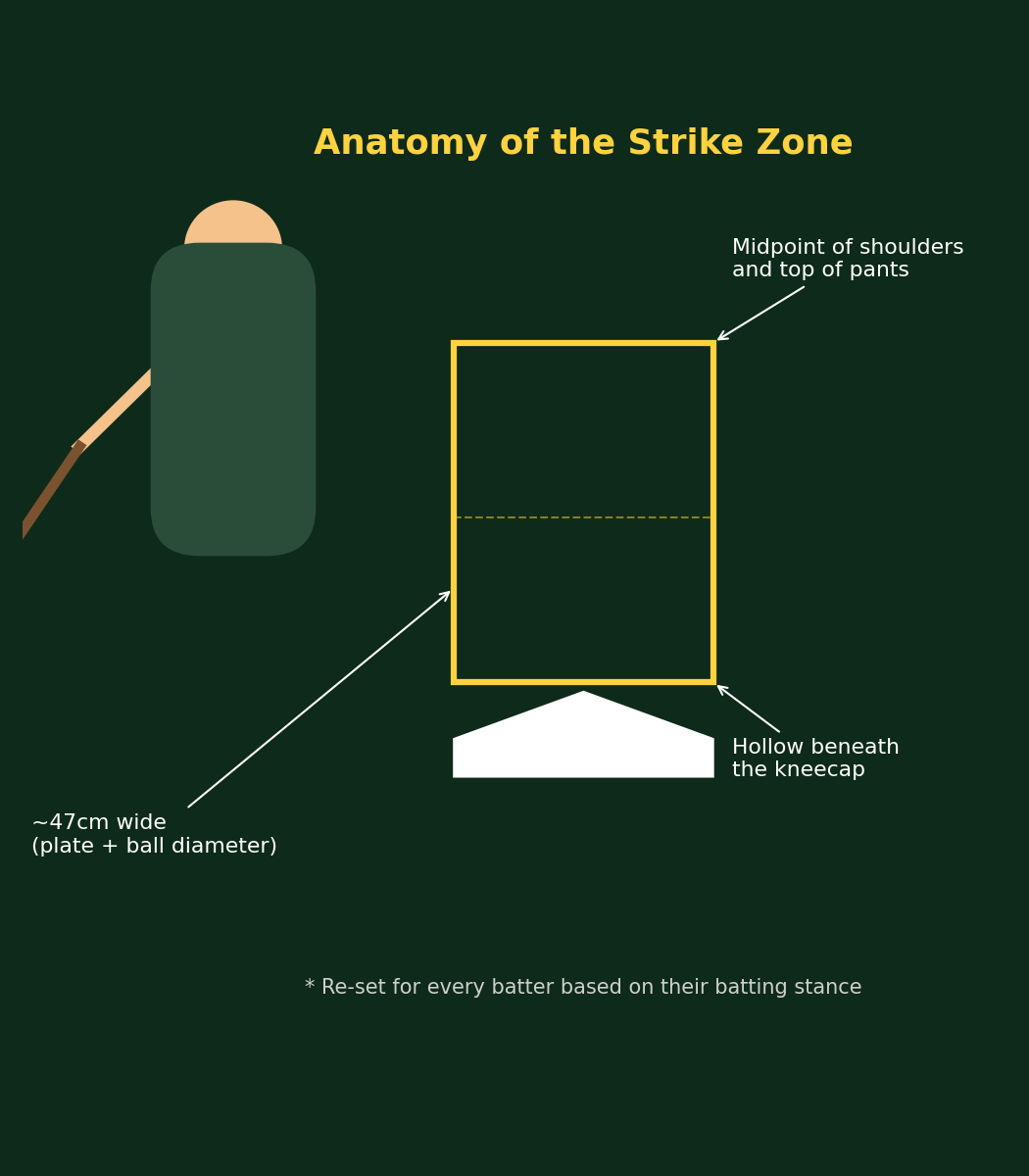
The MLB Official Baseball Rules define the strike zone quite specifically. The top is the midpoint between the batter's shoulders and the top of the uniform pants, and the bottom is the hollow beneath the kneecap.
The key detail is that these boundaries are determined by the batter's stance as they prepare to swing at a pitch. In other words, it's based on the batter's natural hitting posture, not however they happen to be standing before the pitch, or an exaggerated crouch.
This basic framework has stayed largely consistent over the years, though there have been fine adjustments to the details over time. In practice, though, the actual calls have long relied on the umpire's experience and eyesight.
As a result, the same pitch could be called differently depending on the umpire or the situation in the game. This inconsistency has been a long-running source of debate among baseball fans.
Size and How It's Judged
The width of the strike zone is based on home plate. The plate itself measures about 43.18cm across, and since a pitch that merely clips the edge still counts as a strike, the practical width umpires work with is a bit wider than that.
The height, on the other hand, is not a fixed number — it shifts with each batter's height and stance. That's exactly why a tall hitter and a short hitter end up with different strike zones.
Traditionally, umpires have judged this boundary purely by eye. Even veteran umpires with decades of experience couldn't fully avoid small inconsistencies and personal tendencies, simply because a human is making the call.
Factors like the pitcher-catcher's pitch sequencing, an umpire's focus late in a game, or the overall atmosphere have also been pointed to as subtle influences on calls. This is part of what pushed leagues toward exploring automated systems.
The ABS System and Recent Changes
Starting in the 2024 season, the KBO League officially adopted the Automatic Ball-Strike System, or ABS. The move was meant to reduce controversy around ball-strike calls and strengthen fairness across the league.
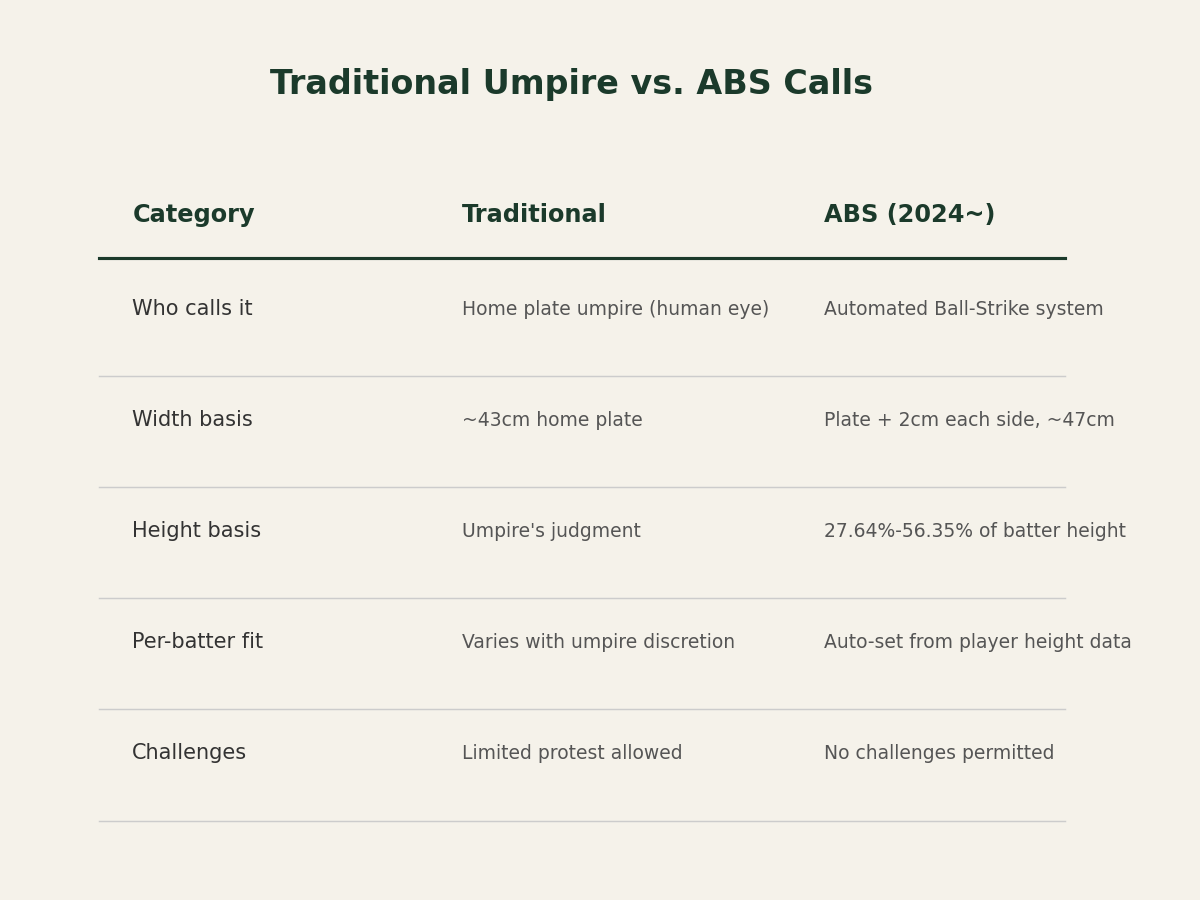
Under ABS, the horizontal boundary adds 2cm to each side of the plate's width, bringing the total to roughly 47.18cm. That's about one baseball's worth of extra margin on each side, reportedly meant to account for small margins of error in pitch tracking.
The vertical boundary is more precise still. The top of the zone is set at 56.35% of the batter's height, and the bottom at 27.64%, calculated automatically from each player's individual height data. That means the zone's height is recalculated for every single batter.
This approach has largely resolved concerns about taller or shorter players being unfairly advantaged or disadvantaged. One notable feature, though, is that ABS calls cannot be challenged — a sign of the league's commitment to treating the automated call as final.
Early on, some players said it took time to adjust to the unfamiliar calls. Even so, the shift is generally seen as a positive step toward more consistent officiating.