2026. 7. 23. 13:45ㆍ취미생활/축구

Hello everyone.
Today's post is about one of the most recognizable parts of soccer: the yellow and red card system, where it came from, and exactly how the rules work.
If you've ever watched a match, you've seen a referee reach into a pocket and pull out a card. It feels like it has always been part of the game, but the card system is actually a fairly recent addition to soccer's long history.
Why yellow and red, specifically? Was there a reason those two colors were chosen over any others? Let's walk through the story behind the cards, and then get into exactly when a referee reaches for one or the other.
Origins: Where Did the Cards Come From
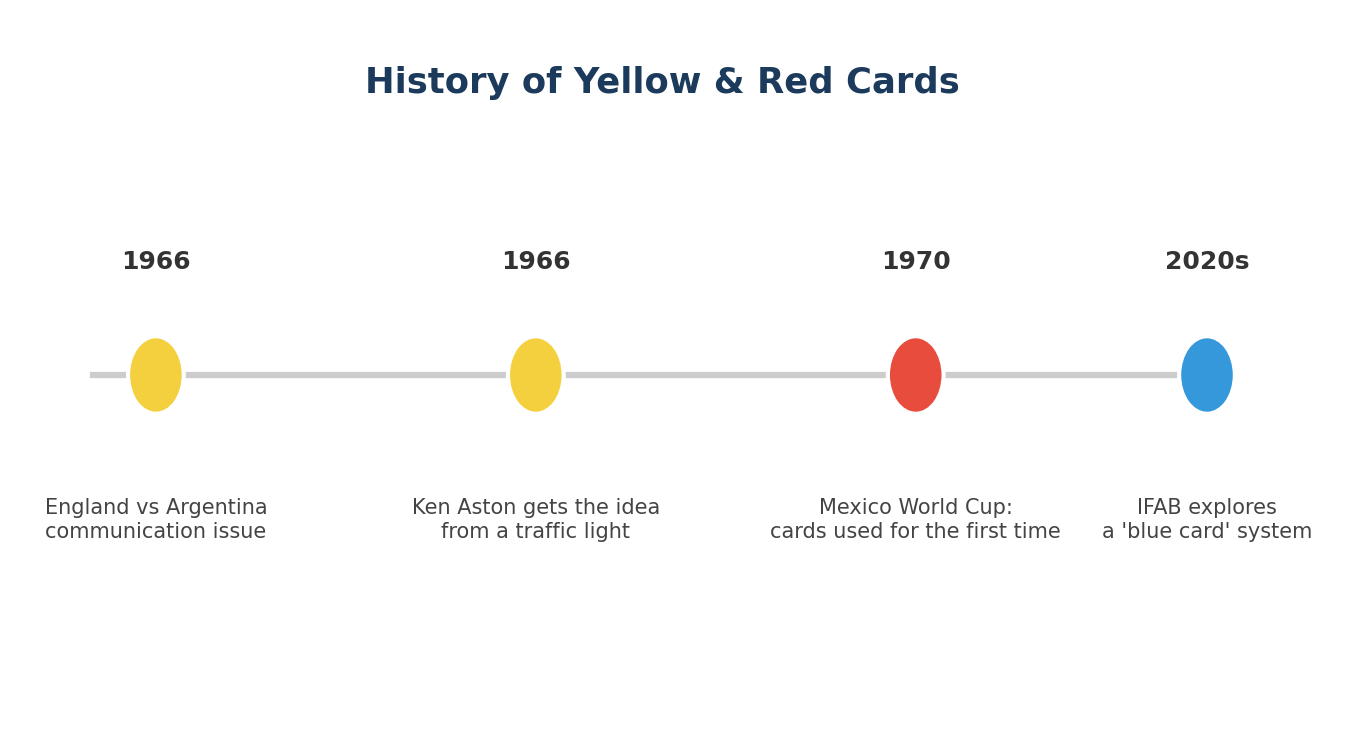
Yellow and red cards made their World Cup debut at the 1970 tournament in Mexico. Before that, referees had no standardized way to signal a caution or a sending-off. They relied on words and gestures, which worked fine when everyone spoke the same language, but broke down quickly in international matches.
That gap became painfully clear at the 1966 World Cup in England, during a match between England and Argentina. An Argentine player was ordered off the pitch but reportedly didn't understand the referee's decision and refused to leave for several minutes, creating a chaotic scene that made headlines.
English referee Ken Aston, who witnessed the incident, is said to have found his answer on the drive home. Stopped at a traffic light on Kensington High Street, he had a simple realization: yellow means slow down, red means stop. That everyday signal could translate directly onto the pitch.
The idea took a few years to become official, but by the 1970 Mexico World Cup, yellow and red cards were used for the first time in a match. The system solved the language problem instantly and has since been adopted, in various forms, well beyond soccer.
Key Facts: When Does a Card Actually Come Out
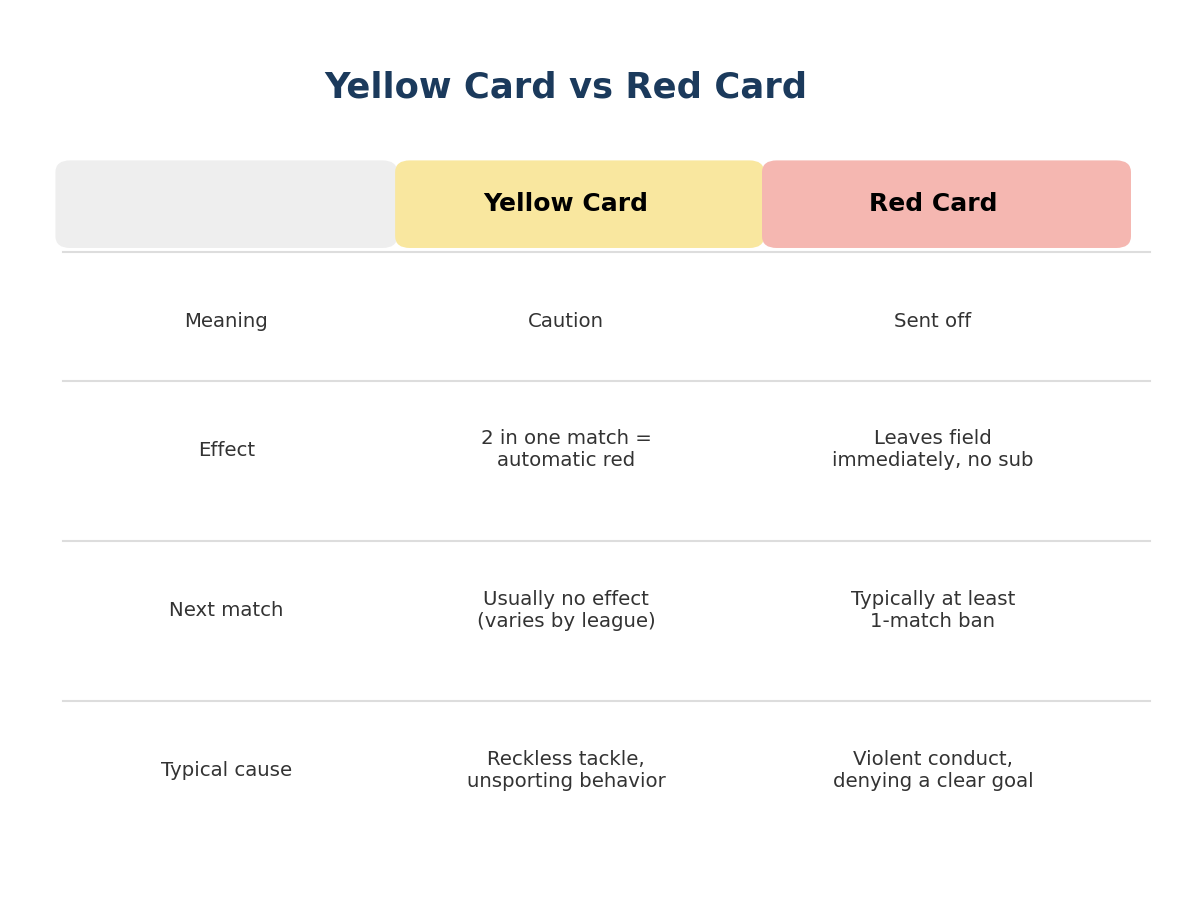
A yellow card is a caution. Referees show it for things like a reckless tackle, unsporting behavior, or deliberately wasting time. It's a warning, not an ejection.
Here's the part that trips a lot of casual fans up: one yellow card doesn't take a player out of the game. It's only when a player picks up a second yellow card in the same match that it automatically becomes a red card, and the player is sent off.
A red card, on the other hand, means an immediate ejection. A referee doesn't need to show two yellows first — violent conduct or denying an obvious goal-scoring opportunity can earn a player a straight red card on the spot. This is usually called a "direct red."
Once a player is sent off, they have to leave the field immediately, and unlike a substitution, the team cannot replace them — they simply play the rest of the match a player short. A suspension typically follows too, often at least one match, though the exact length depends on the league or competition's own disciplinary rules.
Good to Know
The card system isn't frozen in time — it keeps getting debated and adjusted. Most recently, the International Football Association Board (IFAB) has been exploring a "blue card," which would send a player off temporarily, similar to a penalty in ice hockey or handball, rather than for the rest of the match.
Since VAR (Video Assistant Referee) was introduced, referees can review red-card-worthy incidents on screen before making a final call. Many observers feel this has reduced the number of wrongly awarded ejections compared to the pre-VAR era.
Accumulated yellow cards also carry consequences, and the exact threshold varies by competition. In many leagues and tournaments, picking up a certain number of yellow cards over a season or a tournament triggers an automatic one-match suspension, even without ever seeing red.
Next time you're watching a match and the referee reaches into a pocket, it's worth taking a second to guess which card is coming — and why. Understanding the logic behind the call tends to make the whole game more enjoyable to watch.