2026. 7. 21. 22:25ㆍ취미생활/축구

Hello everyone.
Today I'll be writing about the history of adidas, one of football's most iconic boot brands.
Have you ever wondered where those three stripes on football boots actually came from?
Walk into any football store today and you'll find dozens of boot brands lined up on the shelves. But few carry as much history as adidas, a brand that's nearly a century old.
adidas has also had a long-running relationship with the World Cup itself, so today let's trace that story from the very beginning.
Origins
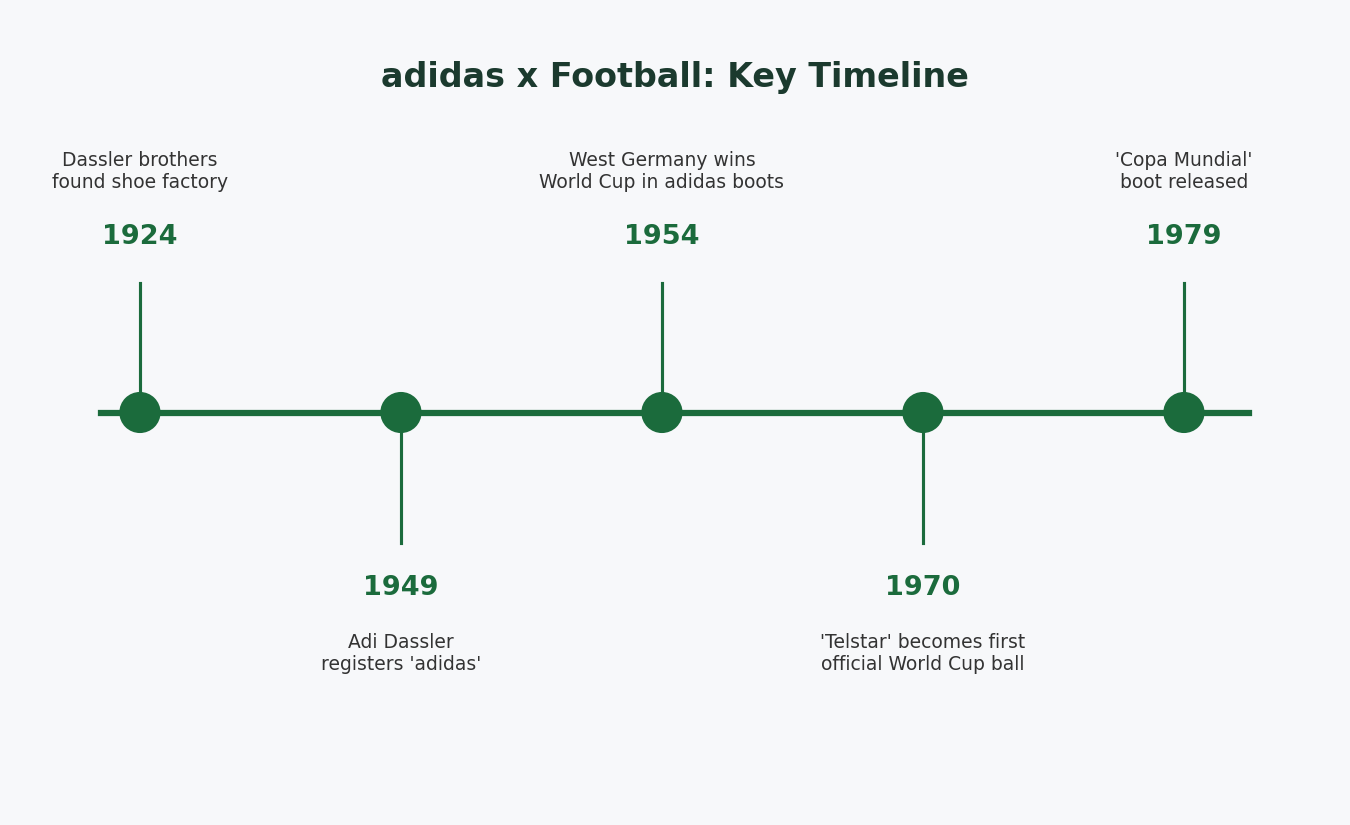
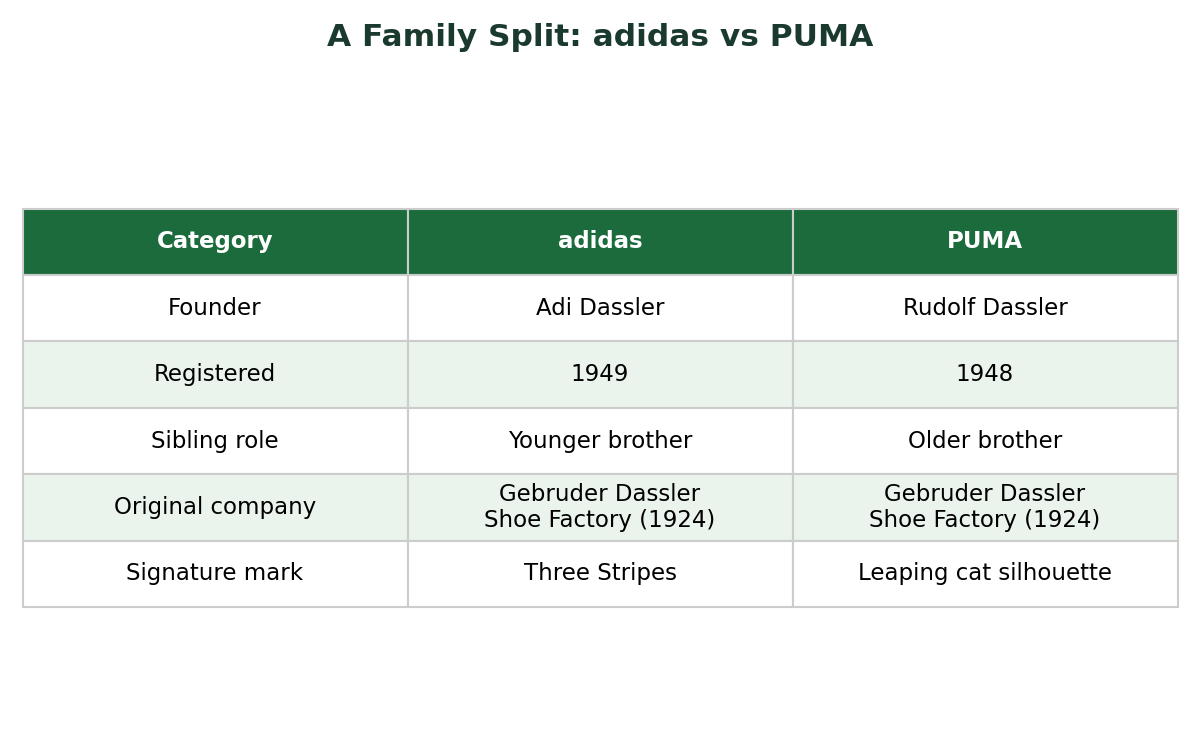
The story of adidas starts in 1924, in a small German town called Herzogenaurach. Brothers Adolf ("Adi") Dassler and Rudolf Dassler set up a shoe factory together.
The brothers reportedly got their start making shoes in their mother's laundry room after returning from World War I. It was a modest beginning, but their handmade shoes slowly built a reputation.
Their partnership, however, didn't last. Tensions grew during World War II, and by 1948 the brothers split the company entirely.
Rudolf went on to register PUMA, while Adi registered "adidas" the following year in 1949, combining his own name (Adi Dassler). The two brothers built factories on opposite sides of the river running through town, and Herzogenaurach reportedly became known as "the town of bent necks," as residents would glance down to check which brand of shoes the person across from them was wearing.
Key Facts
One of the defining moments that turned adidas into a global name was the 1954 World Cup in Switzerland.
West Germany had been thrashed 3-8 by Hungary earlier in the tournament, yet they met Hungary again in the final and won 3-2, a result still remembered today as the "Miracle of Bern."
One of the hidden factors behind that win is said to have been adidas' screw-in stud boots, developed by Adi Dassler. It rained heavily on final day, turning the pitch to mud, and the German players were reportedly able to swap in longer studs to keep their footing while their opponents struggled.
That moment cemented adidas' reputation as a serious football boot brand, and its popularity quickly spread across European football.
Another landmark moment came at the 1970 World Cup in Mexico, when adidas supplied the official match ball for the first time. Its name was "Telstar."
The Telstar was built from 12 black pentagon panels and 20 white hexagon panels, a design chosen so the ball would stand out clearly on black-and-white television broadcasts of the era, its name blending "television" and "star." That design remains, even now, the image most people picture when they think of a classic football.

Good to Know
In 1979, adidas released a boot called the "Copa Mundial," a model that's said to remain a steady favorite among players and collectors even today.
The Three Stripes logo is another adidas hallmark. It's said to have started as a practical design meant to reinforce the shoe's structure before it eventually became the brand's signature mark.
Interestingly, the two Dassler brothers reportedly never reconciled, even until their deaths, and are said to be buried at opposite ends of the town cemetery. It's a striking irony that such a deep rift between two brothers ended up giving rise to two global brands.
adidas has continued to introduce a new official World Cup ball every tournament since, keeping its long relationship with football alive. Looking back at the history of just one brand shows how technology, people, and a bit of circumstance all come together to shape it.