2026. 7. 21. 22:23ㆍ육아생활

Hello!
Today's post is about supplements for babies and toddlers.
Do babies really need all those vitamins parents keep talking about?
If you've spent any time in parenting forums or baby product aisles, you've probably noticed how much attention supplements get. Vitamin D seems to come up constantly, probiotics are recommended by some pediatricians and skipped by others, and iron gets mentioned mostly around the six-to-twelve-month mark.
I remember standing in front of a shelf of baby vitamins myself, completely unsure which ones actually mattered. There are so many brands and formats that it's easy to feel overwhelmed.
So in this post, I want to walk through the supplements that come up most often for infants and toddlers, based on pediatric guidance, along with a few things worth keeping in mind. Just to be clear upfront: this is general information, not medical advice, and the right choice for your child depends on their individual health, so please check with your pediatrician before starting any supplement.

Why Supplements Come Up So Often
Breast milk, formula, and solid foods generally cover most of a baby's nutritional needs, but a few nutrients are trickier to get enough of through diet alone. Vitamin D is a good example — a large portion of it is normally produced when skin is exposed to sunlight, but between sun protection habits and more time spent indoors, many infants don't get enough from sunlight or food alone.
According to the American Academy of Pediatrics, breastfed and partially breastfed infants should receive 400 IU of vitamin D per day starting shortly after birth, and infants who drink less than about a liter of vitamin D-fortified formula a day should also be supplemented. Guidance generally puts the recommended amount at 400 IU for infants, rising to 600 IU for older children, with an upper limit around 1200 IU.
Low vitamin D is associated with rickets, a condition where bones don't develop properly, and it's also been linked to a higher risk of weakened immunity and allergies. That's a big part of why pediatricians so often recommend vitamin D drops for breastfed babies in particular.
Iron is another nutrient that gets a lot of attention. Babies are typically born with iron stores from their mother, but those reserves start declining around four to six months of age. If a baby isn't getting enough iron through solids — especially meat — iron deficiency becomes fairly common between nine and twelve months, and iron plays a role not just in preventing anemia but also in brain development during this window.
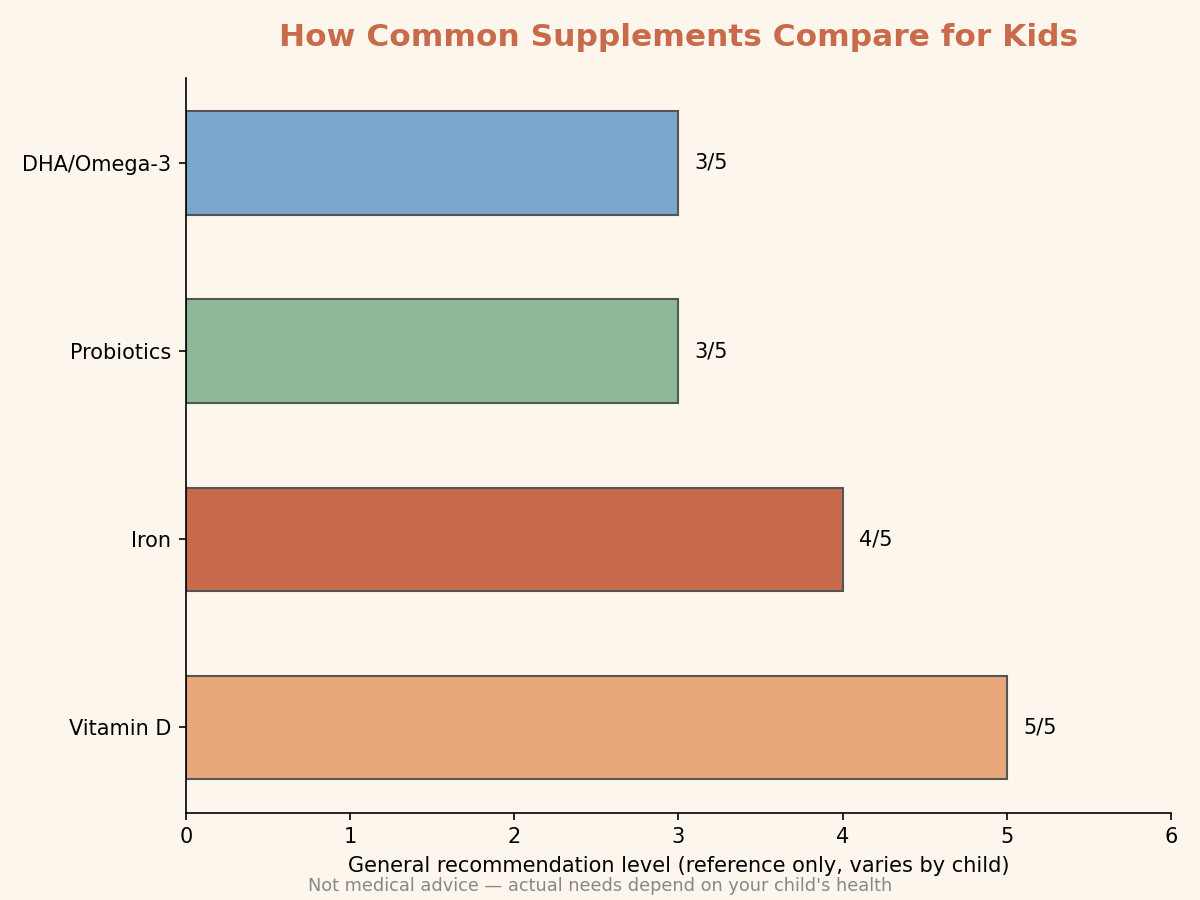
The Main Supplements, One by One
After vitamin D, probiotics are probably the next most common question parents have. Probiotics are thought to support digestion, regular bowel movements, and immune function by boosting beneficial gut bacteria, which is why some pediatricians suggest them for babies with sensitive stomachs or frequent colds and stomach bugs. That said, it's hard to claim any single strain or product works identically for every child — responses tend to vary quite a bit.
DHA and omega-3 fatty acids are well known for their role in brain and eye development. Getting them through oily fish is ideal, but if your child is a picky eater who avoids fish, a supplement is sometimes considered as a substitute.
Multivitamins are widely available too, but there's a catch worth knowing: giving a multivitamin alongside a separate single-nutrient supplement (like standalone vitamin D drops) can lead to accidentally doubling up on certain nutrients. If your child takes more than one product, it's worth checking the labels together to see the combined totals.
Iron and calcium (or dairy) can interfere with each other's absorption, so it's generally suggested to space them out by a couple of hours rather than giving them together. These are the kinds of small details that are easy to miss, so if your child is on multiple supplements, running the combination by a pediatrician or pharmacist is a good idea.
Things Worth Keeping in Mind
First, supplements can't replace meals. No matter how good a vitamin is, it won't make up for an unbalanced diet — most pediatric guidance agrees that supplements should fill small gaps, not serve as a substitute for actual food.
Second, rather than assuming a particular brand is automatically best, it helps to check whether the dosage matches your child's age, what additives are included, and whether the format (tablet, chewable, liquid) is actually easy for your child to take. In practice, the right format often matters more for consistency than the brand name does.
Third, watch out for exceeding the upper intake limit. Fat-soluble vitamins like vitamin D can build up in the body, so giving multiple products at once raises the risk of overdoing it. Getting into the habit of checking the listed amount on each product is worth the extra minute.
Fourth, if your child develops unusual symptoms — a rash, upset stomach, constipation, or diarrhea — after starting a new supplement, it's reasonable to pause it and check in with your pediatrician rather than guessing. Introducing one new supplement at a time, instead of several at once, also makes it easier to notice if something doesn't agree with your child.
One more time for clarity: the amounts and information shared here are general reference points, not a prescription. Actual needs vary by age, weight, and health status, so if you're unsure whether your child needs a particular supplement, a conversation with your pediatrician is the safest next step.
'육아생활' 카테고리의 다른 글
| Parenting :: What Really Helps Kids Grow Taller? A Guide to Height Growth Habits (0) | 2026.07.23 |
|---|---|
| 육아 :: 우리 아이 키 성장, 어떻게 도와줄 수 있을까요? 키성장 생활습관 총정리 (2) | 2026.07.23 |
| 육아 :: 우리 아이 영양제, 꼭 챙겨야 할까요? 비타민D·철분·유산균 가이드 (0) | 2026.07.21 |
| Parenting :: When Should Your Baby Get Vaccinated? A Guide to Infant Immunization Schedules (0) | 2026.07.20 |
| 육아 :: 영유아 예방접종, 시기별로 언제 맞춰야 할까요? 예방접종 총정리 (0) | 2026.07.20 |