2026. 7. 23. 22:23ㆍ육아생활

Hello there.
Today's post is about everyday habits that can help support your child's height growth.
As a parent, it's easy to worry when your child seems shorter than other kids their age. The neighbor's kid seems to be shooting up while yours stays about the same, and before you know it you're searching online for "how to help my child grow taller."
Genetics plays a big role in a child's eventual height, but there are still plenty of things within a family's control. That's what today's post focuses on.
Can everyday habits really make a meaningful difference in how tall your child grows?
The Science Behind Growth
A child's height is generally understood to be shaped by a combination of genetics, nutrition, sleep, exercise, and hormones. Parental height is often cited as the single biggest genetic factor, but environmental factors also play a meaningful role in how a child grows.
Lifestyle habits matter most while the growth plates are still open, meaning before and during puberty. Growth plates are areas of cartilage near the ends of long bones, and cell division in this cartilage is what drives an increase in height.
Growth hormone, released by the pituitary gland, is reported to be secreted more actively during deep sleep, which is one reason sleep quality gets so much attention in discussions about children's growth.
It's worth keeping in mind that no single supplement or food will cause a dramatic growth spurt on its own. These factors tend to work together, and consistency across all of them is what tends to matter most.
Sleep and Growth Hormone
You've probably heard the classic advice that kids need to sleep early to grow tall. The idea of a "golden window" between roughly 10pm and 2am comes less from a magic clock time and more from the fact that growth hormone secretion ramps up during deep, slow-wave sleep, wherever that falls in a child's schedule.
In other words, what matters more than the exact bedtime is going to sleep at a consistent hour, getting enough total sleep, and creating conditions that make deep sleep more likely. Screen time right before bed is worth limiting, since it can interfere with how quickly a child settles into deep sleep.
Recommended sleep duration also shifts with age. Younger children generally need more total sleep, and that recommended amount gradually decreases through the school years and into the teenage years. Take a look at the chart below for a general reference.

If naps run too late or happen at inconsistent times, that can end up disrupting the quality of nighttime sleep too. Where possible, putting a child down and waking them up around the same time every day tends to help.
Nutrition, Exercise, and What to Keep in Mind
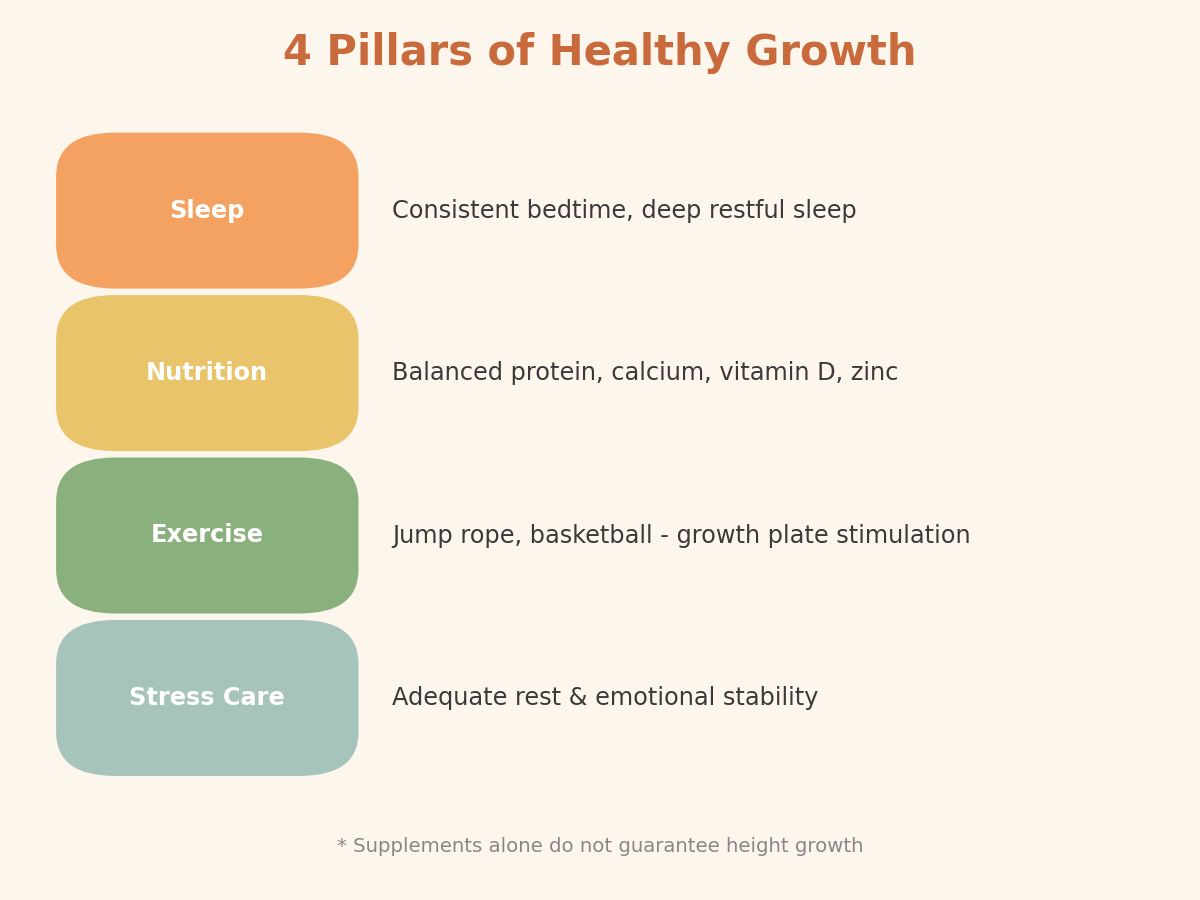
On the nutrition side, a balanced diet that includes protein, calcium, vitamin D, and zinc is generally considered supportive of healthy growth. Rather than fixating on any single nutrient, the basics come down to three regular meals plus reasonable snacks that together cover a wide range of nutrients.
Exercise that puts moderate stress on the growth plates is often mentioned as helpful, and jump rope, basketball, and badminton are commonly cited examples because they involve light, repeated jumping. That said, overtraining or heavy strength training can backfire, so it's worth matching activity level to what the child can comfortably handle.
Stress management matters more than people often assume. Chronic stress or emotional instability in a child is reported to interfere with growth hormone secretion, so keeping a calm and emotionally supportive environment can be considered part of a growth-friendly routine too.
There are plenty of supplements marketed for height growth, but these are best understood as a supporting piece at most — without adequate sleep, nutrition, and exercise, they're unlikely to make much difference on their own. If a child's growth seems noticeably slower than peers or you're genuinely concerned, it's worth checking in with a pediatrician or pediatric endocrinologist rather than relying on self-diagnosis.
'육아생활' 카테고리의 다른 글
| Parenting :: How Do You Choose the Right Car Seat for Your Baby? (0) | 2026.07.25 |
|---|---|
| 육아 :: 카시트, 어떻게 골라야 우리 아이가 안전할까요? 육아용품 총정리 (0) | 2026.07.25 |
| 육아 :: 우리 아이 키 성장, 어떻게 도와줄 수 있을까요? 키성장 생활습관 총정리 (2) | 2026.07.23 |
| Parenting :: Do Babies Really Need Vitamins? A Guide to Vitamin D, Iron, and Pro (0) | 2026.07.21 |
| 육아 :: 우리 아이 영양제, 꼭 챙겨야 할까요? 비타민D·철분·유산균 가이드 (0) | 2026.07.21 |