2026. 7. 20. 18:10ㆍ자산관리
Hello everyone.
Today's post is about real estate auctions.
Does the word "auction" make you picture a complicated legal process that has nothing to do with you?
Interest in real estate auctions has grown noticeably in recent years. As mortgage regulations tightened, it became harder to find desirable properties through ordinary sales, and more buyers started looking toward the auction market, which is comparatively less affected by those regulations.
Reports suggest that the number of real estate auction filings has topped 110,000 cases for two consecutive years, and winning bid ratios for Seoul apartments reportedly reached their highest level since 2021. That said, these trends vary widely by region and property type, so today we'll focus less on market forecasts and more on understanding how the auction system itself actually works.
What Is a Real Estate Auction
Auctions can broadly be divided into private auctions between individuals and public auctions run by a court, which is a government body. What people usually mean by "real estate auction" is this court-run public auction.
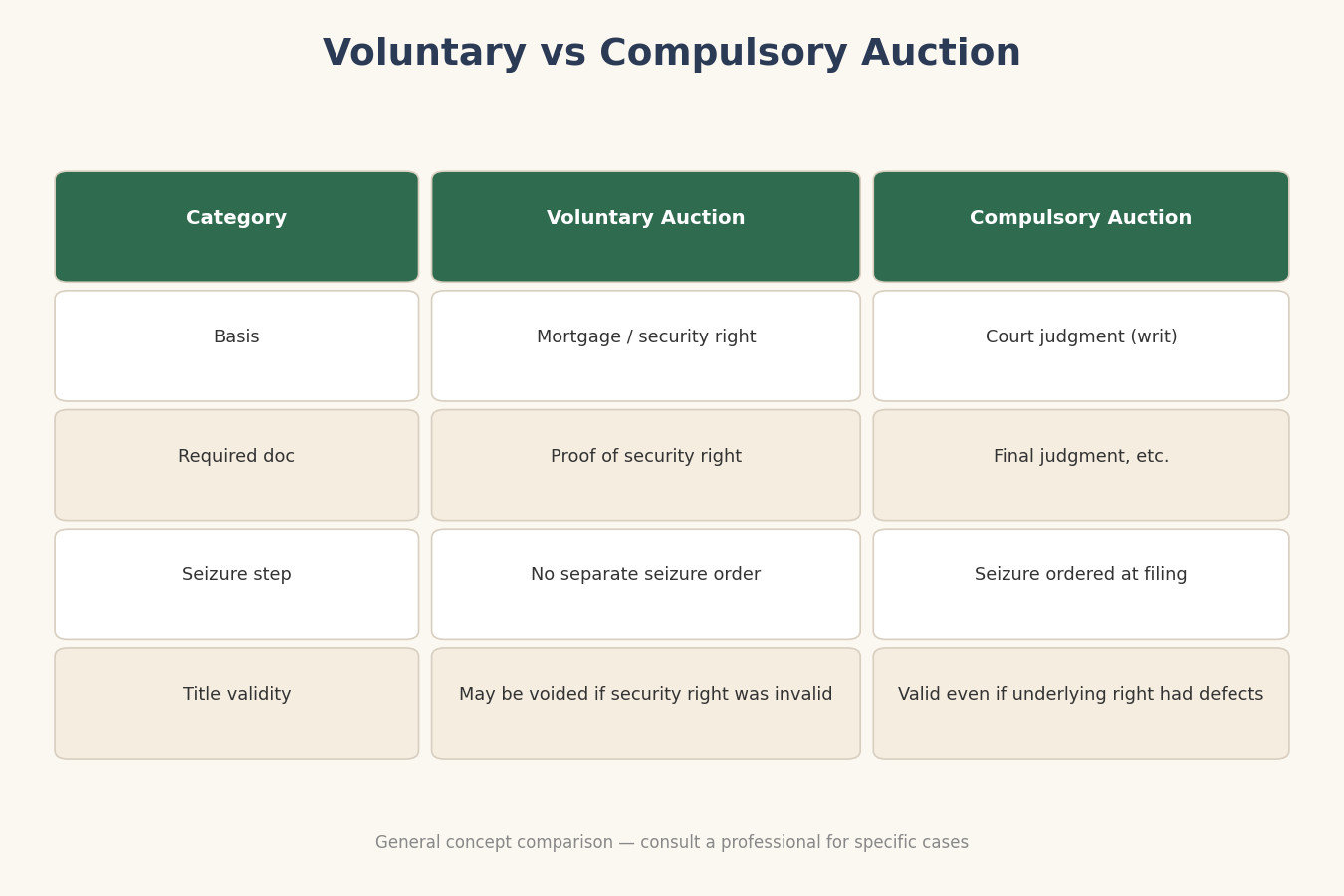
Court auctions are further split into voluntary auctions and compulsory auctions. A voluntary auction is filed by a creditor enforcing a security right, such as a mortgage, that was already registered on the property, and it can be filed with proof of that security right alone, without needing a separate court judgment.
A compulsory auction, on the other hand, is used when there is no such security right in place, and it proceeds based on a writ of execution such as a court judgment. Both types follow largely similar procedures, but they differ in filing requirements and, notably, in how the buyer's title acquisition is treated afterward.
For example, in a voluntary auction, if the underlying security right turns out to have been invalid from the start, the winning bidder's title acquisition can also become invalid. In a compulsory auction, by contrast, the winning bidder's title acquisition is generally considered valid even if there was a defect in the underlying right behind the judgment. These distinctions matter, so it's worth confirming the details with a professional before bidding.
How the Process Works
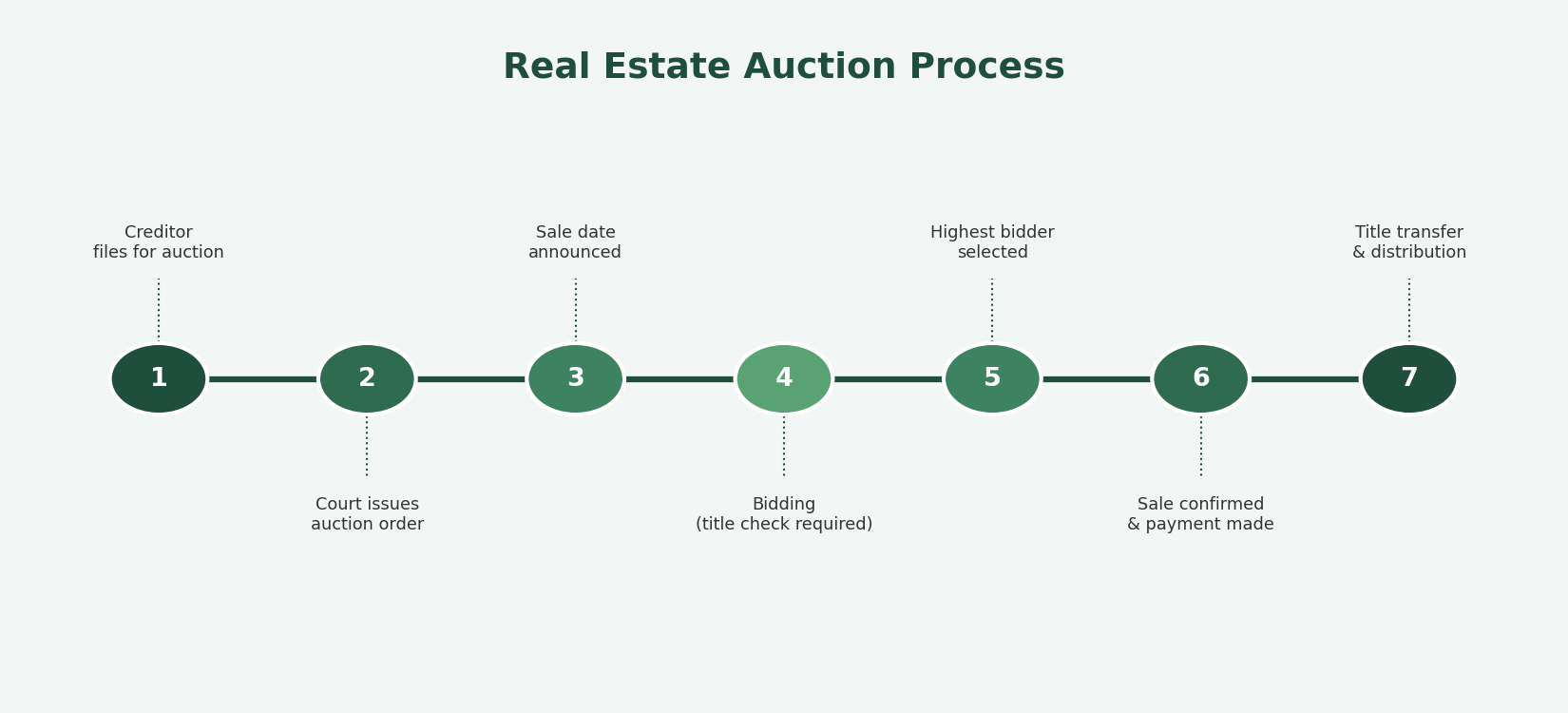
An auction typically begins when a creditor files a petition with the court. Once the court issues an order to begin the auction and completes preparations, a sale date is announced, and from that point ordinary people can look up property details through the Supreme Court's auction information website.
Before jumping into bidding on a property that catches your eye, you need to run a title check using the property registry. This step confirms whether any rights, such as a senior tenant's lease or a lien, would still survive the sale and be passed on to the winning bidder — skipping it can leave you with unexpected costs.
On-site inspection matters just as much as the title check. Walking through the property lets you see the actual occupancy situation and physical condition that documents alone won't reveal, which helps you anticipate the risks involved in the eviction process that may follow a successful bid.
On the day of bidding, whoever submits the highest bid is named the top bidder, and only after the court confirms the sale and the buyer pays the full purchase price does ownership actually transfer. The whole process can take anywhere from a few months to considerably longer, so it's important to plan your finances with that timeline in mind.
Risks and Tips for Beginners
The biggest appeal of an auction is the possibility of buying property below market price. But that upside comes with variables you won't find in a normal sale — a missed title issue, resistance during eviction, or a lower-than-expected loan limit, to name a few.
If the existing occupant doesn't vacate voluntarily after the sale, it can escalate into an eviction lawsuit or forced enforcement, adding both time and cost. It's worth factoring that risk into how you set your bid price from the start.
Financing also works differently than in a regular purchase. There is a dedicated loan product for auction balance payments, but the limit can vary depending on the winning bid, the appraised value, and whether the property is in a regulated area — so it's safer to check your borrowing capacity before you bid, not after.
If you're new to auctions, it may help to start small with lower-risk properties, or to practice title analysis through a study group or professional consultation before committing real money. This post is meant as general educational information about how auctions work, not a recommendation to bid on any specific property.

'자산관리' 카테고리의 다른 글
| Futures Trading Explained: Expiration, Margin, and the Rise of Perpetual Futures (0) | 2026.07.23 |
|---|---|
| 자산관리 :: 선물 거래, 만기와 증거금부터 요즘 화제인 무기한 선물까지 (0) | 2026.07.23 |
| 자산관리 :: 경매, 어떻게 시작해야 할까요? 부동산 경매 절차와 권리분석 총정리 (0) | 2026.07.20 |
| Real Estate :: Is Jeonse Disappearing? Korea's Shift Toward Monthly Rent (0) | 2026.07.19 |
| 부동산 :: 전세는 사라지고 월세만 남을까? 최근 임대차 시장 트렌드 총정리 (0) | 2026.07.19 |