2026. 7. 18. 13:51ㆍ자산관리

Hello.
Today's post is about a concept you'll keep running into in the crypto world: Layer 2.
Have you ever wondered why fees for the same coin transfer can be so different from one moment to the next, or why some transactions take forever to confirm?
To answer that, it helps to understand the "layered" structure blockchains use to process transactions. Today we'll break down Layer 2, a technology that major exchanges and projects have been racing to strengthen recently.
Before we start, a quick note: this post is general educational information, not investment advice or a recommendation for any specific coin or project.
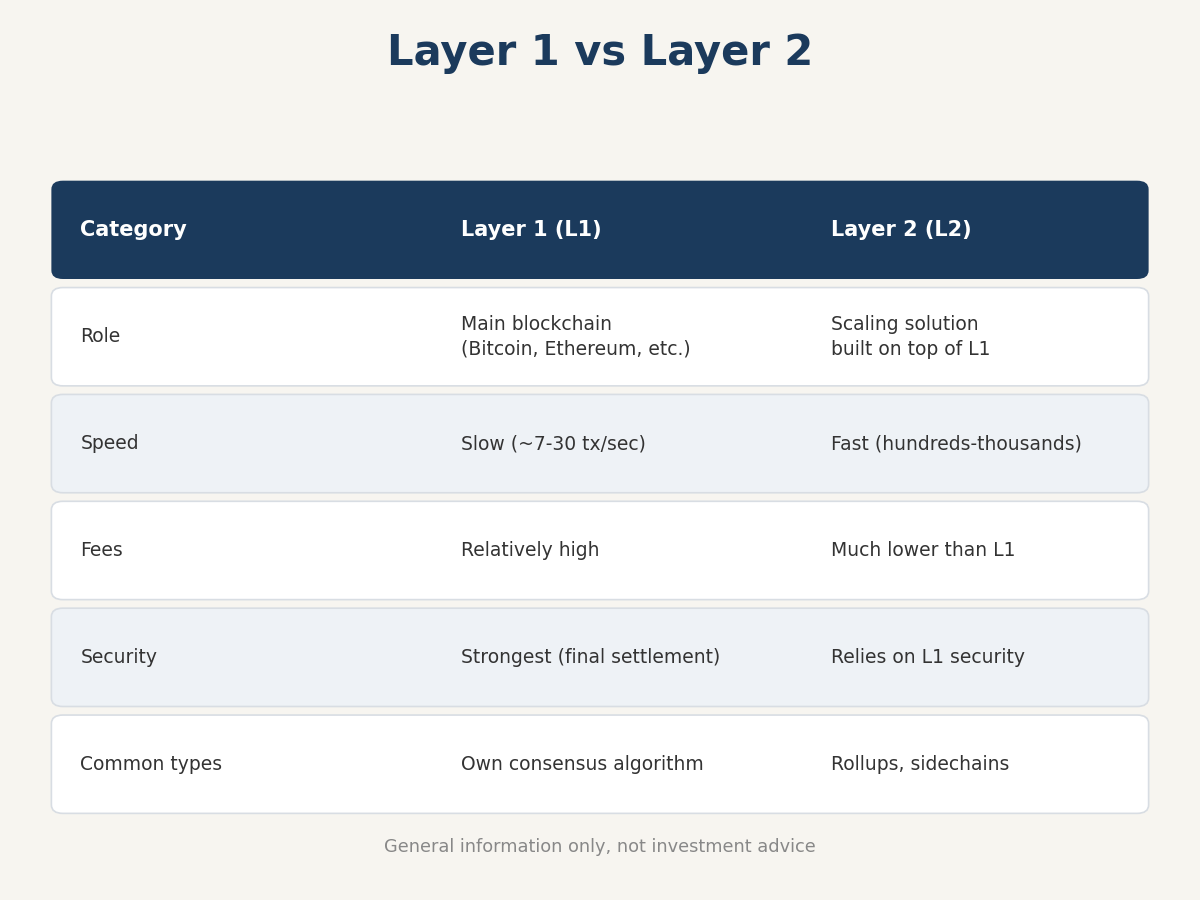
Layer 1 vs Layer 2: What's the Difference?
"Layer 1" refers to a blockchain network itself, like Bitcoin or Ethereum, which runs its own consensus algorithm and network. It's the foundational layer of the crypto ecosystem, responsible for finalizing and securing every transaction.
The trade-off is that this rock-solid foundation is slow. Bitcoin is generally said to process around 7 transactions per second, and Ethereum around 30. When demand spikes, transactions back up and fees climb along with them.
Layer 2 emerged to address exactly this limitation. It's a supplementary system that runs on top of Layer 1, processing transactions quickly outside the main chain and then recording only a compressed summary back onto Layer 1.
Think of Layer 1 as a land registry office that notarizes every single transaction one by one, and Layer 2 as a front desk that pre-sorts and bundles paperwork before sending it in. With that front desk, things move a lot faster without everyone lining up at the registry.

How Does Layer 2 Actually Work?
The most common Layer 2 approach is called a "rollup." It bundles a large number of individual transactions together, compresses them, and periodically posts just the final result back to Layer 1.
This means Layer 1 doesn't need to verify hundreds or thousands of transactions one by one — it only has to check a single compressed batch, which boosts speed and cuts fees dramatically. On Ethereum, using Layer 2 is generally said to reduce fees anywhere from roughly 10x to over 1,000x compared to using Layer 1 directly.
Another common approach is the "sidechain," a separate blockchain connected to the main chain but operated independently. It processes transactions under its own rules and speed, then exchanges information with the main chain as needed.
Both approaches share the same core idea: Layer 1 doesn't have to do everything itself. That shift in thinking is what built today's Layer 2 ecosystem.

Why Is Layer 2 Getting Attention Again Right Now?
Layer 2 news keeps coming. For example, Base, the Layer 2 network operated by Coinbase, has reportedly rolled out private transaction features aimed at enterprise customers, supporting the transaction confidentiality businesses need while still keeping blockchain transparency intact.
Other projects are also revamping their own mainnets or deepening integrations with exchanges, so technical efforts around Layer 2 continue at a steady pace. Since specifics on any individual project can change quickly, it's more useful to focus on the broader trend — why these efforts keep happening — rather than any single announcement or date.
The answer to that trend comes down to usability. For crypto to move beyond being just an investment asset and into everyday payments, remittances, gaming, and financial services, it needs to be far faster and cheaper than it is today. Layer 2 has become a core technology for getting there.
That's also why exchanges and projects keep investing in Layer 2 infrastructure. You don't need to understand the technical details as a user — but if you've noticed crypto transactions feeling faster and cheaper than they used to, Layer 2 is very likely part of the reason.
'자산관리' 카테고리의 다른 글
| Real Estate :: Is Jeonse Disappearing? Korea's Shift Toward Monthly Rent (0) | 2026.07.19 |
|---|---|
| 부동산 :: 전세는 사라지고 월세만 남을까? 최근 임대차 시장 트렌드 총정리 (0) | 2026.07.19 |
| 코인 :: 레이어2(Layer2)란 무엇인가? 코인이 더 빠르고 저렴해지는 원리 (0) | 2026.07.18 |
| Asset Management :: Why Do Markets Swing on Options Expiration Day? A Look at Quadruple Witching (0) | 2026.07.17 |
| 자산관리 :: 옵션 만기일에는 왜 증시가 출렁일까? '네 마녀의 날'까지 옵션 총정리 (0) | 2026.07.17 |