2026. 7. 16. 13:47ㆍ자동차
Hello!
Today I'm writing about a new EV charging technology called Plug & Charge.
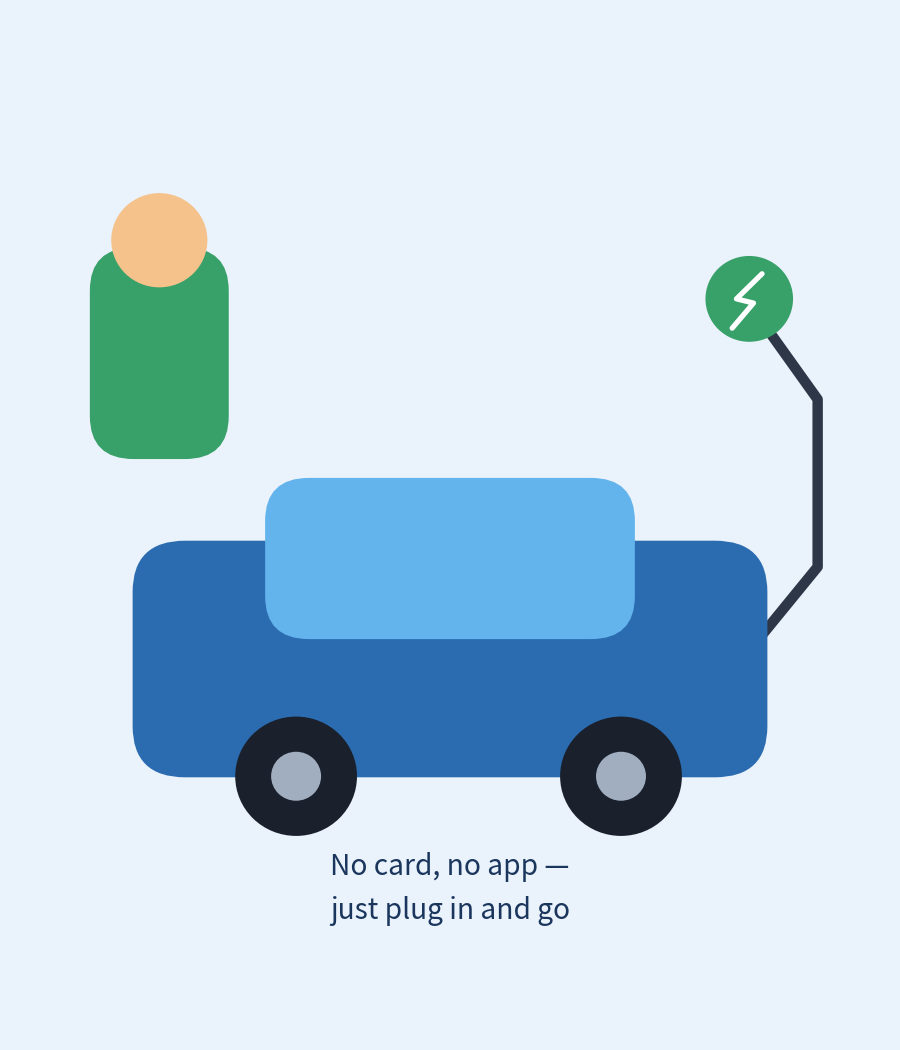
"What if charging your EV never required a card or an app at all?"
Anyone who drives an EV regularly knows the hassle: every charging network seems to have its own app, its own membership card, its own RFID tag. Even for those of us who work on charging systems, this fragmentation has been a long-standing headache.
But a technology that lets your car and the charger recognize each other the moment you plug in, handling authentication and payment automatically, is already becoming an international standard. Today, let's look at what Plug & Charge actually is, how it works, and what's changing around it.
Origins
Plug & Charge (PnC) is a feature defined in the international standard ISO 15118, allowing an EV and a charging station to authenticate each other and start a session automatically the instant the cable is connected. No tapping a membership card, no scanning a QR code, just plug in.
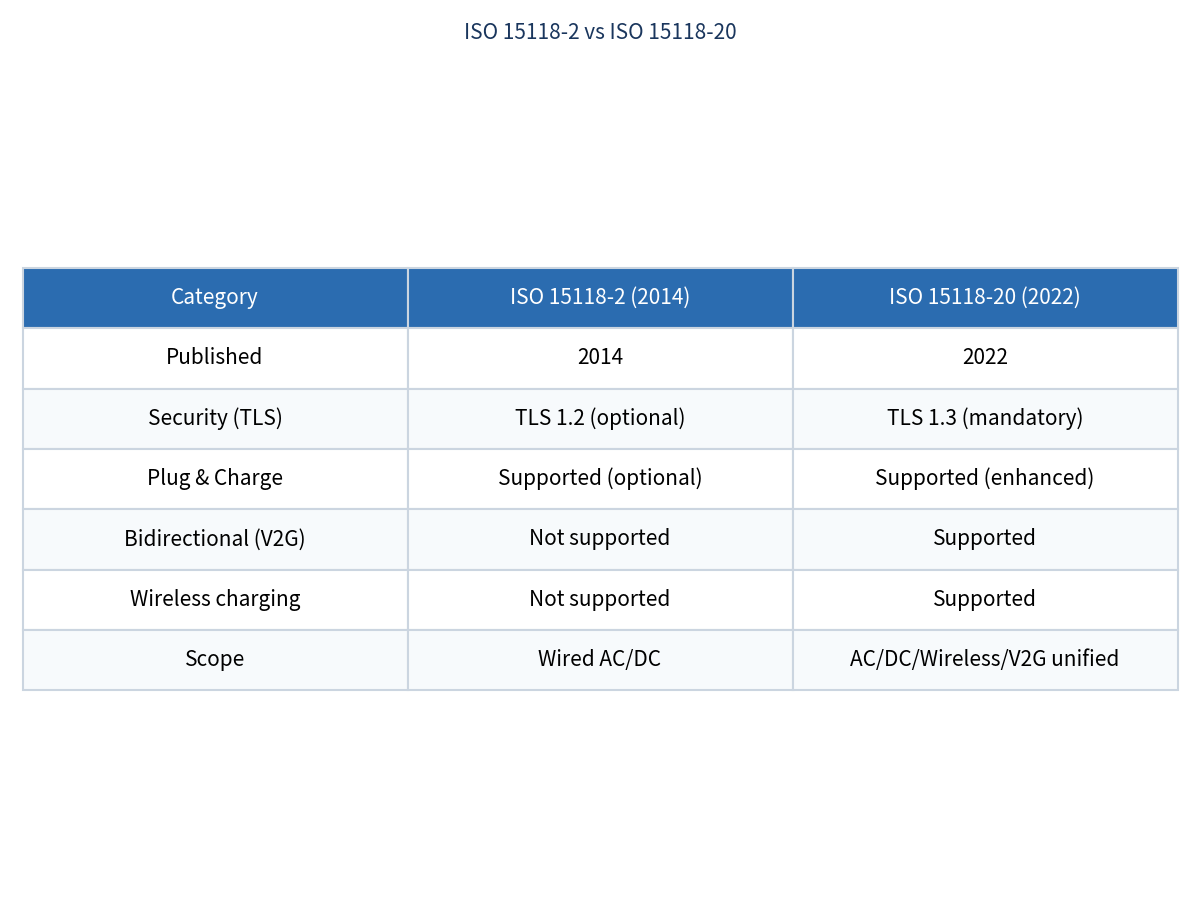
The standard traces back to ISO 15118-2, published in 2014, which first defined digital communication between vehicle and charger along with the basic concept of Plug & Charge.
It was revised in 2022 as ISO 15118-20, which made TLS 1.3 encryption mandatory and expanded the standard to cover bidirectional charging (V2G) and wireless charging as well.
Today, European brands including BMW, Mercedes-Benz, Volkswagen, Audi, Porsche, and Volvo are reported to be actively applying this standard across both AC and DC charging.
How It Works
The reason Plug & Charge can work safely without a card comes down to digital certificates based on PKI (public key infrastructure). Both the vehicle and the charger hold their own unique certificates, and the moment the cable connects, they exchange certificates to establish mutual trust.
Once authenticated, the session is billed automatically using payment information registered in advance, with no separate payment app required. The driver simply checks the invoice after charging is done.
Because this is still a relatively new technology, security research is ongoing alongside it. Recent academic work has pointed to the possibility of relay attacks targeting the Plug & Charge authentication process, showing the standard is still being hardened.
That's part of why ISO 15118-20 made TLS 1.3 mandatory, tightening encryption across the communication link. As the technology becomes more convenient, its security is being reinforced in parallel.

The 2026 EU Mandate and Where Korea Stands
Starting in January 2026, the European Union requires newly installed public AC chargers to support Plug & Charge based on ISO 15118-2. That requirement is reported to expand to ISO 15118-20 support by 2027, covering new and upgraded chargers more broadly.
The situation in Korea is somewhat different. Research has pointed out that KEPCO (Korea Electric Power Corporation) operates its own PKI system, which creates technical challenges in aligning directly with the international V2G root certificate structure. As a result, Plug & Charge adoption in Korea remains at an early review stage.
That said, standardization discussions appear to be picking up among domestic automakers and charging infrastructure operators. Since vehicles exported to Europe already need to support this standard, many in the industry see wider domestic adoption as a matter of time.
From the perspective of someone who works on charging systems, Plug & Charge is more than a convenience feature, it's a complex system involving certificate issuance and management, communication protocols, and billing integration. Bringing it to Korea will likely require not just standard compatibility but also settlement arrangements between operators.
Takeaway
Plug & Charge is a new EV charging technology where authentication and payment complete automatically the moment you plug in, and it's rapidly becoming mandatory across Europe under the ISO 15118 standard. Korea is still at an early stage, but with standardization discussions underway, the charging experience should keep getting more convenient.
Behind that convenience, though, are real challenges to solve, including certificate security and settlement structures between operators. I'll keep watching how this technology takes root here, and I'll be back with another new charging technology next time.
#EV #ElectricVehicle #PlugAndCharge #ISO15118 #EVCharging #ChargingInfrastructure #EVTech #ChargingAuthentication #V2G #SmartCharging #AutoAuthentication #ChargingPayment #NewEVTech #ChargingSecurity #EVCharger #ElectricCarLife #GreenMobility #FutureMobility #EVInfo #ChargingStandard #Electrification #EVNews
'자동차' 카테고리의 다른 글
| Car :: Could Your EV Charge in 20 Minutes? A Look at Megawatt Charging (MCS) (0) | 2026.07.17 |
|---|---|
| 전기차, 메가와트로 충전하는 시대가 온다고? 미래기술 총정리 (0) | 2026.07.17 |
| 자동차 :: 전기차, 카드 없이 꽂기만 해도 충전과 결제가 끝난다고? 플러그앤차지 신기술 총정리 (0) | 2026.07.16 |
| Car :: Could Your EV Sell Electricity Back to the Grid? A Look at V2G (0) | 2026.07.13 |
| 자동차 :: 전기차, 충전만 하지 않고 전기도 팔 수 있을까? V2G 미래기술 총정리 (0) | 2026.07.13 |