2026. 7. 12. 10:24ㆍ취미생활/야구
Hi everyone.
Today's post covers one of the most confusing rules in baseball: the uncaught third strike, better known as the "strikeout, not out" rule.
Have you ever watched a batter swing and miss for strike three, only to see him sprint to first base while the catcher scrambles after the ball?
That strange sight isn't a mistake by the broadcast — it's the uncaught third strike rule in action. In plain terms: the batter is charged with a strikeout, but he isn't automatically out.
The rule kicks in when the catcher fails to cleanly catch the third strike, whether it's dropped, bounces away, or gets past him entirely. In that moment, the batter is given a chance to reach first base safely, just like on a fielded ground ball.
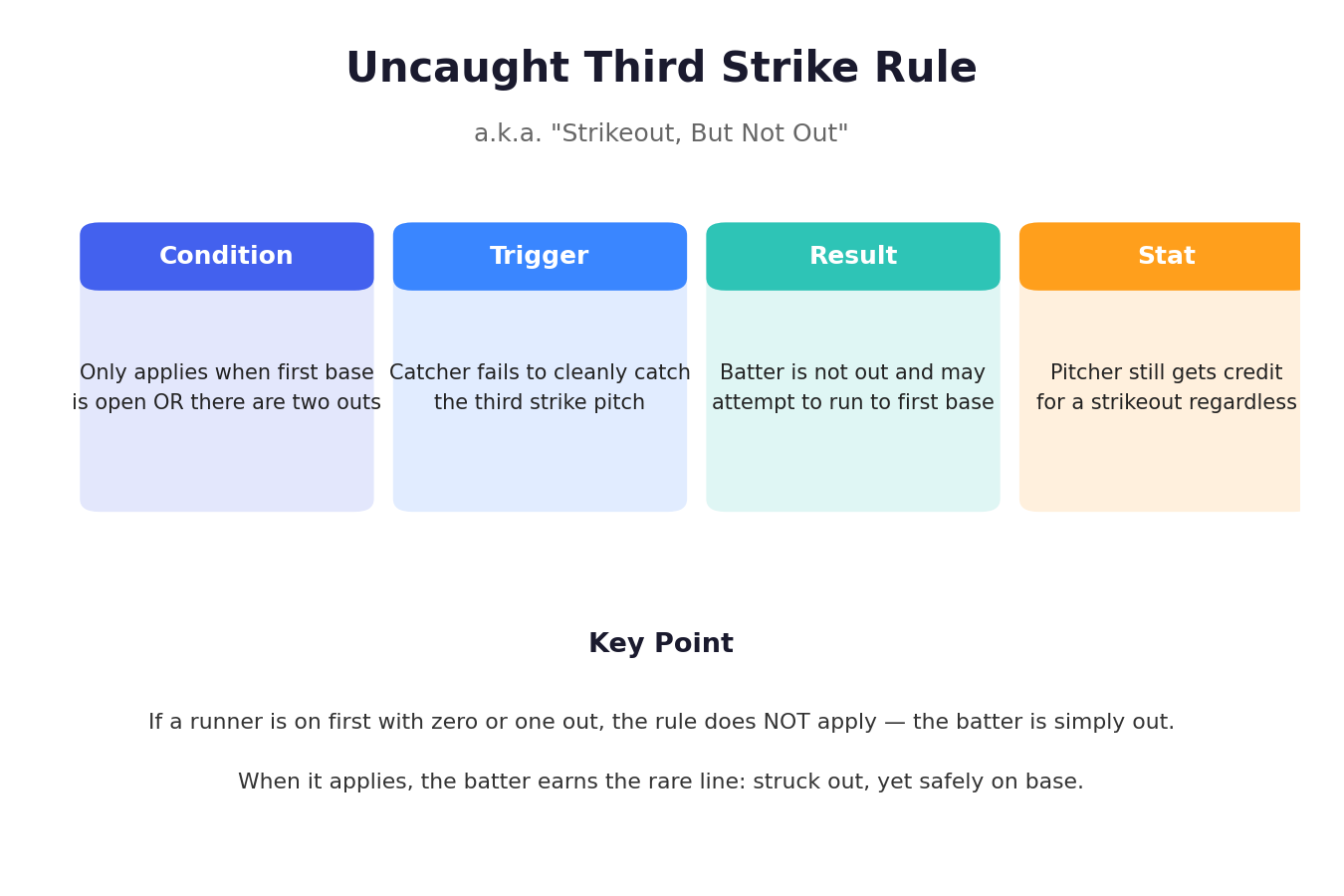
But there's an important catch. This rule only applies when first base is unoccupied, or when there are already two outs. If a runner is standing on first with zero or one out, the batter is simply ruled out even if the catcher drops the ball.
Why the restriction? It's widely understood as a safeguard against defenses intentionally dropping the ball to set up an easy double play. Without this condition, catchers could exploit the rule far too easily.
Here's the quirky part: the pitcher still gets full credit for a strikeout in the box score, even though the batter reaches base. It's one of the few plays where a pitcher can rack up a strikeout without actually recording an out.

So has this rule ever actually decided a game? Absolutely — and the most famous case in baseball history happened in the 1941 World Series.
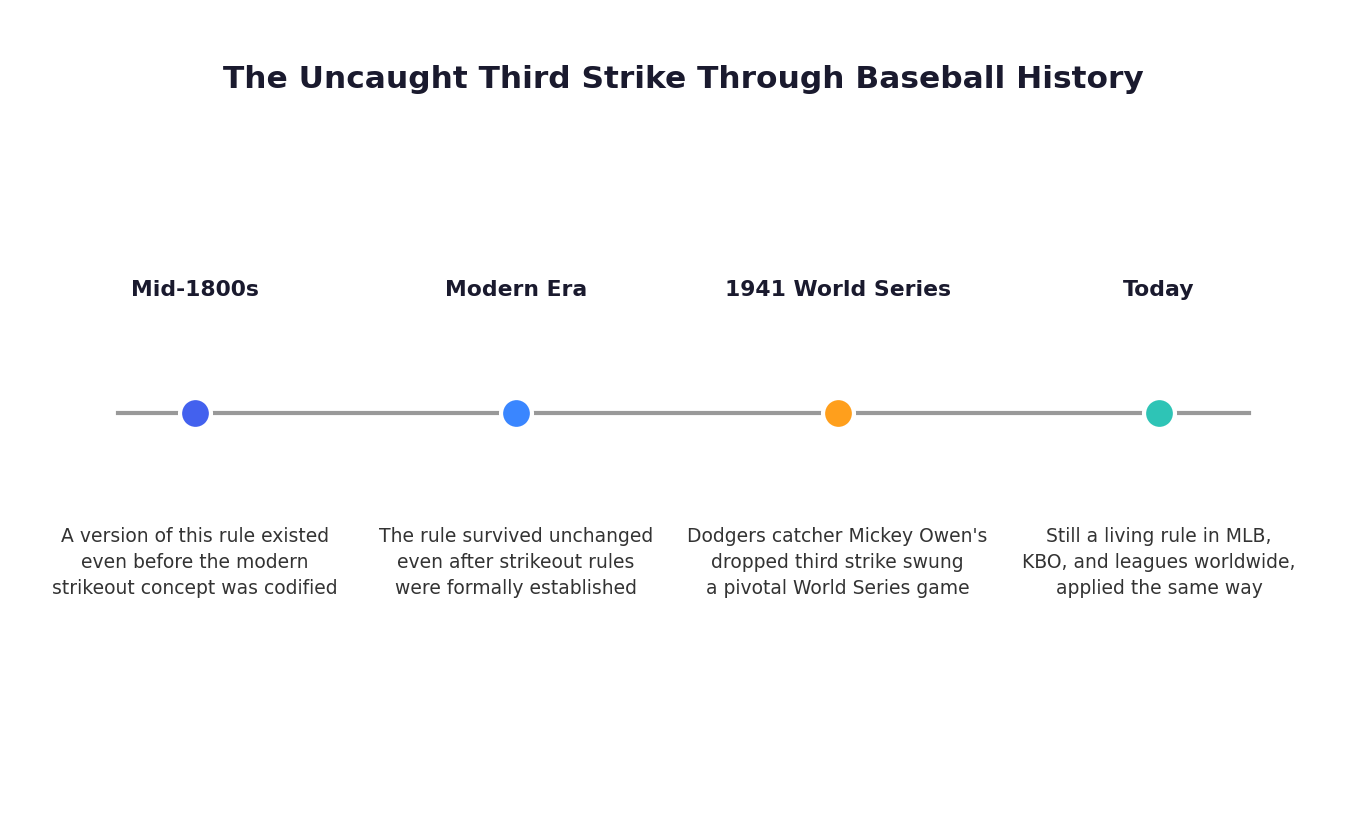
The Brooklyn Dodgers led 4-3 in Game 4, one strike away from tying the series at two games apiece. Dodgers catcher Mickey Owen couldn't hold onto what should have been the final strike, and the ball got away from him. Instead of the game ending, the Yankees batter reached first, sparking a four-run rally that flipped the outcome of the entire series. To this day, it's remembered as one of the most consequential uncaught third strikes in baseball history.
Interestingly, some version of this rule is believed to predate the modern strikeout concept itself. It has survived essentially unchanged through more than a century of baseball, and it still occasionally swings the momentum of a game today.
Summary
The uncaught third strike rule lets a batter run to first base when the catcher fails to cleanly catch strike three — but only if first base is open or there are already two outs. The pitcher still gets the strikeout on the books, and as the 1941 World Series showed, this obscure rule can occasionally change the course of an entire game.
#UncaughtThirdStrike #StrikeoutNotOut #BaseballRules #MLBRules #KBO #Baseball101 #BaseballHistory #MickeyOwen #1941WorldSeries #Strikeout #CatcherRules #BaseballBasics #BaseballExplained #SportsRules #BaseballFans #LearnBaseball #BaseballTrivia #DoublePlay #BaseballForBeginners #GameRules #BaseballKnowledge #MLBHistory