2026. 7. 11. 00:28ㆍ육아생활
Hello!
Today's post is about how to keep track of your child's national vaccination schedule.
Do you know exactly when — and how many times — your child needs each vaccine?
Anyone raising a child has probably stared at a vaccination schedule feeling a bit lost. There are quite a few government-funded essential vaccines, and each one follows its own timing.
Public health authorities generally define a National Immunization Program (NIP) covering vaccines from birth through around age 12, with each vaccine having its own recommended timing and number of doses. Today, let's map out that big picture together.
Here's a quick visual overview of the overall timeline first.
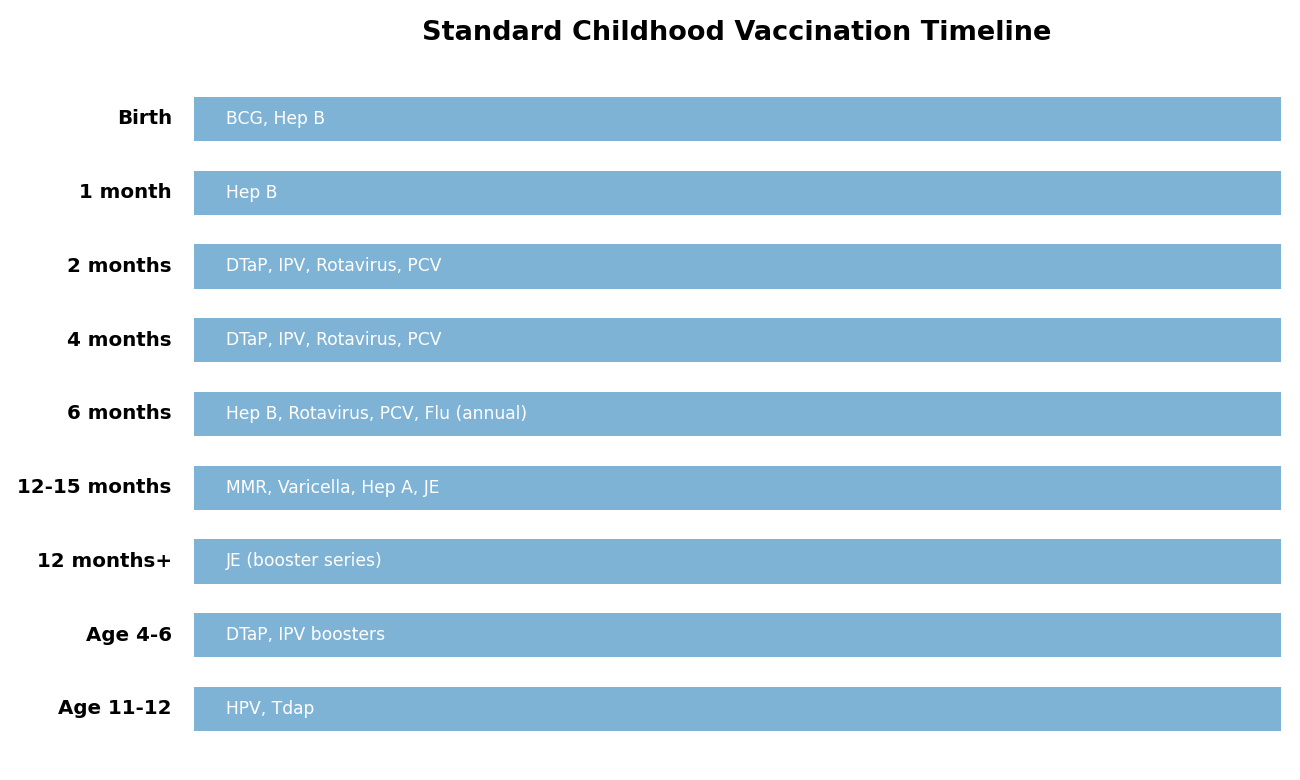
Right after birth, babies typically receive the BCG vaccine (for tuberculosis) and the first dose of Hepatitis B. Two more Hepatitis B doses usually follow at 1 month and 6 months, completing a 3-dose series.
Starting around 2 months, DTaP (diphtheria, tetanus, pertussis), IPV (polio), rotavirus, and pneumococcal conjugate vaccine (PCV) begin their primary series, generally completed across the 2, 4, and 6-month visits.
Around 12 to 15 months, a new wave of vaccines kicks in: MMR (measles, mumps, rubella), varicella (chickenpox), hepatitis A, and Japanese encephalitis. This stretch tends to feel the most overwhelming for parents since so many vaccines line up around the same time.
By age 4 to 6, booster doses of DTaP and IPV are typically given, and around age 11 to 12, HPV (human papillomavirus) vaccination begins. Worth noting: in several countries the HPV program has recently been expanded to include boys around this age, not just girls.
Since there are so many vaccines involved, here's a table summarizing which vaccine prevents which disease.

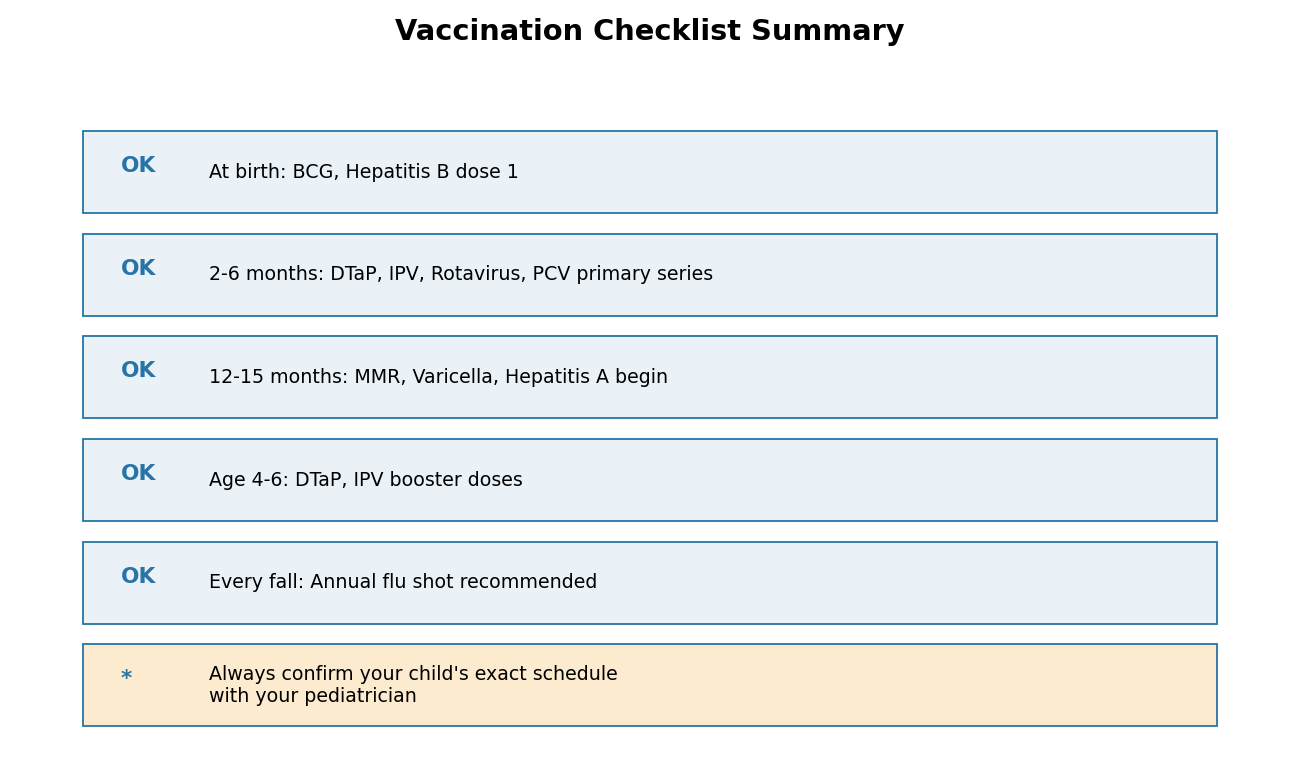
A few practical things are worth keeping in mind when managing the schedule. If your child has a fever or isn't feeling well on the day of an appointment, it's generally safer to postpone and reschedule after checking with your pediatrician.
If you've fallen behind on the schedule, try not to worry too much — most vaccines allow for a "catch-up" series where you simply pick up from where you left off. That said, the exact catch-up plan is best confirmed directly with your pediatrician.
It's also worth remembering that some vaccines, like the flu shot, need to be repeated every year, and your local health authority's immunization registry website can usually show your child's vaccination history and upcoming doses.
Here's the whole flow summarized once more as a simple checklist.
Final Thoughts
A child's vaccination schedule involves a shifting lineup of vaccines depending on age, so rather than trying to memorize every detail at once, it helps to understand the overall flow and then confirm the exact personal schedule through your local immunization registry or your pediatrician. This post is intended for general informational purposes only and is not a substitute for medical diagnosis or advice — please consult a licensed pediatrician for any questions about your child's health or vaccination status.
#vaccination #childvaccination #immunizationschedule #parentingtips #BCG #HepatitisB #DTaP #IPV #rotavirus #pneumococcal #MMR #varicella #HepatitisA #JapaneseEncephalitis #HPVvaccine #vaccineschedule #newbornparenting #babyvaccines #pediatrician #parentinglife #newparents #immunization #childhealth #wellchildvisit #publichealth
'육아생활' 카테고리의 다른 글
| Parenting :: Does Screen Time Really Affect Your Child's Brain Development? (0) | 2026.07.12 |
|---|---|
| 육아 :: 스크린 타임, 우리 아이 두뇌 발달에 정말 영향을 줄까요? (0) | 2026.07.12 |
| 육아 :: 우리 아이 예방접종, 시기별로 어떻게 챙겨야 할까요? (0) | 2026.07.11 |
| Parenting :: Does Sleep Really Matter That Much for a Child's Height? (0) | 2026.07.10 |
| 육아 :: 아이 키 성장, 잠이 정말 그렇게 중요할까요? (0) | 2026.07.10 |