2026. 7. 12. 14:22ㆍ육아생활
Hello!
Today I'll be writing about whether screen time really affects a child's brain development.
"Does a little bit of screen time really hurt my child's brain development?" If you're a parent, you've probably wondered this at least once.
There are moments in a busy day when handing over a phone or turning on the TV feels like the only option. But I wanted to actually look into what the research says, so let's dig in.
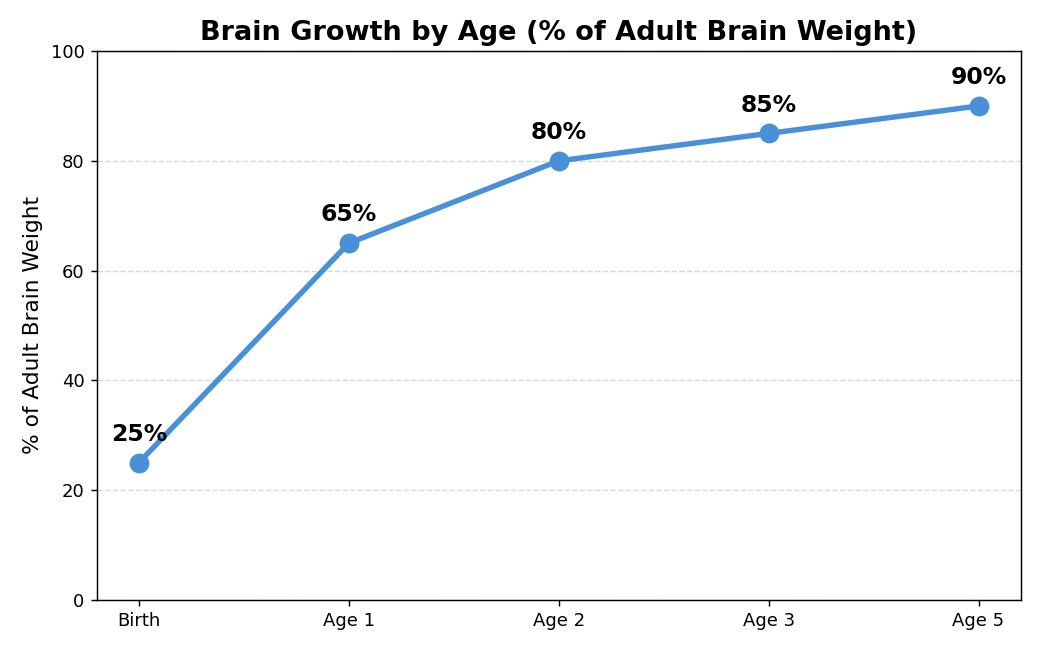
A baby's brain starts out at about 25% of adult brain weight at birth, and remarkably, around 90% of brain growth is complete by about age 5. That makes early childhood a critical window of rapid brain development.
During this period, the brain is highly sensitive to outside stimulation, and the kind of input a child receives shapes how neural connections form. That's part of why the environment and experiences of these early years matter so much.
So what exactly does screen time do? The first two years of life are a period of explosive growth in language, social skills, emotional development, and sensory processing, and interaction with real people is considered especially important during this window.
As screen time increases, it naturally reduces the time spent making eye contact, talking, and playing with parents. Experts note that this kind of reduced interaction can potentially have a negative impact on language development, social skills, and emotional attachment.
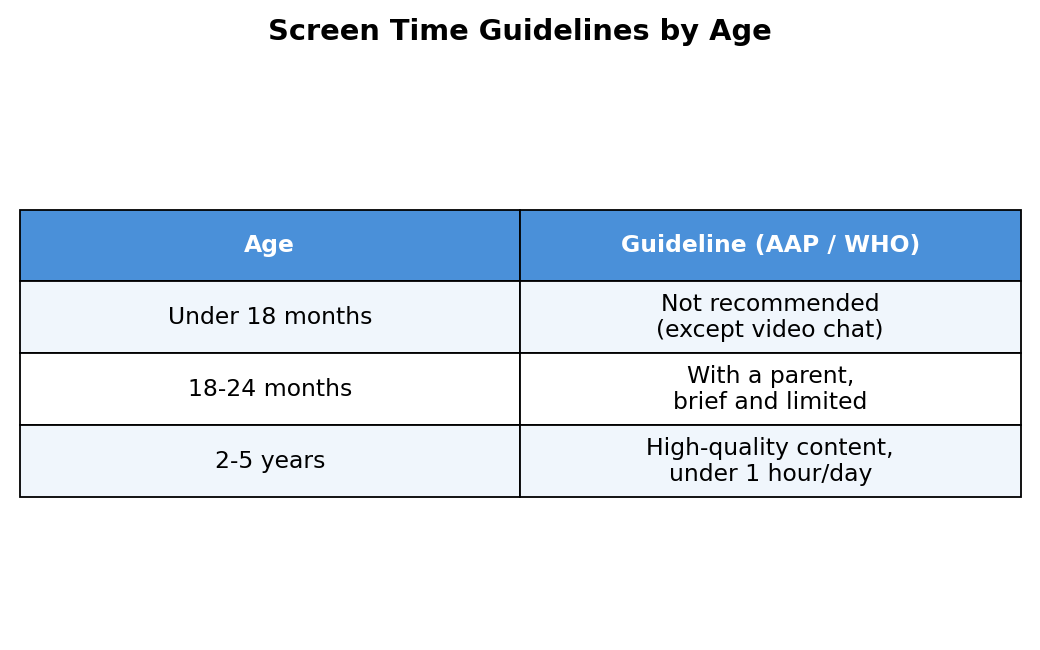
"So how much screen time is actually okay?" That's probably the question on your mind, and the guidelines from the American Academy of Pediatrics (AAP) and the World Health Organization (WHO) are a good place to start.
The AAP recommends no screen time at all for babies under 18 months, with the exception of video chatting with family, since that's really more about human interaction than passive screen viewing.
From 18 to 24 months, screen time is recommended only briefly and together with a parent. From age 2 onward, high-quality content limited to under an hour a day is considered appropriate. WHO's guidelines are broadly similar.
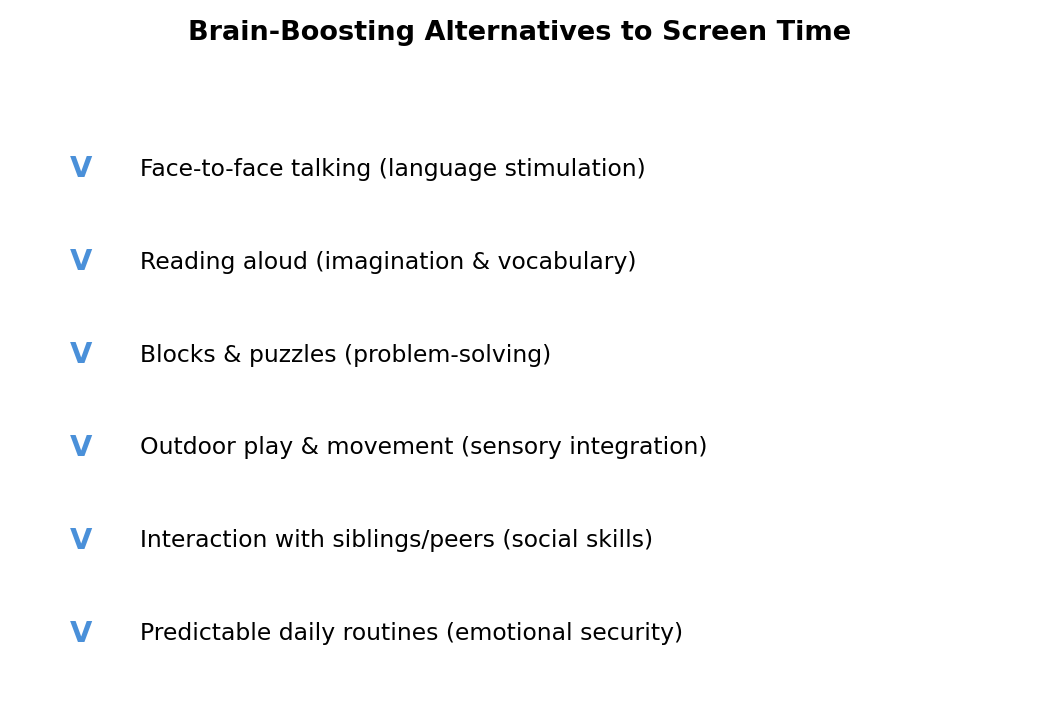
So what should you do instead of cutting screen time? Nothing fancy, really — everyday activities like making eye contact and talking with your child, reading aloud, playing with blocks or puzzles, and outdoor active play are known to support brain development far more effectively.
Playing with siblings or peers, and keeping a predictable daily routine, are also considered helpful for emotional stability and brain development.
Of course, cutting out screens entirely isn't always realistic. The occasional bit of screen time probably isn't the problem in itself — what matters more is making sure it doesn't crowd out the interaction and play time that matter most.
Summary
Today we looked at the relationship between screen time and a child's brain development. The period before age 5 is when most brain growth happens, and both the AAP and WHO recommend age-based limits on screen time. Rather than eliminating screens completely, it seems more important to keep a healthy balance by making sure children get enough real interaction and play. This post is for general informational purposes only, and if you have specific concerns about your child's development, please consult a pediatrician.
#parenting #parentingtips #screentime #braindevelopment #childdevelopment #toddlerdevelopment #babybraindevelopment #digitalparenting #languagedevelopment #socialskills #emotionaldevelopment #earlychildhood #parentingadvice #kidsplay #readingaloud #outdoorplay #pediatricadvice #AAP #WHO #newparent #screentimeguide #familytime
'육아생활' 카테고리의 다른 글
| Parenting :: Why Does Sleep Really Matter for Your Child's Brain Development? (0) | 2026.07.12 |
|---|---|
| 육아 :: 아이 뇌 발달, 잠이 정말 중요한 이유는 뭘까요? (1) | 2026.07.12 |
| 육아 :: 스크린 타임, 우리 아이 두뇌 발달에 정말 영향을 줄까요? (0) | 2026.07.12 |
| Parenting :: How Should You Track Your Child's Vaccination Schedule? (0) | 2026.07.11 |
| 육아 :: 우리 아이 예방접종, 시기별로 어떻게 챙겨야 할까요? (0) | 2026.07.11 |