2026. 8. 7. 20:51ㆍ취미생활/야구
Hello everyone.
Today I want to walk through one of the most confusing rules in baseball: the infield fly rule.
Baseball has plenty of finely detailed rules, and even longtime fans sometimes get tripped up by a few of them. The infield fly rule is one of the classic examples, often requiring an on-screen graphic during broadcasts just to explain what happened.
What makes it especially tricky is the condition under which the batter is ruled out. If you're new to the sport, your first reaction is usually confusion.
Have you ever wondered how a batter can be called out on a fly ball that nobody even caught?

What Exactly Is an Infield Fly?
An infield fly is a fair fly ball that an infielder can catch with ordinary effort, called by the umpire when there are runners on first and second base (or the bases are loaded) with fewer than two outs.
The moment the umpire makes this call, the batter is automatically out, whether or not the ball is actually caught. Because the play is no longer a force play, runners are free to decide for themselves whether to advance or stay put.
Not every fly ball qualifies, though. Line drives and bunt attempts are excluded from the rule, since defenders can't easily drop those on purpose to set up a cheap play.
One more detail worth noting: the rule only applies to fair territory. If the ball drifts foul, it's simply ruled a foul ball. The infield fly call only sticks if the ball lands, or is caught, in fair territory.
Breaking Down the Three Conditions
For an infield fly to be called, three conditions must all be met at once. The first is the out count: it has to be zero or one out. Once there are two outs, the rule no longer applies at all.
The second condition involves the runners. There must be runners on first and second, or the bases must be loaded. If a runner is only on first, or there are no runners at all, an infield fly simply can't be called.
The third condition is about the batted ball itself: it has to be a fair fly ball that, in the umpire's judgment, an infielder could catch with ordinary effort. What's interesting here is that there's no strict numerical threshold — it comes down to the umpire's discretion.
That means two borderline pop-ups can end up with different rulings depending on the umpire or the exact circumstances. This judgment call is exactly why the infield fly rule tends to spark more debate than most other rules in baseball.
Why Does This Rule Even Exist?
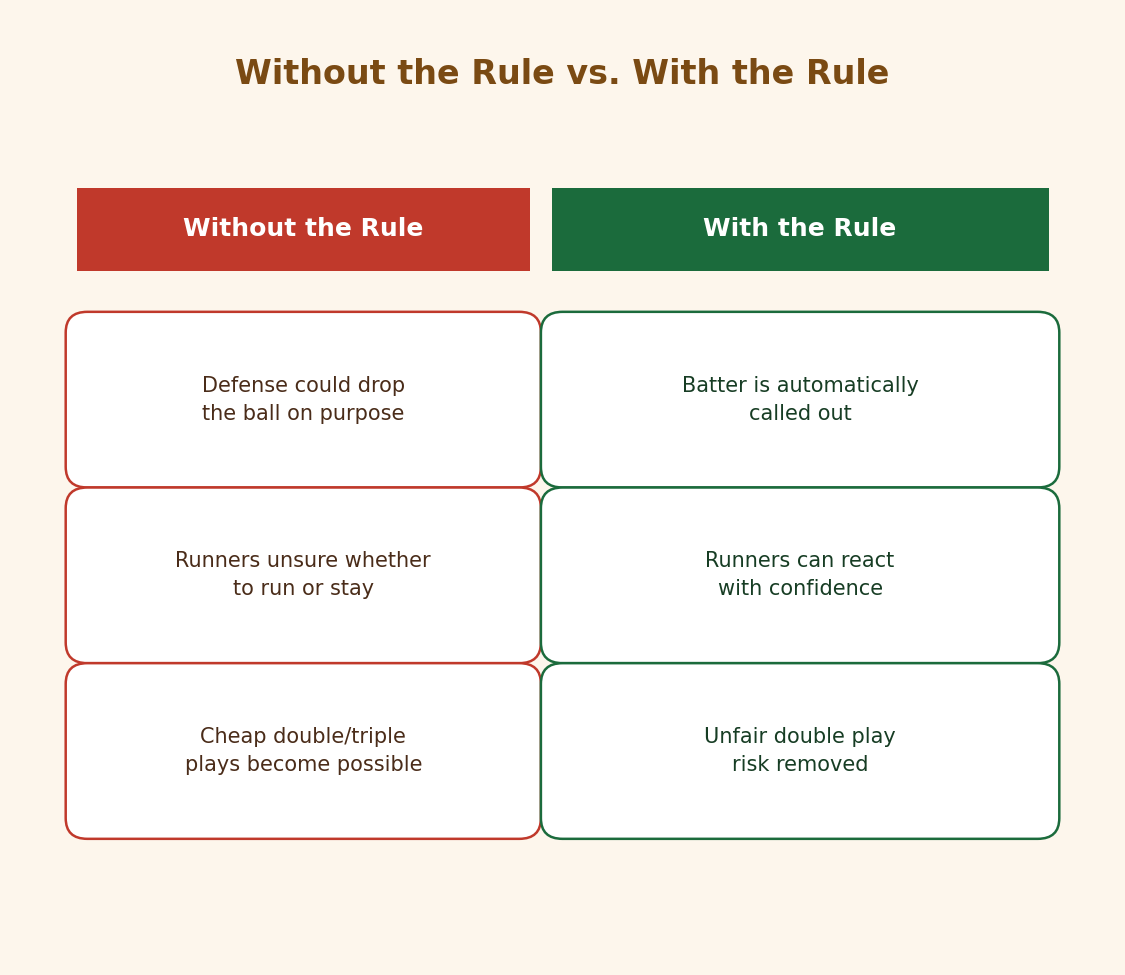
What would happen without this rule? A defense could intentionally let an easy pop-up drop, then use the resulting force-out situation to turn a double play or even a triple play.
Runners, expecting the ball to be caught, would stay near their bases — only to suddenly be forced out when the fielder lets it drop on purpose. The infield fly rule exists specifically to prevent this kind of unfair, cheap play.
There's a famous real-world case where this call sparked major controversy. In the 2012 National League Wild Card Game, the Atlanta Braves faced the St. Louis Cardinals, and in the eighth inning, umpire Sam Holbrook called an infield fly on a shallow pop-up hit by Atlanta's Andrelton Simmons.
Because the ball traveled out near the shortstop and left fielder, many felt the call came too late. Frustrated fans littered the field with bottles and debris. The Braves filed an official protest, but MLB denied it, and the Cardinals went on to win the game.
Good to Know for Watching a Real Game
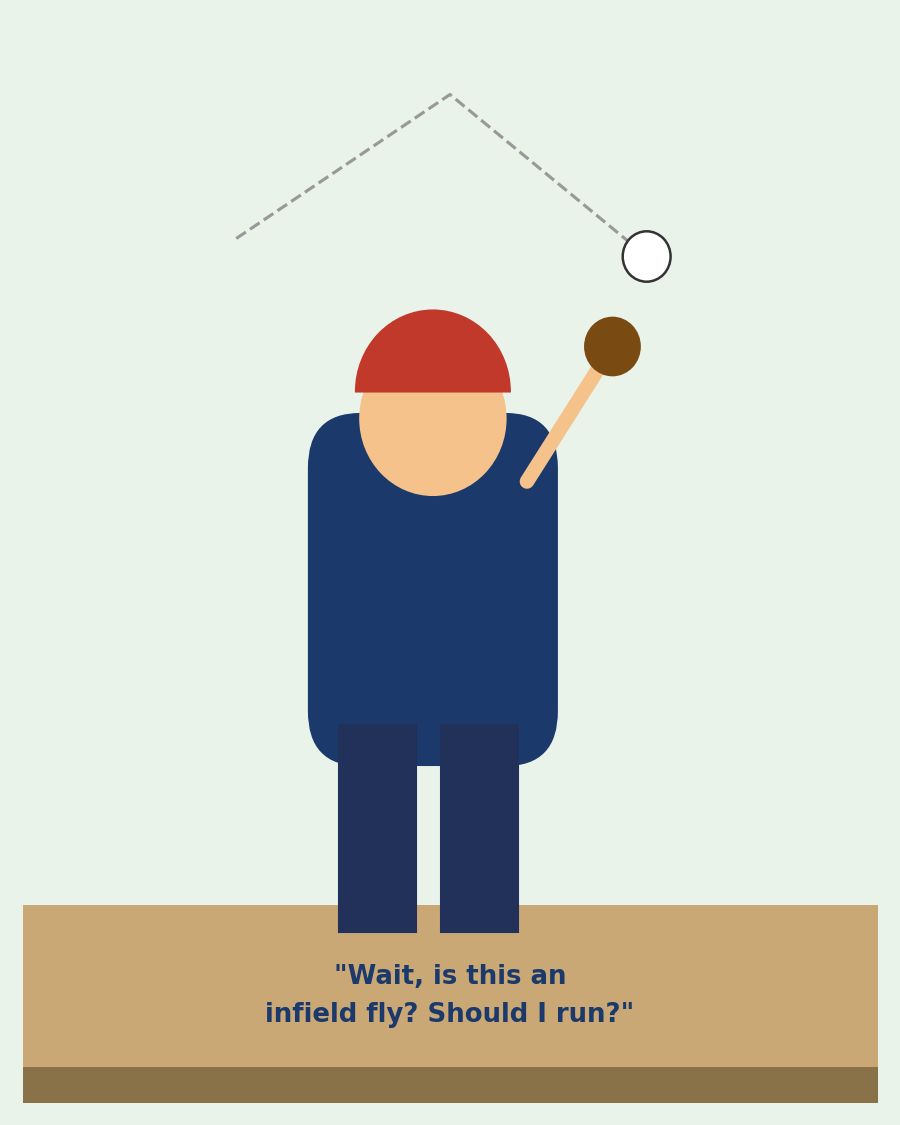
Once an infield fly is called, the defense doesn't actually need to catch the ball. Since the umpire's call already makes the batter out, there's no extra out to be recorded even if a fielder muffs it.
If you don't know the rule, though, watching a broadcast can be confusing — you might wonder why a dropped ball still counts as an out. Most broadcasts and stadium scoreboards display an "infield fly" indicator, so keeping an eye out for that graphic makes everything click much faster.
This isn't just an MLB quirk, either. The same concept appears in the Official Baseball Rules used across most organized leagues worldwide, including Korea's KBO League. That says a lot about how essential this safeguard is considered for keeping the game fair.
Next time you see a runner on first and second with a borderline pop-up in the air, watch the umpire's signal and listen closely. If you hear "infield fly," you'll now know exactly why the batter is out.
'취미생활 > 야구' 카테고리의 다른 글
| Baseball :: Why Is Jackie Robinson's Number 42 Retired League-Wide? A Legend's Story (0) | 2026.08.08 |
|---|---|
| 야구 :: 재키 로빈슨, 왜 등번호 42는 전 구단 영구 결번이 됐을까? 레전드 스타 총정리 (0) | 2026.08.08 |
| 야구 :: 인필드 플라이, 왜 잡지도 않았는데 아웃일까요? 경기 규칙 총정리 (0) | 2026.08.07 |
| Baseball :: After the Yankees, Meet Rawlings - The Brand Behind the Ball, A Brand History (0) | 2026.08.05 |
| 야구 :: 뉴욕 양키스 다음은 롤링스, 야구공 속 이야기 브랜드별 역사 총정리 (1) | 2026.08.05 |