2026. 7. 26. 14:27ㆍ육아생활

Hello.
Today I'm writing about how to handle your baby's reactions after a vaccination, and when it's actually time to call a doctor.
If your little one has an upcoming shot, you're probably feeling a mix of excitement and nerves. It's very common for parents to come home afterward and see their baby acting fussier than usual, or running a slight fever, and immediately worry that something is wrong.
The truth is, most of what shows up after a vaccine is simply the immune system doing its job, not a warning sign. Still, knowing where the line sits between "normal" and "call the doctor now" makes those first few days so much easier to get through.
Does a fever right after a shot mean you should rush to the emergency room? That's a question almost every parent asks at some point before their child's vaccination. Let's walk through the answer together.
What Counts as a Normal Reaction
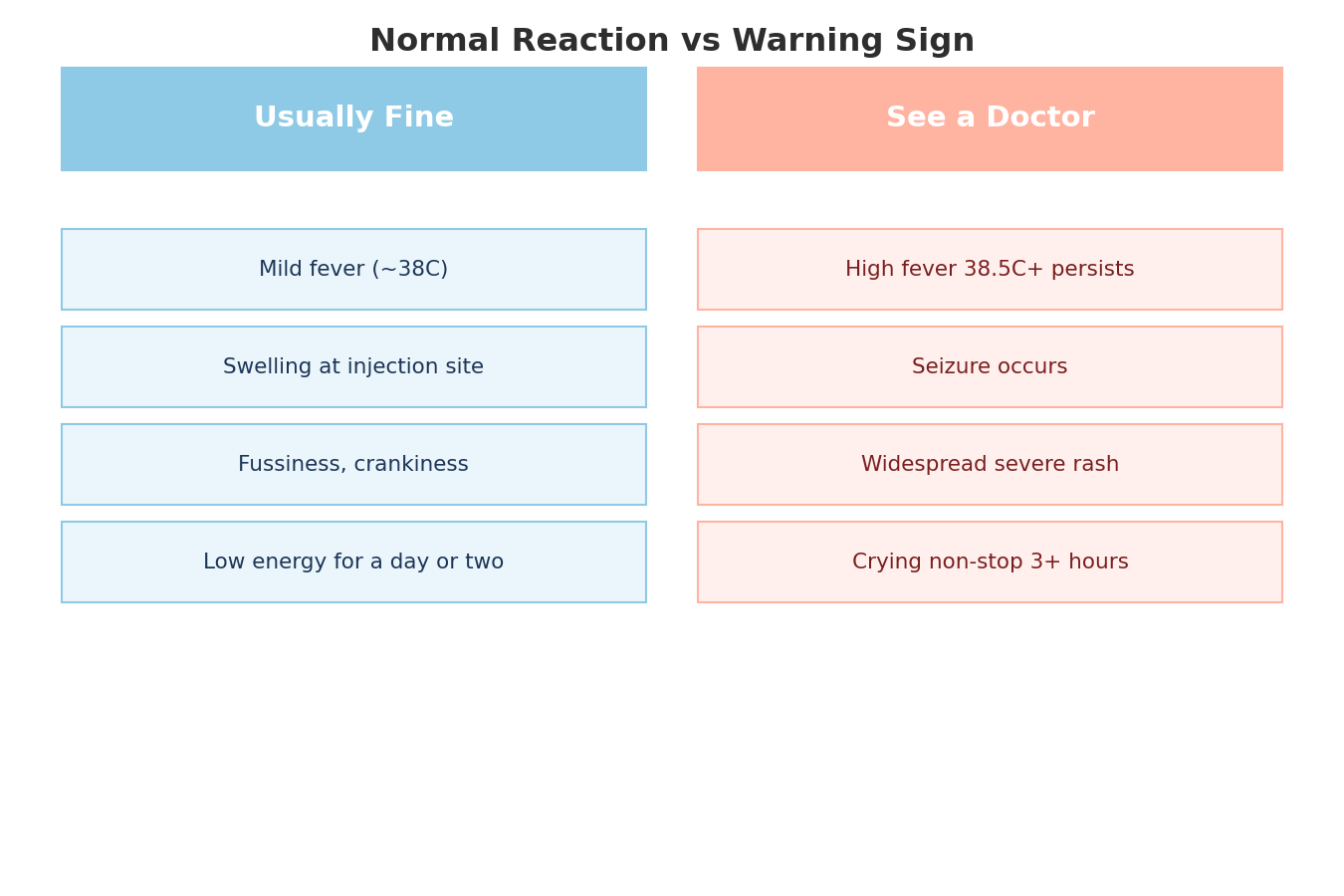
A vaccine works by prompting the immune system to recognize a piece of the pathogen and build antibodies against it. Along the way, a mild fever or some swelling and soreness at the injection site are genuinely common responses, not something to panic over. Public health guidance generally treats a temperature around 38C as an early, expected sign of that immune response.
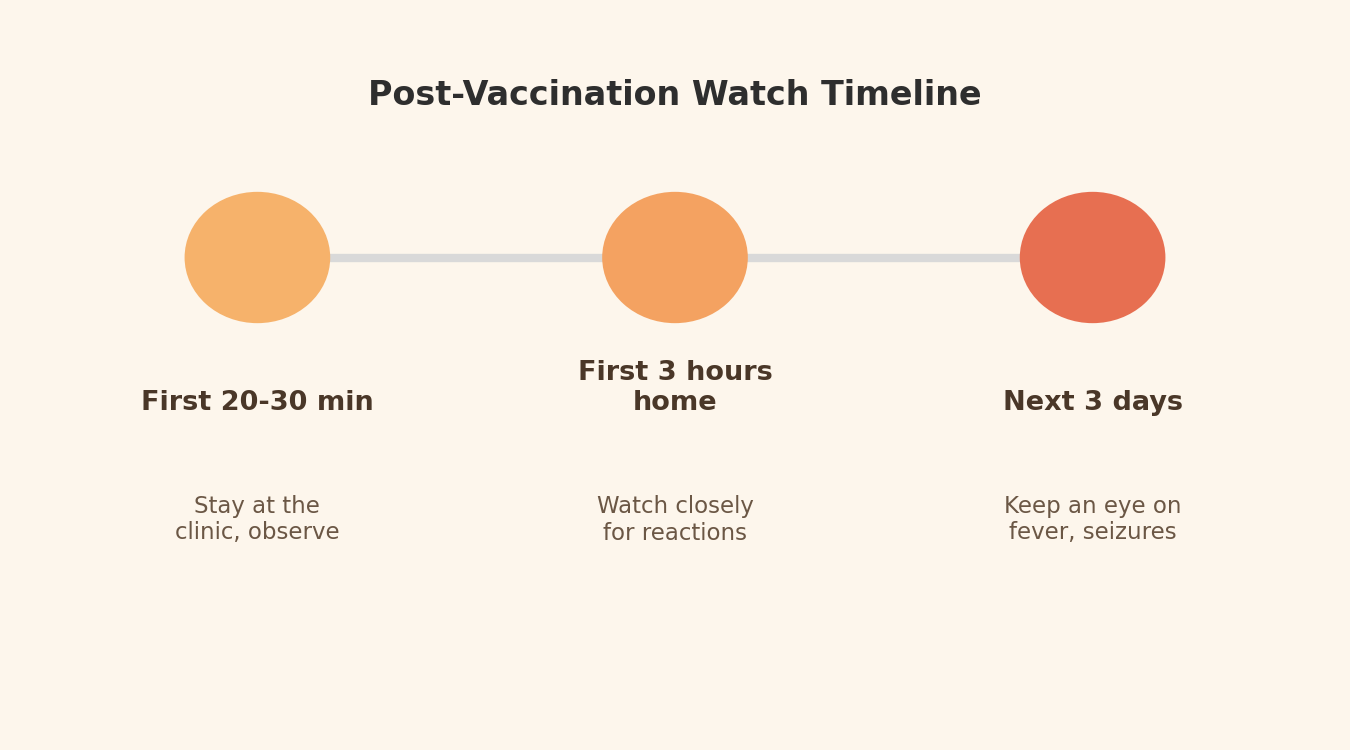
That's why it helps to watch your child closely for a set window of time after a shot. A widely used rule of thumb is staying at the clinic for the first 20 to 30 minutes to catch any immediate reaction, keeping a close eye on things for at least 3 hours once you're home, and continuing to watch for fever or seizures for about 3 days afterward.
Extra fussiness or crankiness during this window is also completely normal. Your baby's body is working a bit harder than usual, so a little more cuddling and comfort goes a long way. That said, if low energy or crankiness drags on well past a day or two, or seems unusually severe, it's worth a call to the pediatrician.
Warning Signs That Need a Doctor
On the other hand, a few signs go beyond the range of a normal reaction. The clearest one is a fever of 38.5C or higher that doesn't come down even after fever medication and keeps persisting. In that case, it's better to call your pediatrician right away rather than wait it out.
A seizure is another sign that needs immediate medical attention. If your baby briefly shakes or seems unresponsive for a moment, don't try to handle it alone, get medical help right away. Widespread, severe rash or hives across the body can also point to an allergic reaction and deserves close attention.
One more useful marker is how long the crying lasts. If your baby cries intensely and continuously for more than 3 hours straight, unlike their usual pattern, it could be a sign of real discomfort or pain worth checking with a doctor. These situations are uncommon, but knowing about them ahead of time means you won't be caught off guard.
How to Care for Your Baby at Home
If the reaction falls in the normal range, you can manage most of it comfortably at home. A cool, damp cloth on the injection site helps with redness, soreness, or swelling. There's no need to press hard, a light touch is enough.
During a mild fever, dress your baby in light clothing rather than bundling them up in blankets, since letting body heat escape naturally supports recovery. Keeping them well hydrated also helps the body bounce back faster.
It's also a good idea to skip vigorous activity on the day of the shot and the day after. If daycare or preschool is on the schedule, check how your baby is actually feeling first and make the call based on that, rather than sticking rigidly to routine.

Good to Know: Tracking Tools and Reporting Systems
In Korea, the KDCA runs a system called the Immunization Registry (nip.kdca.go.kr) where parents can check national vaccination support programs, their child's shot history, and upcoming due dates. It's a handy way to make sure you don't miss a scheduled dose. If you're outside Korea, most national health systems offer a similar registry or app worth looking into.
The same system also explains how to report an adverse reaction if something concerning happened after a shot. Filing a report alongside seeing a doctor can be a useful way to keep an official record.
One important note: everything in this post is general information, not a medical diagnosis or treatment plan. If you're ever worried about your baby's schedule or symptoms, please consult a pediatrician directly, and double-check the exact timing of each dose with your doctor's office.
'육아생활' 카테고리의 다른 글
| Parenting :: Does Omega-3 (DHA) Really Help Kids' Brain Development? (0) | 2026.07.27 |
|---|---|
| 육아 :: 우리 아이 오메가3(DHA), 두뇌 발달에 정말 도움될까요? (0) | 2026.07.27 |
| 육아 :: 예방접종 후 이상반응, 병원에 가야 할 때는 언제일까요? 대처법 총정리 (0) | 2026.07.26 |
| Parenting :: How Do You Choose the Right Car Seat for Your Baby? (0) | 2026.07.25 |
| 육아 :: 카시트, 어떻게 골라야 우리 아이가 안전할까요? 육아용품 총정리 (0) | 2026.07.25 |