2026. 7. 7. 23:38ㆍ취미생활/야구
Hi everyone.
Today's post is about a set of baseball basics that trip people up even after watching for years.
"Do you know exactly where the strike zone ends?"
Even long-time fans get fuzzy on the strike zone. It's the space above home plate — roughly the width of the plate plus one ball diameter on each side, and vertically from the midpoint between the shoulders and the top of the pants down to below the kneecap. In other words, the zone shifts slightly depending on each batter's stance.
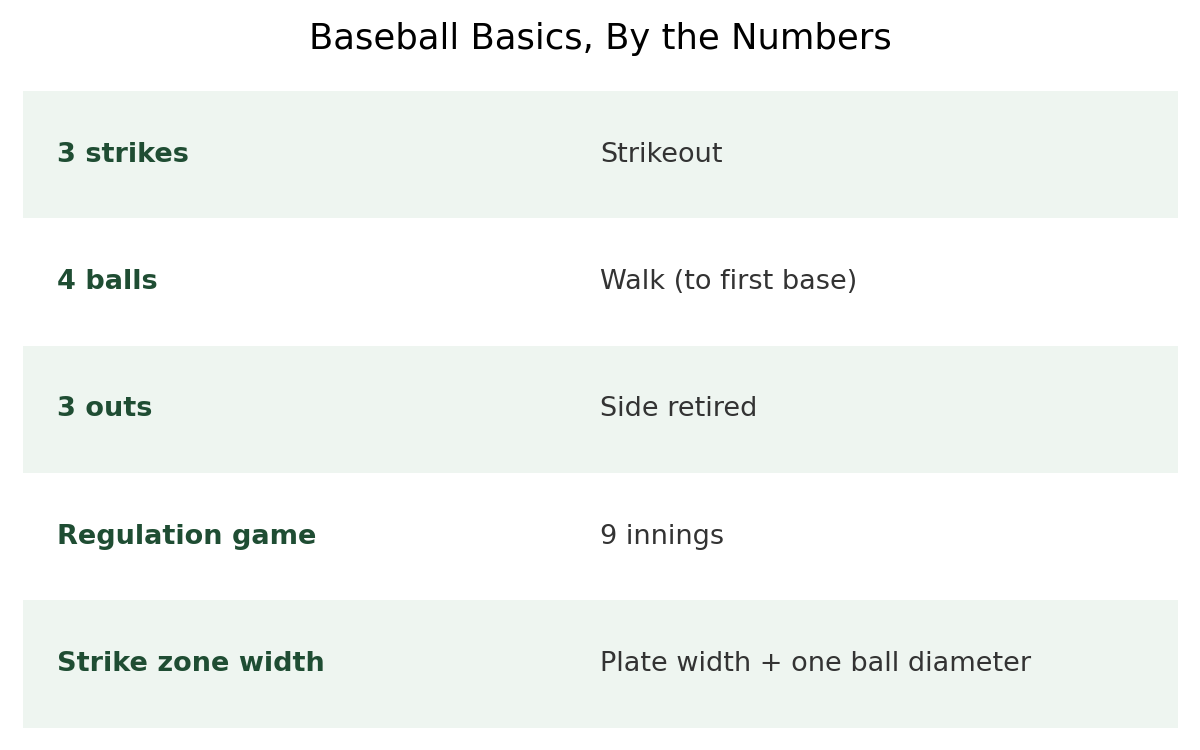
Putting it in a table makes it click. Three strikes is a strikeout. Four balls is a walk to first base. Three outs and the sides switch. A regulation game runs 9 innings, and if it's tied after 9, it goes to extra innings.
Here's the part that trips people up: a strikeout counts as one out, and once a team racks up 3 outs, the inning ends and the other team bats. So every half-inning needs at least 3 outs to close out. A double play can knock out 2 outs on a single batted ball, which is why it's such a momentum-killer for the batting team.
The strike zone can look a little different depending on the umpire, and more recently on whether a league uses an Automated Ball-Strike (ABS) system. But the underlying definition is always anchored to plate width and the batter's stance — keep that in mind and calls make a lot more sense on broadcast.
Bottom line
Strike zone, strikeout, walk, out count, innings — remember these five numbers and you're already halfway to understanding the game. Try tracking calls against these basics next time you watch, and the game gets a lot more fun to follow.
#baseball #baseballrules #strikezone #strikeout #walk #outcount #innings #baseballbasics #baseballterms #baseball101 #howtowatchbaseball
'취미생활 > 야구' 카테고리의 다른 글
| Baseball :: Louisville Slugger — How Did a 140-Year Bat Brand Begin? (0) | 2026.07.09 |
|---|---|
| 야구 :: 루이빌 슬러거, 140년 방망이 브랜드의 시작은 어땠을까? (0) | 2026.07.09 |
| Baseball :: WBC, How Did Korea Reach the Second Round After 17 Years? (0) | 2026.07.09 |
| 야구 :: WBC, 한국은 왜 17년 만에 2라운드에 올랐을까? 국제대회 역사 정리 (0) | 2026.07.09 |
| 야구 :: 스트라이크존부터 아웃카운트까지, 기본 규칙 제대로 알고 있나? (0) | 2026.07.07 |