2026. 8. 22. 23:31ㆍ자산관리
Hello everyone.
Today I'm writing about two of the most common option strategies for managing risk: the covered call and the protective put.
Did you know that a single option contract can help protect stock you already own?
Options often get a reputation for being complicated or risky, and mostly associated with aggressive directional bets. But in practice, options are also widely used simply to protect assets you already hold, or to add a little extra income on top of them.
That reputation has been softening lately, too, as monthly-income covered call ETFs have become more mainstream. Today we'll take a closer look at two strategies that show up constantly in real-world portfolios: the covered call and the protective put.
**Origins: How the Options Market Got Here**
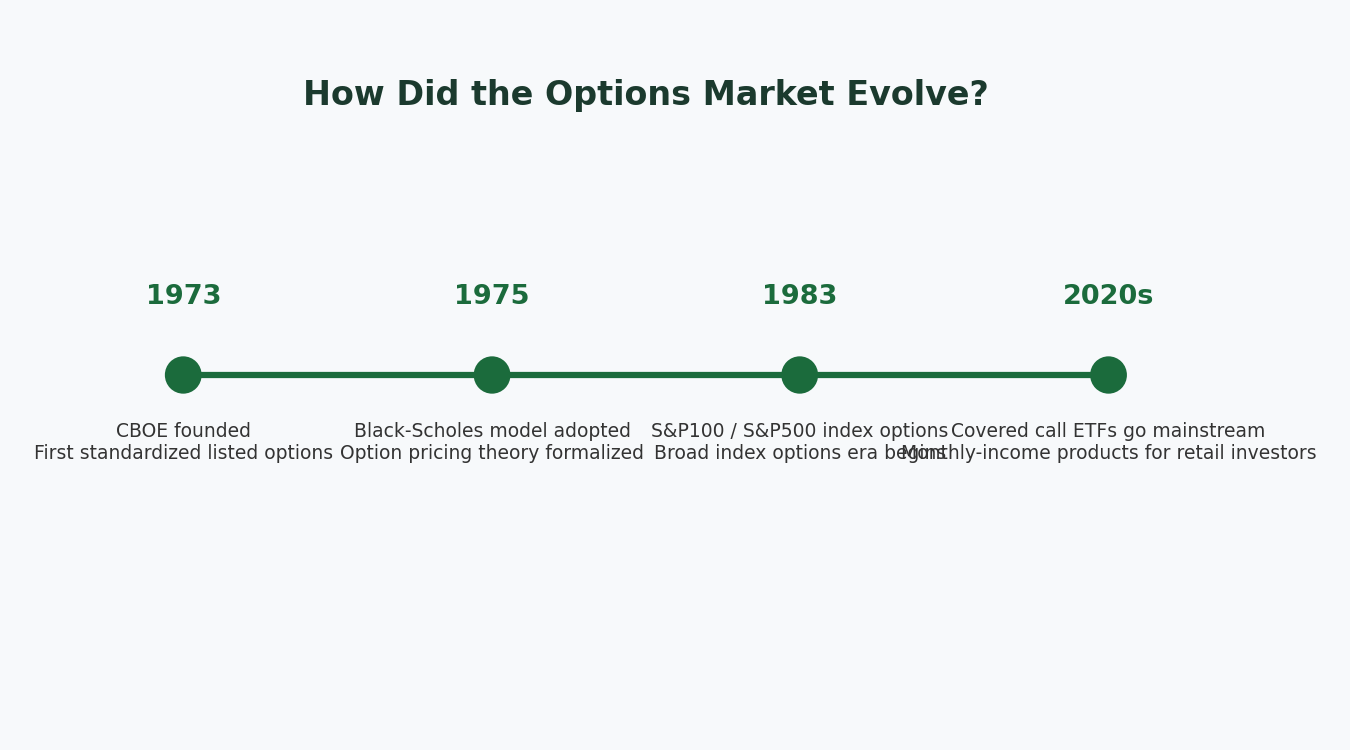
Before diving into strategy, it helps to know a bit about how listed options came to exist in the first place. Standardized, exchange-listed options trading is generally traced back to 1973, when the Chicago Board Options Exchange (CBOE) was founded in the United States.
Before that, options were mostly traded over the counter, which meant opaque pricing and thin liquidity. Once CBOE introduced standardized contracts on an exchange, options became far more accessible to everyday investors.
A couple of years later, around 1975, the Black-Scholes model was adopted for options pricing, giving traders a more rigorous framework for valuing contracts. Roughly a decade after that, in the early 1980s, index options on benchmarks like the S&P 100 and S&P 500 were introduced, dramatically expanding how options could be used.
More recently, covered call ETFs built on these same option mechanics have become popular as monthly-income products, bringing a strategy once reserved for professional traders much closer to everyday investors.
**Covered Call: Earning Extra Income with Premium**
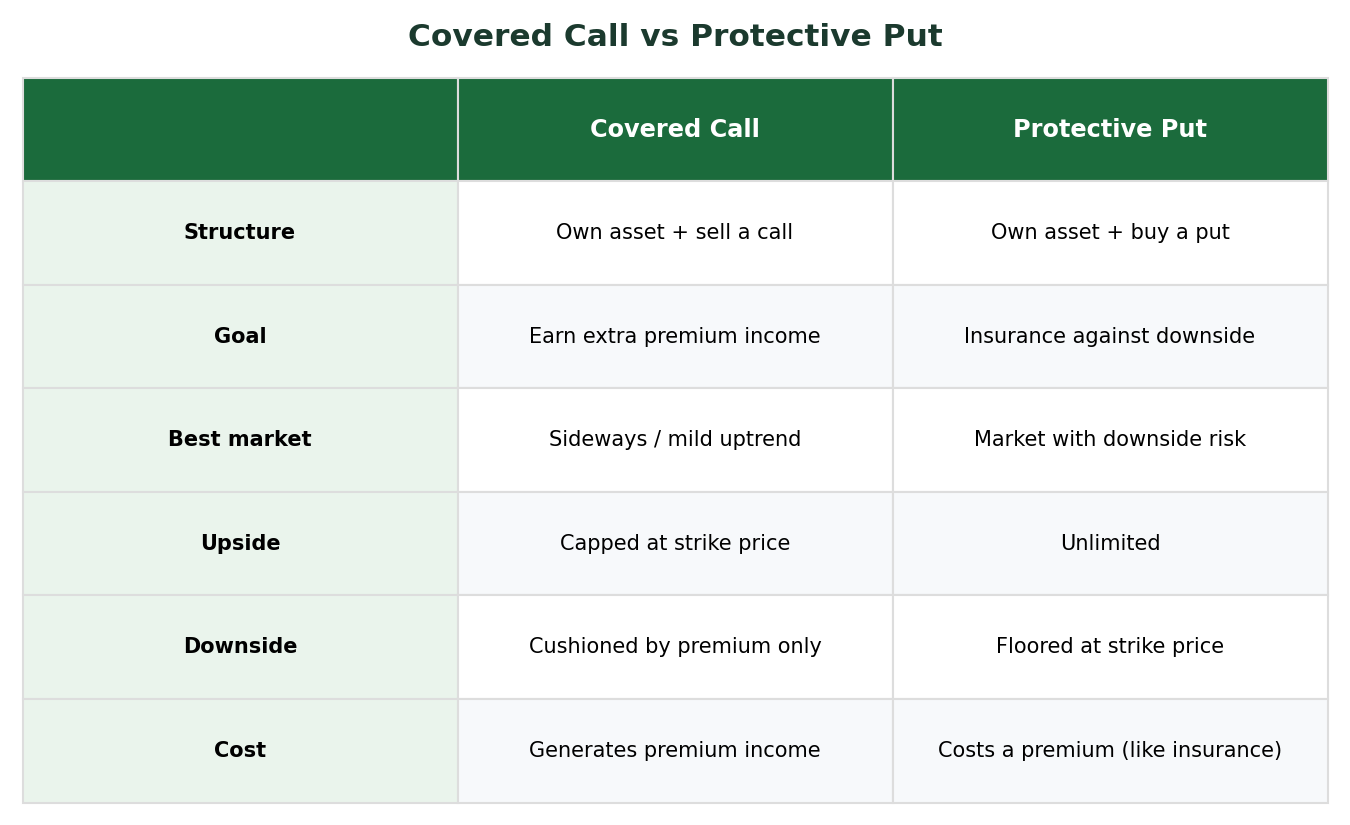
A covered call means selling a call option on a stock or ETF you already own. In exchange for selling that call, you collect a premium up front, which becomes an additional stream of income on top of whatever the underlying asset does.
If the stock trades sideways or rises only modestly, you get to keep that premium as extra return, even without the stock itself moving much. This is exactly the mechanism behind the monthly-distribution covered call ETFs that have grown so popular recently.
There's a trade-off worth understanding, though. If the stock rallies sharply above the call's strike price, the gains above that strike effectively go to the option buyer instead of you, so covered calls can underperform simply holding the stock during a strong rally. In other words, you're trading away some upside in exchange for steadier premium income.
That's why covered calls tend to work best when you don't expect a dramatic rally, but do want a more consistent, dividend-like cash flow from a sideways or slowly rising market.
**Protective Put: Insurance Against a Downturn**
A protective put works the opposite way: you buy a put option on a stock you already hold to guard against downside risk. Because a put gives you the right to sell at a set price, your losses are effectively floored at that strike price no matter how far the stock falls.
It's a lot like car insurance. If nothing bad happens, you've simply paid a premium for peace of mind. But if the market drops sharply, that protective put can meaningfully limit how much your portfolio actually loses.
That insurance isn't free, of course. Buying a put means paying a premium up front, and if the stock rises or stays flat instead of falling, that premium is simply a cost with no payout. For that reason, protective puts are often used tactically, for example ahead of a specific event like earnings or a rate decision where near-term downside risk feels elevated.
**Good to Know**
In one line: a covered call trades away some upside for premium income, while a protective put pays a premium to cap downside. Because the two strategies serve different goals, which one fits better depends heavily on your market outlook.
In practice, some investors combine the two. Selling a call for premium and using part of that premium to buy a put creates what's known as a "collar," pairing income generation with downside protection in a single structure.
Keep in mind that an option's premium and payoff depend on several moving parts: the underlying price, time remaining until expiration, and implied volatility, among others. If you're considering using either strategy, take the time to read the product materials carefully and make sure it actually matches your goals and risk tolerance.
This post is intended purely as educational information about how these option strategies work, and is not investment advice regarding any specific stock or product. Options trading carries the risk of loss of principal, so careful judgment is essential.

**Wrapping Up**
A covered call sells a call against a position you hold to collect premium income, and tends to shine in sideways or mildly rising markets, while a protective put buys a put to insure against downside, acting much like insurance for your portfolio. Neither strategy guarantees a profit, but understanding both gives you more precise tools for managing a portfolio.
There are plenty more option strategies and products built on these same building blocks, and understanding these two basics should make it much easier to follow along with option-related news or product descriptions going forward. Next time, it would be worth covering the collar strategy that combines both, along with a few other option strategies.
#options #coveredcall #protectiveput #optionstrategy #calloption #putoption #optionpremium #riskmanagement #portfoliomanagement #assetmanagement #coveredcalletf #monthlyincomeetf #collarstrategy #optionstrading #derivatives #CBOE #blackscholesmodel #indexoptions #investingbasics #investing101 #stockmarket #hedging #sellingoptions #buyingoptions #financeeducation