2026. 8. 16. 23:56ㆍ육아생활
Hello everyone.
Today's post is about how to read your child's growth chart, what "short stature" actually means medically, and when a bone age test might come into the picture.
If you're a parent, you've probably had this moment: you pick up your child's growth report after a checkup, and it's full of numbers like "45th percentile" that don't mean much at a glance. Meanwhile you can't help wondering whether your child is growing at a normal pace compared to other kids the same age.
Where does your child actually stand on that curve? Let's walk through how growth charts work, what defines short stature, and when a bone age test is actually needed.
**What Is a Growth Chart, Exactly**
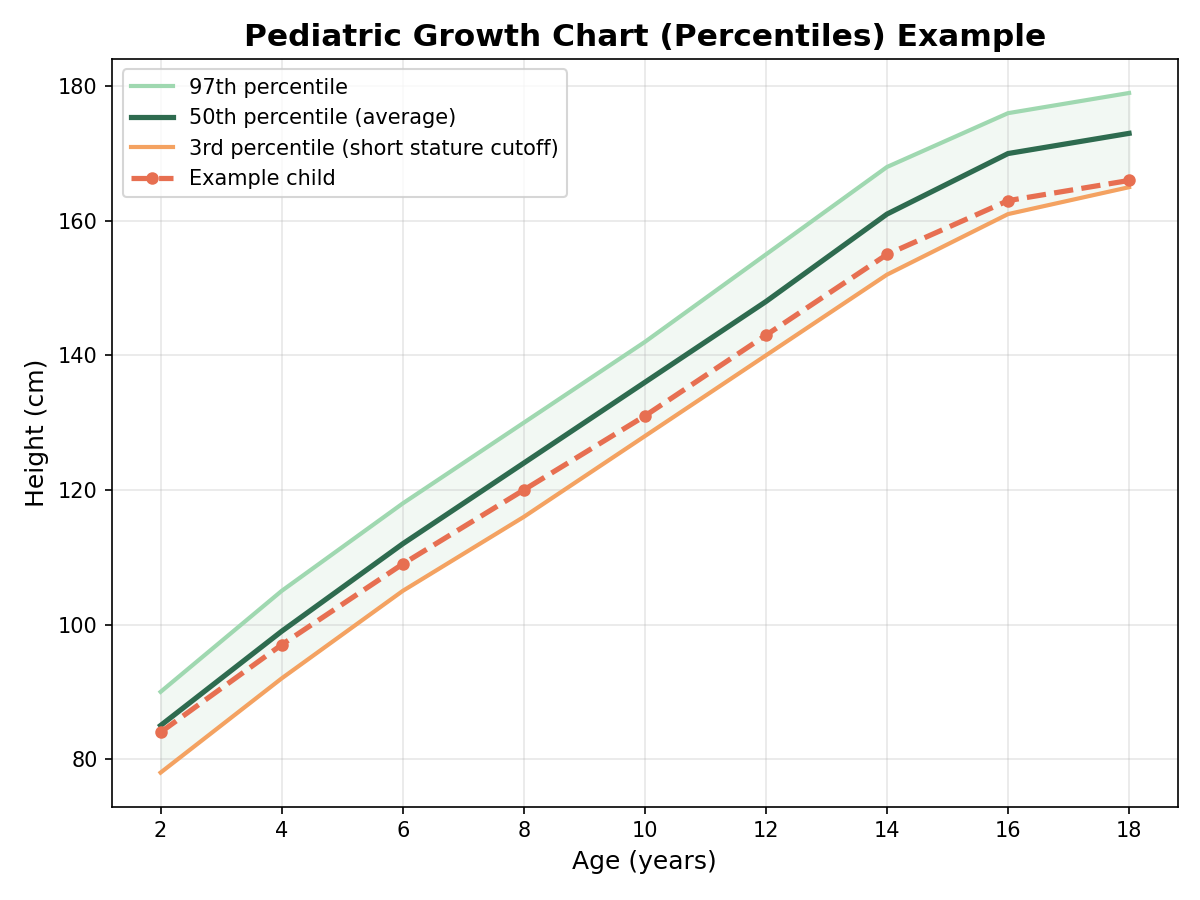
A growth chart plots a child's height (or weight) as a percentile among 100 same-age, same-sex peers. It's a statistical snapshot, not a grade or a target.
If a child is at the 75th percentile, that means out of 100 same-age peers lined up by height, they'd be the 75th tallest. The 50th percentile represents the exact middle of the group, in other words the average.
Pediatric growth charts are built from large population datasets collected by public health agencies, and the charts pediatricians use are based on this reference data. On the chart itself, age runs along the horizontal axis and height (or weight) along the vertical axis, with several curved lines marking different percentiles.
What matters most isn't a single measurement but the trend over time. If a child suddenly drops from the 90th percentile to the 30th, that kind of sharp shift across percentile lines is worth discussing with a pediatrician, regardless of where the child ends up sitting.
**How Is Short Stature Actually Defined**
Medically, short stature is generally defined as height falling at or below the 3rd percentile for age and sex, or more than 2 standard deviations below the average.
In other words, a parent's gut feeling that "my kid is the shortest in class" isn't the same as a clinical diagnosis. The more reliable approach is plotting several measurements over time on the growth chart and checking whether the child consistently tracks near or below that 3rd percentile line.
Measuring your child's height every 3 to 6 months and recording it is genuinely useful. Watching that trend line over time tells you far more than any single measurement ever could.
That said, parental height, the timing of puberty, birth weight, and many other factors can all influence a child's growth pattern, and only a physician's evaluation and testing can pin down the actual cause. If you're concerned about your child's growth pace, a visit to a pediatrician, or a pediatric endocrinologist if needed, is the most reliable next step.
**Bone Age Testing: When and How It's Done**
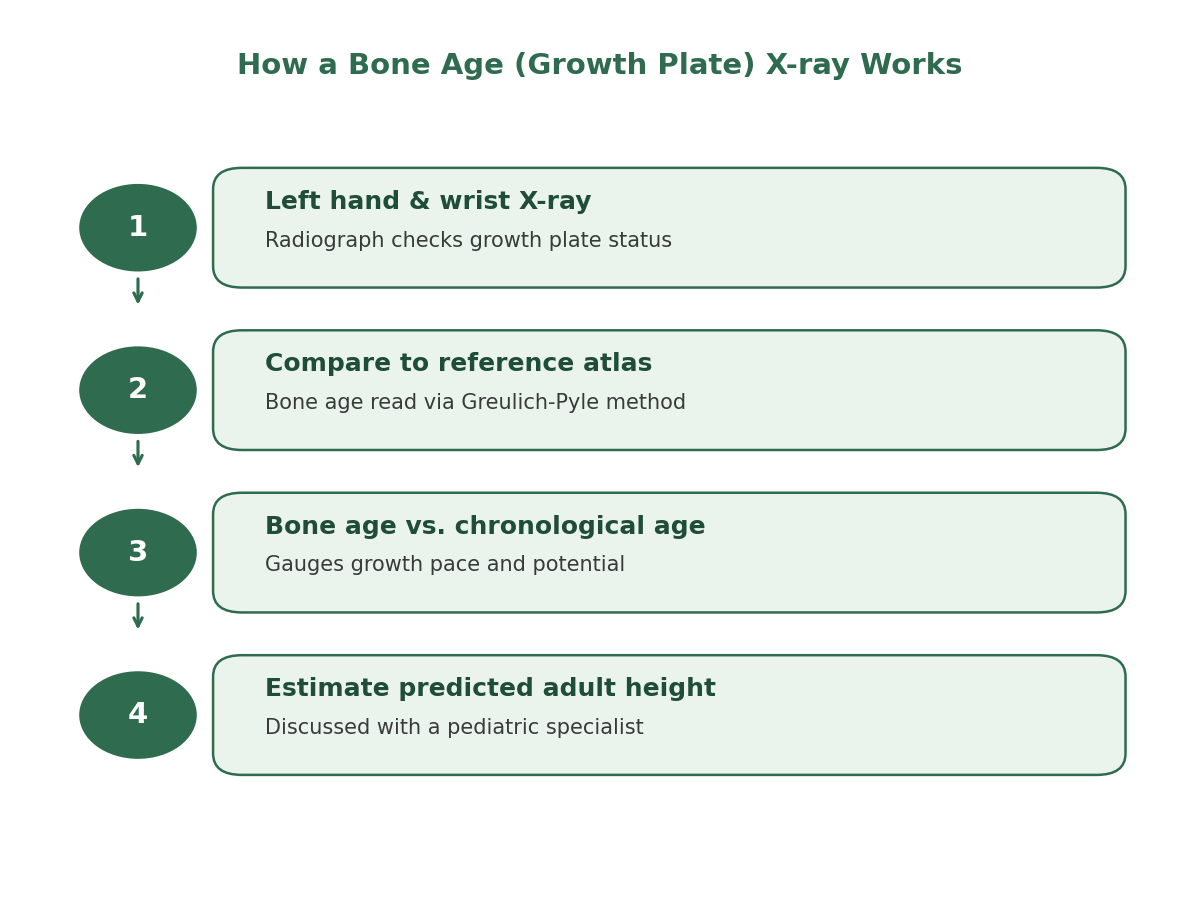
A bone age test, often called a growth plate assessment, involves taking an X-ray of the left hand and wrist to evaluate how mature the bones are.
The resulting X-ray is compared against a standard reference atlas of bone development by age. The most widely used method for this comparison is the Greulich-Pyle method, which matches the patient's hand X-ray to the closest-matching reference image in the atlas to determine bone age.
When bone age differs significantly from chronological age, it can suggest the growth plates may close earlier or later than expected, and this information is also used to estimate predicted adult height.
A bone age test isn't something every child needs. It's typically ordered when a doctor sees a meaningfully slower growth rate than peers, when a child meets the criteria for short stature on the growth chart, or when puberty starts unusually early or late. Rather than deciding on your own whether this test is necessary, it's best discussed with a specialist.
**Good Habits to Support Healthy Growth at Home**
There's no magic formula for height, but adequate sleep, balanced nutrition, and regular physical activity are all known to support growth hormone release and bone development.
Growth hormone is released most actively during deep sleep, which is why keeping a consistent bedtime matters. Staying up late scrolling on a phone or tablet can hurt sleep quality, so it's worth watching that habit.
During growth years, a balanced intake of protein, calcium, and vitamin D supports bone and muscle development, and weight-bearing activities like jumping rope or basketball are also considered helpful. That said, no single food or exercise guarantees height gain — think of these as supportive habits for healthy growth overall, not a guaranteed formula.
Above all, if you're worried about your child's growth, the most reliable path isn't relying on information from the internet, but tracking height and weight regularly with your pediatrician and discussing the growth chart together.
**Wrap-Up**
Today we covered how to read a growth chart, what defines short stature, and when a bone age test comes into play. Use the growth chart as a tool to understand your own child's growth trend rather than an absolute ranking, and if short stature is a concern, a pediatrician visit is the most reliable way to get a clear answer rather than guessing on your own.
Every child grows at their own pace and timing, so rather than comparing your child to the kid next door, it helps to simply watch whether their own growth curve is tracking steadily. Hopefully this rundown is useful for parents navigating their child's growing years.
'육아생활' 카테고리의 다른 글
| Parenting :: How Much Vitamin D Does Your Child Really Need? A Guide to Kids' Supplements (0) | 2026.08.20 |
|---|---|
| 육아 :: 우리 아이 비타민D, 얼마나 챙겨야 할까요? 영양제 총정리 (1) | 2026.08.20 |
| 육아 :: 우리 아이 성장곡선, 어떻게 확인해야 할까요? 저신장 기준과 성장판 검사 총정리 (0) | 2026.08.16 |
| 육아 :: 아이 오메가3, 정말 먹여야 할까요? 두뇌 발달과 영양제 이야기 (0) | 2026.08.15 |
| Parenting :: Why Does Sleep Matter So Much for Your Baby's Brain Development? (0) | 2026.08.10 |